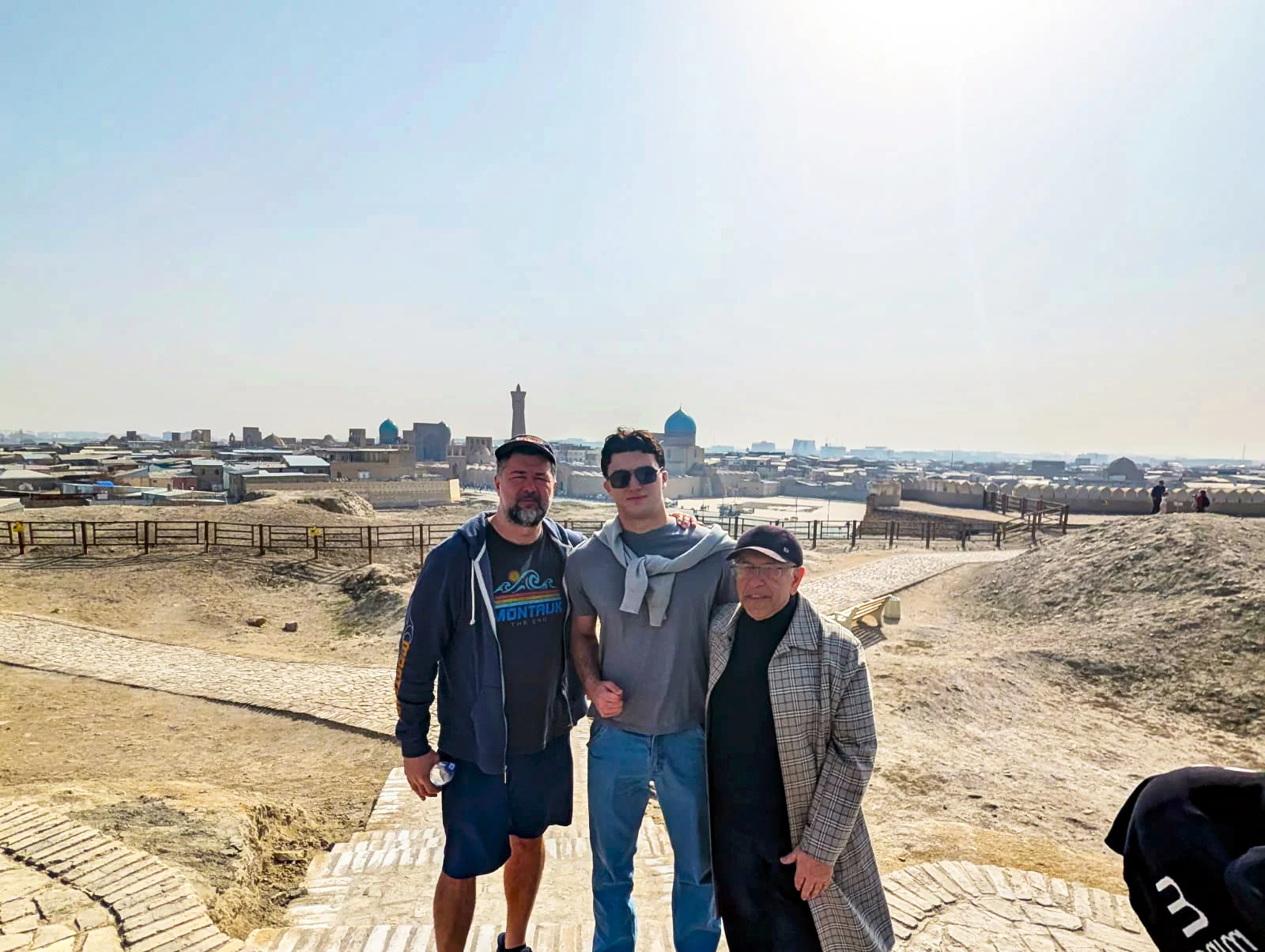
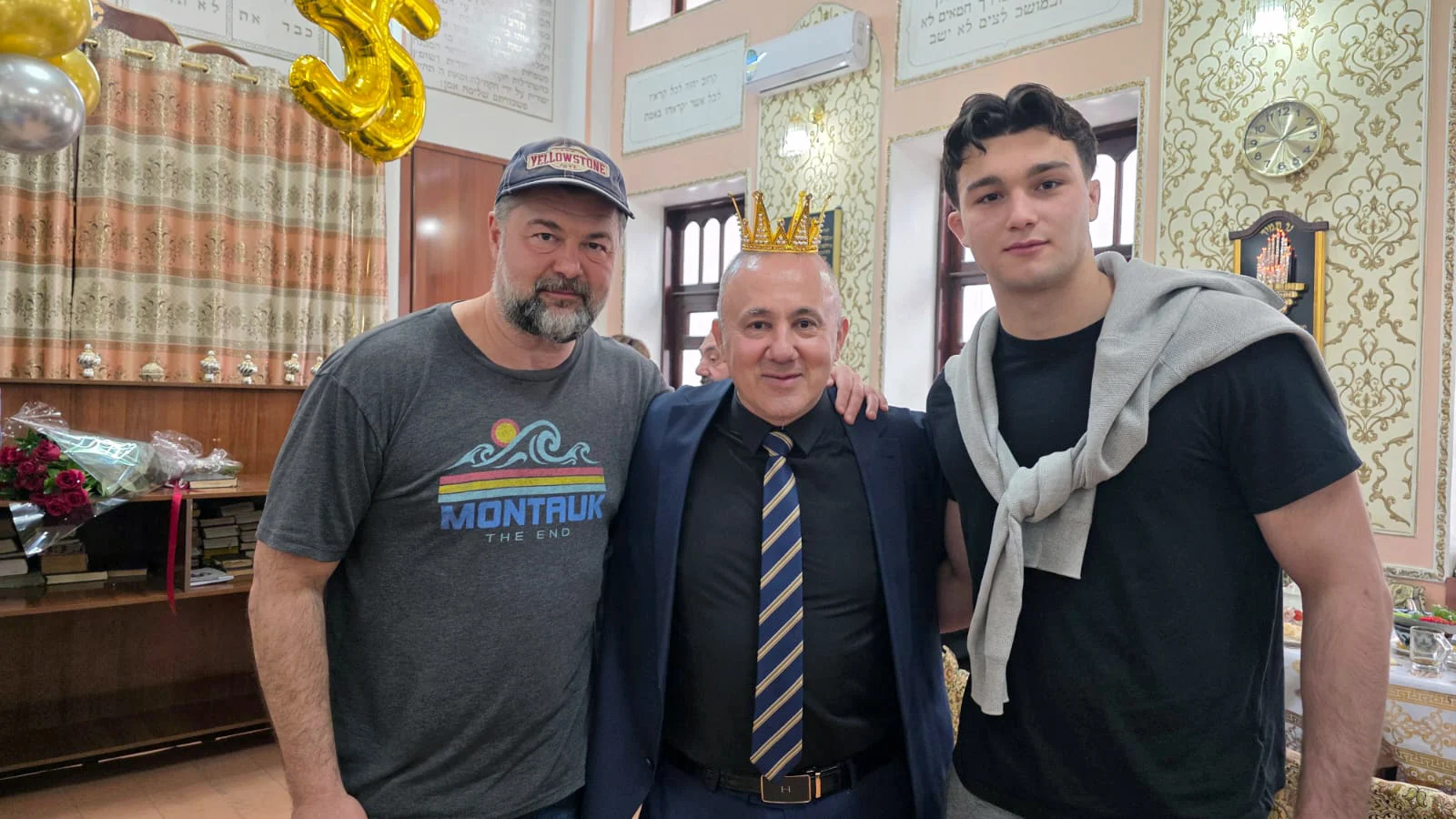
The recent international scientific conference, “Bukharian Jews in the Socio-Economic and Cultural Life of the Region,” held at Bukhara State University at the end of February 2026 was more than an academic gathering. It was a moment of recognition that the history of Bukharian Jews is inseparable from the broader history of Central Asia.
The conference, supported by regional authorities and international partners, brought together scholars, historians, and community representatives from Uzbekistan and abroad. It was both scholarly and symbolic: an affirmation that our community’s economic, intellectual, and cultural contributions deserve careful study and public acknowledgment.
For me, this event was deeply personal.
I was unable to attend in person. Instead, I sent my son Albert and my grandson Evan. Albert was not merely an observer — he was one of the presenters. He spoke about our family’s heritage, about memory, continuity, and the responsibility of preserving Bukharian Jewish history for future generations. Knowing that my son stood at the podium in Bukhara, speaking about our past in the city of our ancestors, gave the conference a meaning that transcended academia.
My connection to Bukhara is not theoretical. It is ancestral.
We are called Bukharian Jews, even though much of our people lived outside the Emirate for more than 150 years. Bukhara is the city where my mother was born and where my forefathers lived before moving to Samarkand.
When I visited Bukhara in 2014, I did not arrive as a tourist. I arrived as someone returning to origins. As I wrote then, Bukhara was for me a city “covered in mystique,” inseparable from the history and culture of my people.
I expected a fading relic of the past. Instead, I found a living mosaic — the architecture of the Emirate, Islamic monuments, Soviet-era boulevards, Western influences, and the old Bukharian Jewish mahalla intertwined. What moved me most was hearing local Tajiks and Uzbeks speak in our Bukharian-Jewish dialect of Tajik. In that moment, I felt a cultural closeness that surprised me.
I walked through the Jewish quarter where, in the late 19th century, my great-grandfather David Mulloniyaz was killed while visiting from Jerusalem. I stood in the synagogue where only a small group now gathers. At the Jewish cemetery, under a dome crowned with a Star of David, I stood before the restored grave of Hakham Yosef Maman, born in Tetouan, Morocco in the middle of XVIII century, and near the resting place of his son-in-law, my ancestor Rabbi Pinchas Katan Mulloniyaz. That moment fulfilled a lifelong dream — standing at the graves of my forefathers.
At that time, the Jewish community of Bukhara numbered roughly 150 families, mostly elderly. The Jewish school that once educated primarily Jewish children had only a handful remaining. The demographic reality is sobering.
And yet, the spirit endures.
After visiting the cemetery in 2014, I listened to Shashmaqom performed with deep respect for masters such as Levicha Bobokhonov, who was born in Bukhara and was the singer of the Emir. The music did not feel like nostalgia. It felt alive — a bridge between Jewish and Muslim communities, between generations.
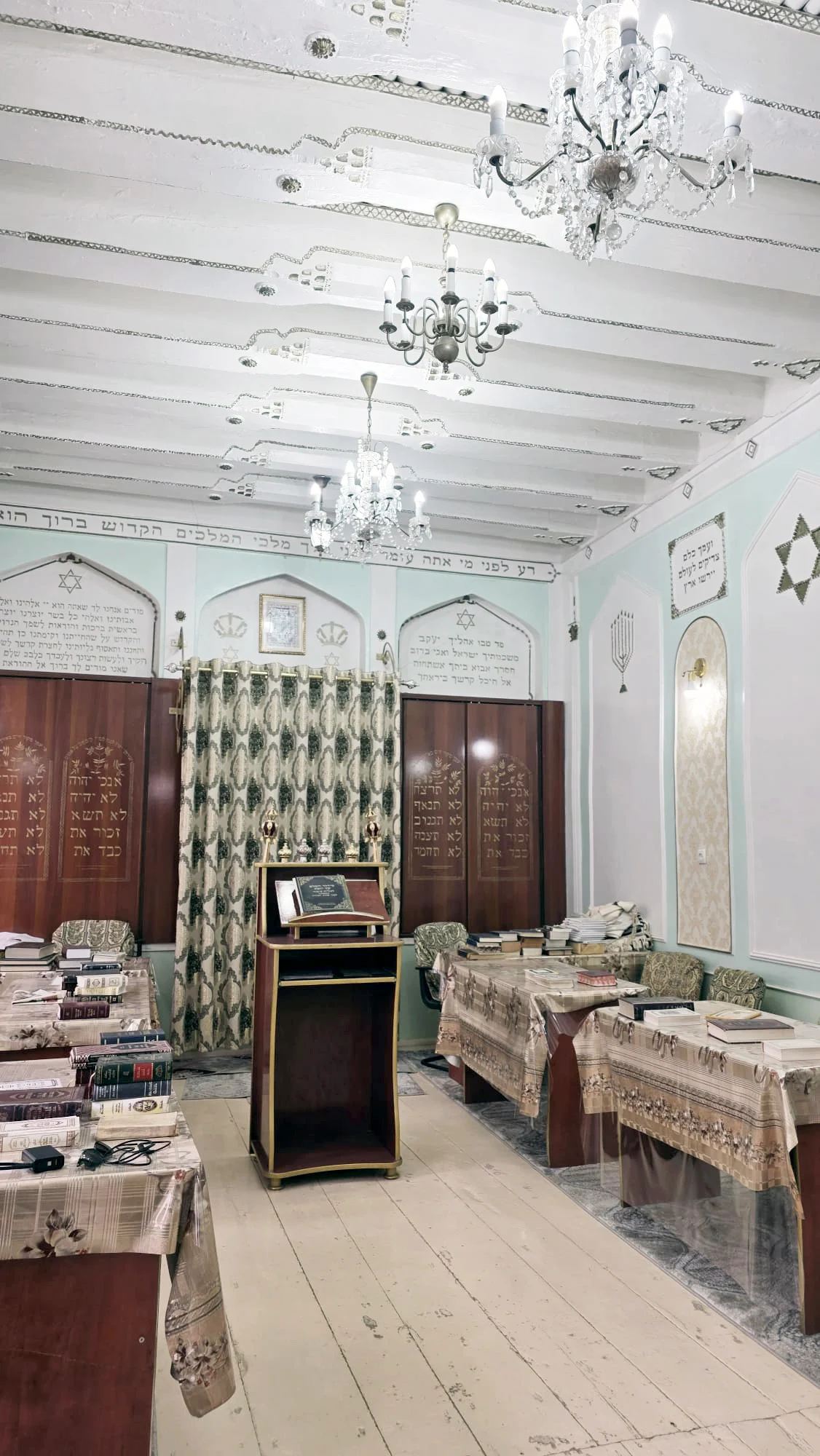
It is no coincidence that one of the initiators and organizers of this recent conference was Rafael Nektalov, a longtime advocate for preserving and promoting Bukharian Jewish culture and scholarship. His efforts, together with local institutions, helped transform the idea of a conference into a reality.
Although I was not physically present this year, my son and grandson were there. Albert spoke about our heritage; Evan witnessed it. The they visited the graves of our ancestors walked on the same streets they walked. Seven generations connected through one city.
In that sense, the conference was not only about academic papers and historical analysis. It was about transmission — from elders to children, from scholars to students, from memory to future.
Bukhara is not simply a city. It is identity, language, melody, and resilience. As long as our children return — to speak, to study, to remember — the story of Bukharian Jews in Central Asia remains part of the living narrative of the region
I sincerely thank the organizers, scholars, and participants who made this important conference possible.
To the leadership of Bukhara State University and all who helped bring this conference to life — your work pays meaningful tribute to the heritage of Bukharian Jews. I sincerely appreciate your devotion and care.
A special thank you to Rafael Nektalov, Director of Itzhak Mavashev Foundation, for his vision and dedication in helping bring this conference to life.
With gratitude and hope for continued connection,
By David Mavashev