
There are some dishes that explain a people.
Not because they are fancy. Not because they are rare. Because they lasted.
Maso Jhoshak is one of those dishes.
For many Jews, Passover soup means matzah ball soup. For Bukharian Jews, it means this. A deep, steady pot built from onions, meat on the bone, potatoes, eggs, and matzah at the very end.
It is warm. Practical. Filling. And old.
Very old.
This is not a dish that was created to impress anyone. It was created to feed a family during a holiday with limits.
And that’s exactly why it still matters.
A soup made from what people had
Passover has always required a different kind of cooking.
Without leavened bread or everyday staples, meals had to be built from a smaller set of ingredients. In Bukharian homes, that meant relying on what was available and permitted — onions, oil, bone-in meat, potatoes, eggs, and matzah.
Maso Jhoshak comes from that kind of kitchen.
It’s a dish shaped by limits. Nothing extra. Nothing unnecessary. Just ingredients that made sense, used in a way that could feed a family and hold a table together.
Over time, it became more than that.
Not because it changed much — but because it didn’t have to.
It may remind people of egg drop soup… but that’s not really it
Yes, eggs are poured into hot broth. Yes, they turn into ribbons.
But that’s where the comparison ends. Because here, the eggs are not the whole story.
The broth carries the weight. The bones give it depth. The onions build its base.
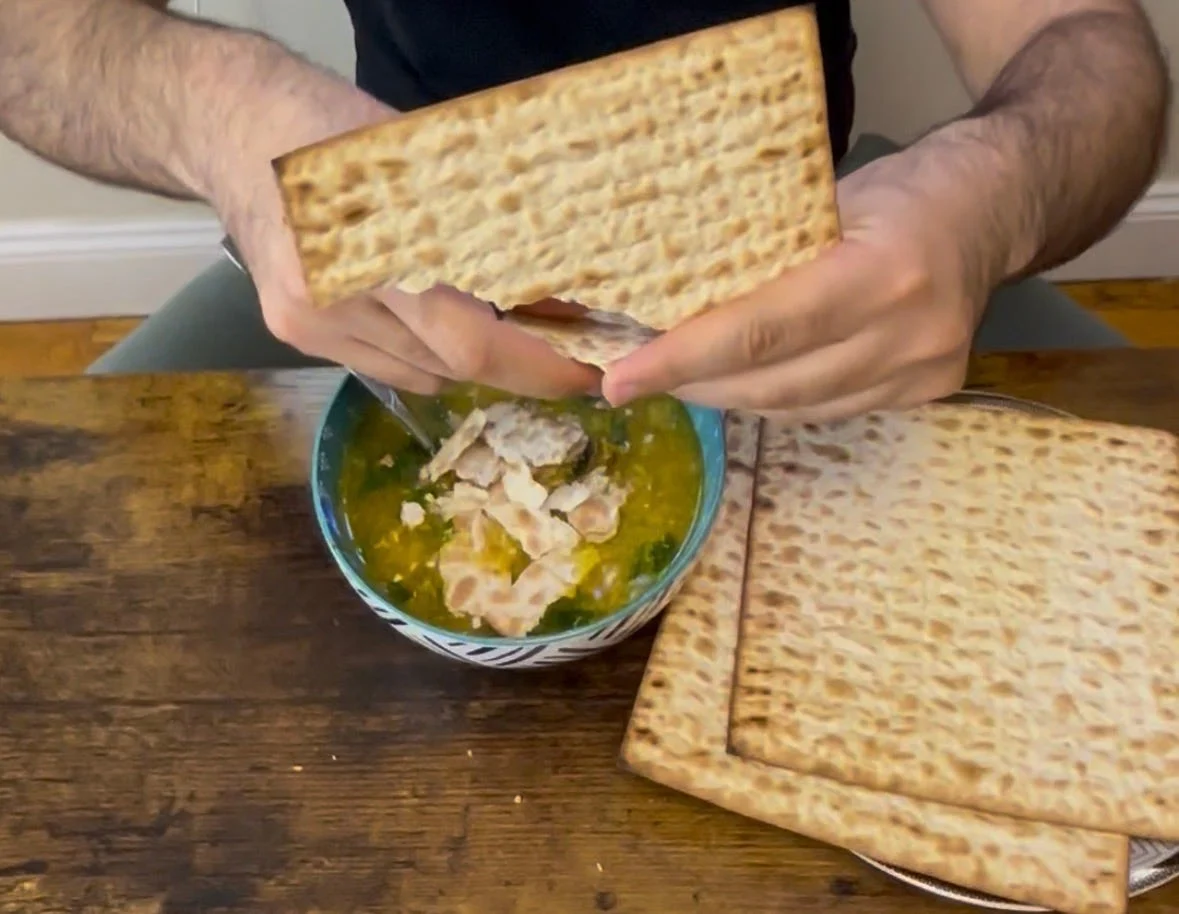
And then there’s the matzah. Not on the side. Not separate.
Broken by hand. Dropped straight into the bowl.
It absorbs everything and brings it together.
In this dish, the eggs matter. But so does the matzah. That’s what makes it feel like Passover.
A centuries-old dish that kept moving forward
Like most dishes that last this long, Maso Jhoshak didn’t stay frozen. The base stayed the same — onions, bones, broth, eggs, matzah. But people adjusted where they could. Some added brightness. A handful of sour crest/sourgrass. In Russian-speaking homes, you’ll hear it called shavel. That sharp, slightly sour bite cuts through the richness. Others use sorrel. And if neither is around, cilantro works. Not the same, but it brings freshness. Some kitchens added carrots over time, giving the dish a little sweetness and color.
Nothing that changes it. Just small shifts that come with time.
For some, it’s new. For others, it’s everything. Share this with someone who needs to see it.
Ingredients (Serves 4)
• 3/8 cup vegetable oil
• 1 large onion, finely chopped
• 2 large carrots, sliced or cut into strips
• 2 large potatoes, peeled and cut into chunks
• 10–12 pieces beef neck bones
• 2 large eggs, whisked
• Salt, to taste
• Black pepper, to taste
• Turmeric, to taste
• Coriander, to taste
• Cumin, to taste
• 7–8 cups water
To serve:
• Sorrel, sourgrass (shavel), or cilantro
• Matzah, crushed into the bowl as much as you like
How it comes together
Start with oil in a pot over medium heat. Add the onions and let them cook slowly until soft and golden. Add the carrots and let them cook down alongside the onions. Season with salt, black pepper, turmeric, coriander, and cumin. Add the beef neck bones and let them brown, allowing them to release their flavor into the pot. Pour in the water and bring everything to a simmer.
Add the potatoes, then lower the heat and cover. Let the soup cook slowly until the broth is rich and the potatoes are tender.
Right before serving, pour the whisked eggs slowly into the hot broth while stirring gently, allowing them to form soft ribbons.
Serve into bowls. Top with sorrel, sourgrass, or cilantro.
And finally, crush matzah directly into the bowl before eating.
Why it lasts
Maso Jhoshak doesn’t try to be anything more than it is.
A Passover soup. A Bukharian soup. A soup built from what was there.
And somehow, that was always enough. That’s why it stayed. That’s why it still shows up. Not because it’s trendy. Because it belongs.
This was first published in Abe Fuzaylov’s Substack “Bukharian Bites.”
By Abe Fuzaylov