
These days, Rafael Nektalov, editor-in-chief of The Bukharian Times, is in Argentina. His trip is connected to projects of the Yitzhak Mavashev Foundation — an institute dedicated to studying the heritage of Bukharian Jews in the diaspora.
Argentina is one of the countries where descendants of Bukharian Jews still live—those who migrated here in different waves during the 20th century: first from Kokand, Samarkand, and Tashkent after the 1917 Revolution; then from France in 1939; and later from Israel. Among them are the Pinkhasov, Isakharov, Rubinov, and Mavashev families, some of whose members Nektalov met personally.
During his stay in Buenos Aires, Nektalov visited the AMIA — the country’s largest Jewish communal and cultural center — met with leaders of the local community and spoke to them about the lives of Bukharian Jews in the United States and the work of the World Congress of Bukharian Jews. A special place in his remarks was devoted to the philanthropic work of Lev Leviev, president of the Congress, who for many years has supported educational, cultural, and social initiatives of Jewish communities around the world.
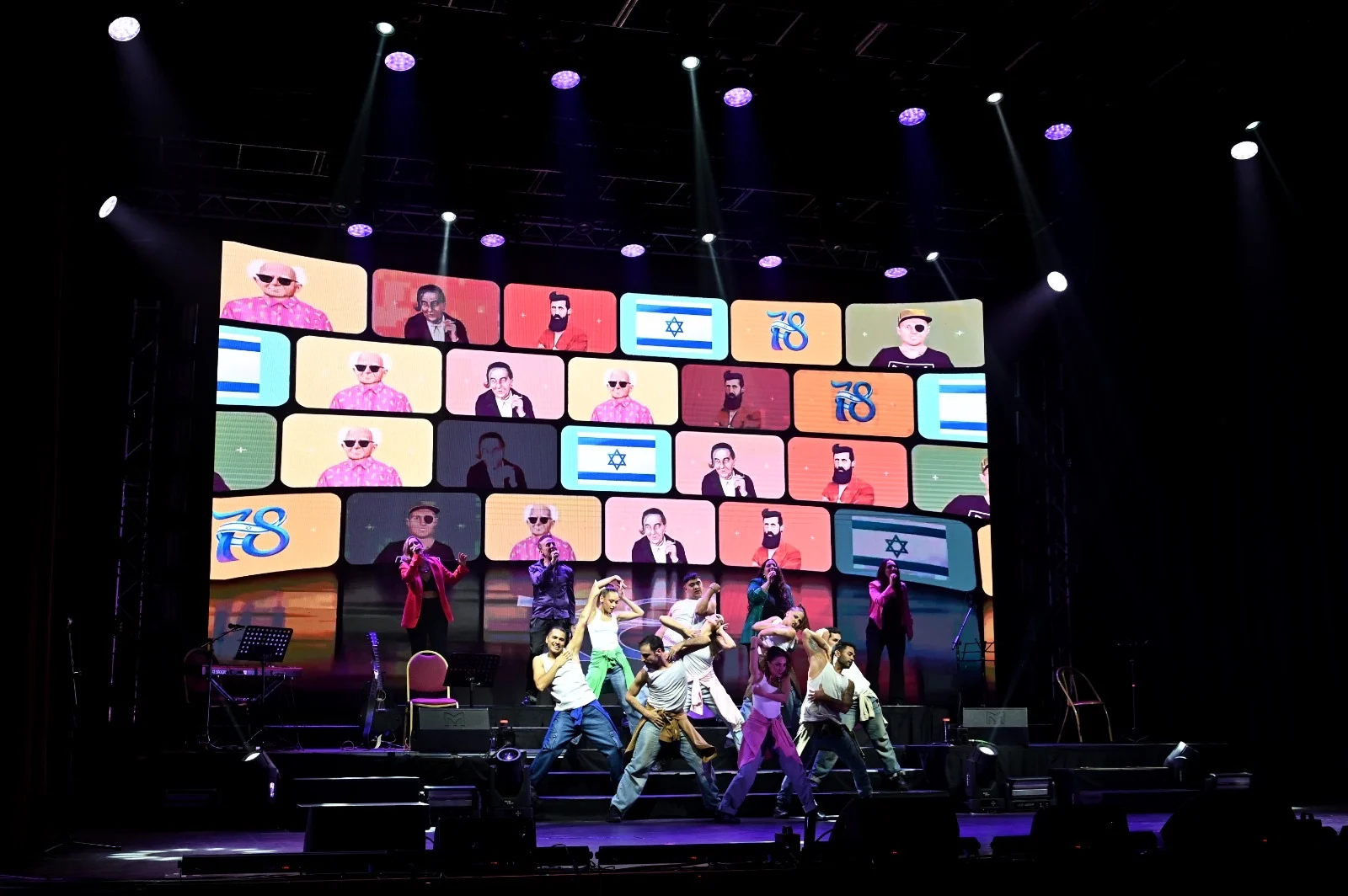
As part of the trip, Nektalov also visited the Jewish Museum, walked through the Jewish quarter, visited a cemetery where members of the Bukharian community are buried, and met with researchers of Argentine Jewish history, as well as figures in science and the arts. He was also an honored guest at a ceremonial concert dedicated to Israel’s Memorial Day and Independence Day, held in Buenos Aires on April 21, 2026.
“ARGENTINA AND ISRAEL — BROTHERS IN PAIN”
At a time when many countries around the world have united in hostility toward Jews, Israel, and Zionism, Argentina has declared itself an island of kindness and respect toward Jews and Israel in an ocean of lies, hypocrisy, antisemitism, and hatred.
I found myself in Argentina precisely when the country’s president, Javier Milei, visited the State of Israel for the third time in two years on an official trip.
Standing at the Western Wall, Milei, unable to hold back tears, called “Argentina and Israel brothers in pain.”
MILEI: “AM YISRAEL CHAI!”
At the official ceremony marking Israel’s Independence Day, where he was honored with lighting a torch, he said:
“Today, filled with pride, I stand here in the 78th year of the independence of the State of Israel — such a young country of such an ancient people. Israel’s independence became a watershed moment in Jewish history — a revolution that brought light to a people who had only recently endured one of the darkest and most brutal periods in its great history.”
HE CONCLUDED HIS SPEECH IN HEBREW: “AM YISRAEL CHAI!”
It should be noted that during these festive days, Argentina’s president was awarded Israel’s Presidential Medal and took part in memorial and Independence Day events.
Local media widely circulated photos of the presidents of both countries, quoting Milei’s statement that Israel and Argentina are united by “shared values.” Most significant for me was the announcement of plans to move Argentina’s embassy to Jerusalem (despite earlier reports of a pause), giving special weight to the relationship between the two countries.
During the visit, the sides signed the so-called “Isaac Agreements,” a package of cooperation deals, including in security and artificial intelligence. The name echoes the Abraham Accords and reflects an attempt to expand cooperation to countries of the Western Hemisphere.
In turn, Israeli Prime Minister Benjamin Netanyahu said that political changes in South America signal the return of an “alliance of freedom,” with the new initiative aimed at strengthening cooperation among democratic nations and countering terrorism, antisemitism, and Iran’s regional influence.
ISRAELI HOLIDAYS IN BUENOS AIRES
I had planned to write about my impressions of Argentina chronologically, but after being invited to the Memorial Day ceremony for Israel’s fallen soldiers and victims of terror — Yom HaZikaron — followed by the celebration of Israel’s Independence Day — Yom HaAtzmaut — both held this year on April 21–22, I decided to dedicate my first essay to this remarkable event.
The venue, Teatro Gran Rex, is a grand and elegant theater located in one of the most prestigious parts of the capital, reminiscent of New York’s Broadway: glowing billboards, brightly lit shop windows, restaurants, cozy cafés, theaters, and street performers. Due to security measures, part of the street was closed off. In addition to police, young members of Jewish security groups — similar to “Shmira” — maintained order.
ONE OF THEM, A MOROCCAN JEW FROM ISRAEL, SURPRISED ME WITH A QUESTION:
“Are you a Bukharian Jew?” he asked with a smile.
“Of course!” I replied, struck by his intuition.
Thank God — one of our own.
THE CONCERT
My friend Miguel Schauerman (more on him in the next chapter) secured tickets for us, and after security checks, we entered the theater foyer.
Jewish activists handed out Israeli flags. Some attendees brought large flags themselves and posed for group photos.
The four-tiered theater seats more than 3,000 people, most of them Jewish youth enthusiastically waving blue-and-white flags.
Today, more than 200,000 Jews live in Argentina — Ashkenazi, Sephardi, and Mizrahi — representing Orthodox, Conservative, and Reform Judaism. That evening, all were united by Israel, which remains at the center of global politics and continues its struggle for the right to exist, create, and develop as the only democratic country in the Middle East — the Jewish State, marking its 78th anniversary this year.
I have celebrated this holiday many times — in the USSR, Uzbekistan, the United States, and Israel — and each time felt the emotional power of the pairing of Memorial Day and Independence Day. Their sequence reminds us of the price paid for the Jewish people’s right to live, create, build, and pray at the Western Wall in the land of our ancestors.
From the stage spoke representatives of Israel’s embassy in Argentina, the World Zionist Organization, Jewish Agency leaders, youth movement representatives, and the president of the Federation of Jewish Communities of Argentina. All spoke proudly of their identity — inseparable from Israel.
The lights dimmed, and archival footage filled the screen: Jewish refugees, Holocaust survivors, the liberation of Jerusalem, the Six-Day War, peace agreements, and the tragedy of October 7, 2023 — forcing Jews worldwide to reexamine their identity.
WE BUKHARIAN JEWS HAVE ALWAYS CALLED OURSELVES BANU ISRAEL — “SONS OF ISRAEL.”
I found myself reflecting that this was happening in a country where, after World War II, Nazi criminals once hid — among them Adolf Eichmann. After fleeing to Argentina in 1950, he lived under a false identity until Israeli intelligence tracked him down. Captured by Mossad, he was brought to Israel, tried, and executed as one of the architects of the Holocaust.
I first heard about this in Jerusalem in 1991 from Shulamit Tillyaeva, a Bukharian Jewish poet and journalist who witnessed the trial.
The concert itself was extraordinary — over 100 performers, including singers, musicians, and dance groups, created an atmosphere of unity between Israel and Argentina. Performances ranged from professional acts to amateur Jewish dance groups, all brimming with energy.
Watching this, I couldn’t help but wonder: what prevents the UJA-Federation of New York from organizing something similar? Why aren’t such large-scale celebrations held in a city with a million Jews?
Songs were performed in Spanish, Ladino, Hebrew, and Yiddish — with even Russian phrases woven in, like: “Khorosho, khorosho, slava Bogu, khorosho!” (“Good, good, thank God, good!”).
The highlight was the Israeli national anthem, sung by all 3,000 attendees — a powerful, emotional chorus.
Near me sat three Argentine Jews who had made aliyah and now serve in the IDF. They were invited on stage and honored — a moment filled with pride, tears, and joy.
After the concert, people lingered outside, celebrating in the brightly lit streets. I met a group of Israeli singers invited to perform.
“I’m so proud to have been born here and to have immigrated to Israel as a child,” said singer Ora. “And now I’m back, singing in Hebrew for my fellow countrymen.”
TO BE CONTINUED
PHOTOS: OSA AND RAFIK SHARKI
This first appeared in issue 1263
and was translated
from Russian to English.
By Rafael Nektalov Editor-in-Chief