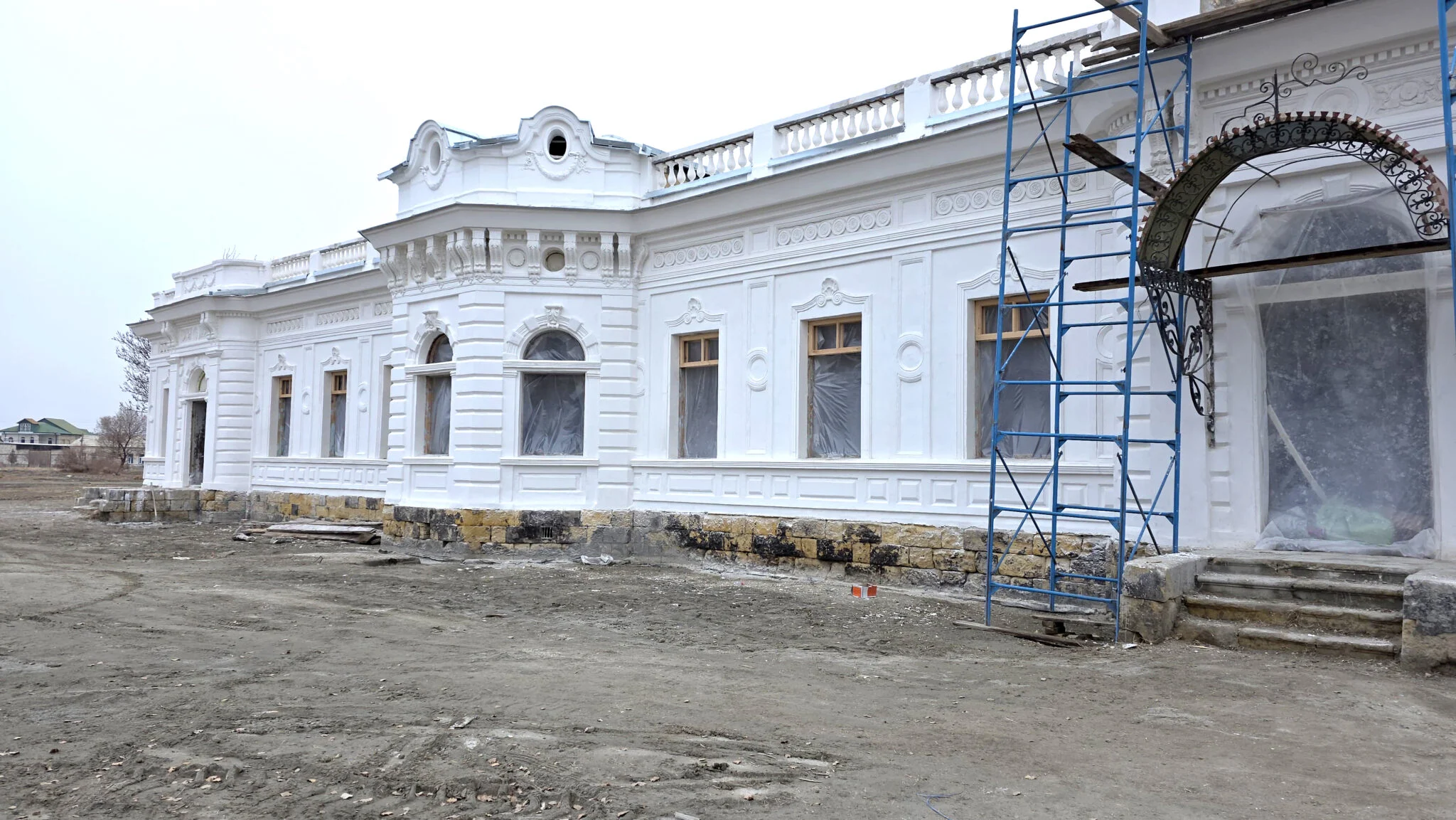
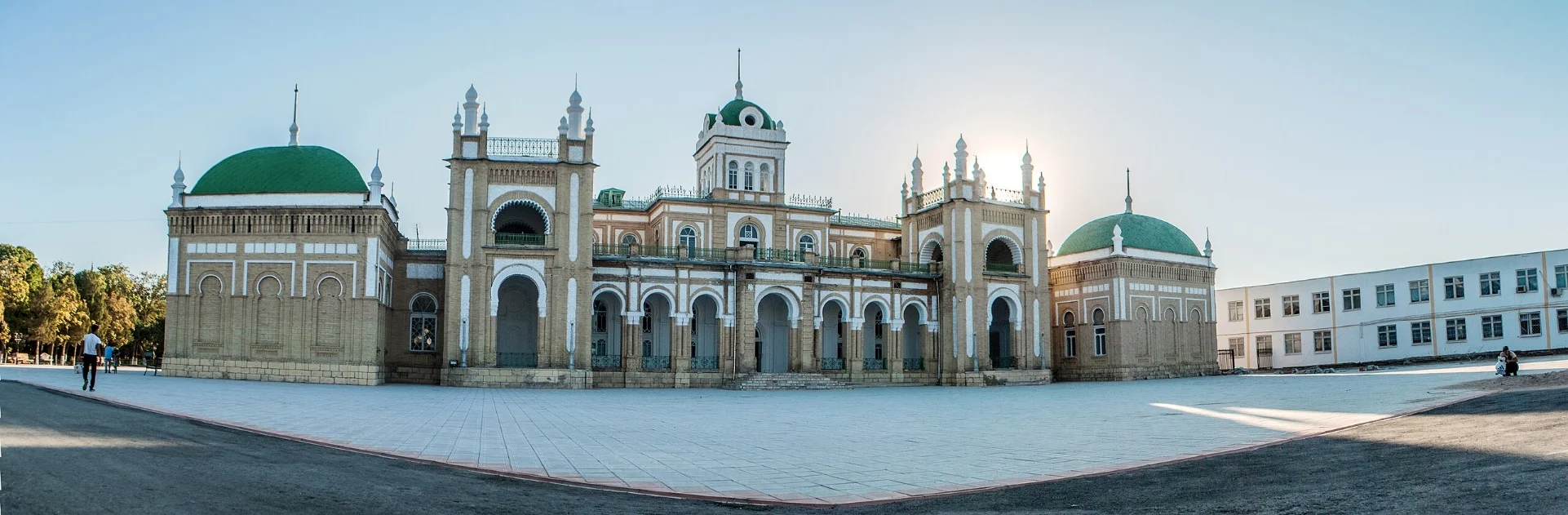
Rising in the heart of the Bukhara Emirate at the end of the 19th Century, Kagan Palace — a sun-washed fusion of Moorish arches and imperial brilliance — stands as a breathtaking testament to the vision and artistry of Emir Sayyid Abdullah Khan. It is a structure where history, culture, and architecture converge in perfect harmony.
On February 26, 1888, when the railway first arrived in Bukhara, new doors to the world were opened for its people. Inspired by his travels across European and Russian cities, where he observed the elegance of aristocratic life and the sophistication of European architecture, the Emir envisioned a residence that would unite the grandeur of his homeland with the refinements of the West.
Originally intended to rise within the heart of Bukhara, the palace’s location was moved 7.5 miles east to what is now Kagan after religious leaders opposed building it in the city. Designed by the eminent Russian architect Alexey Leonidovich Benois and completed under the supervision of engineer Dubrovine between 1895 and 1898, the palace became a marvel of combined national and European styles.
The Kagan Palace is a symphony of architectural influences: Moorish arches, Baroque flourishes, Empire elegance, and delicate Oriental motifs intertwine seamlessly. Stucco reliefs, Arabic inscriptions, stained-glass windows, and intricate floral patterns adorn both interiors and exteriors, creating a visual dialogue between tradition and innovation. Its grand halls stretch along a longitudinal axis, with the central ceremonial hall hosting receptions, councils, and festive gatherings during the Emir’s rule. Dutch-style stoves brought warmth in winter and enhanced the beauty of each room.
Ingeniously crafted air corridors circulate warmth from the floors in winter and cool air in summer, maintaining a comfortable climate throughout the year. Verandas and arches are shaped in bell-like elegance, with Quranic verses engraved in stucco and carved wood, reflecting devotion and artistry in every corner. Each room’s design reflects a meticulous balance of interior and exterior aesthetics, exuding grace and refinement.
Occupying nearly 10 acres, the palace is enveloped by gardens where trees, flowerbeds, fountains, and porticos conjure a sense of both historic opulence and serene modernity. Sayyid Olimkhan, the last ruler of the Mangit dynasty, used the palace to receive distinguished guests. Following 1920, the palace housed a girls’ school, later becoming part of the railway authorities’ facilities, and today it continues to serve as the Railway Palace.
The Kagan Palace is more than a building; it is a symbol of Bukhara’s encounter with the wider world, a shining example of East and West in dialogue, and a jewel of desert splendor.
Visiting it is stepping into the spirit of an era: every arch, corridor, and ornate hall speaks of a time when craftsmanship, culture, and history merged to create a legacy that continues to inspire awe.
BY DILDORA IBROHIMOVA
This was translated from Russian to English and edited.