INTERVIEW
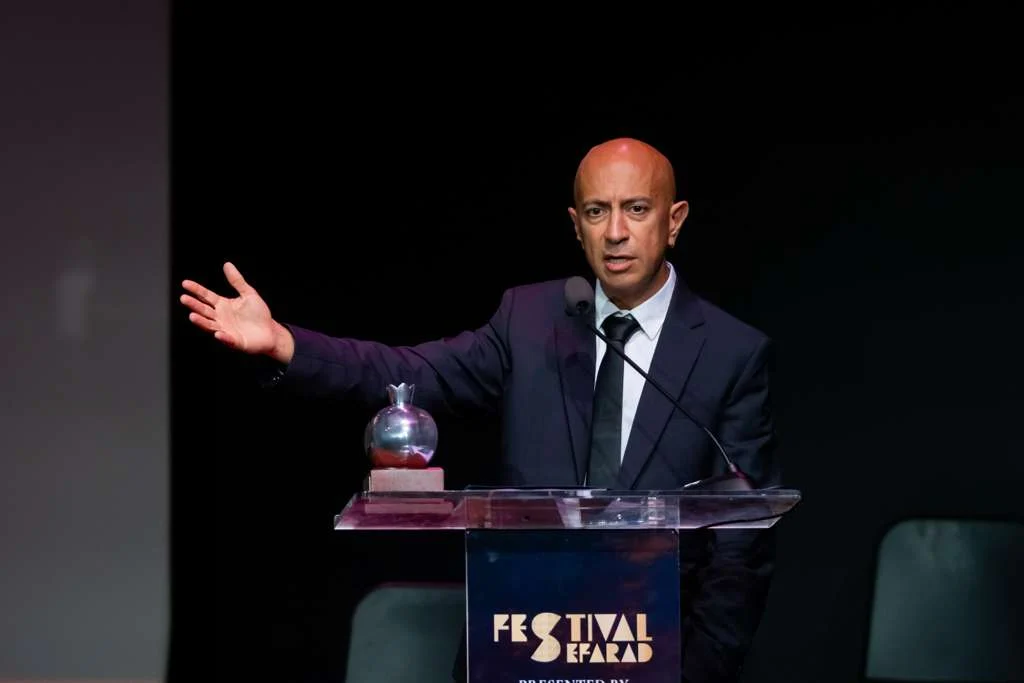
When Avi Issacharoff accepted the Pomegranate Lifetime Achievement Award for Storytelling on June 1 at the Museum of Jewish Heritage, he told a story only he could tell. As a young radio correspondent in Gaza, he sat down for his first-ever interview with Hamas founder Sheikh Ahmed Yassin, who declared that one day there would be an Islamic Palestinian state «between the river and the sea» — and that the Jews would «go back to their houses in Europe and the US.»
«But Mr. Sheikh, look at me,» Issacharoff replied. «My family is not from Europe, nor from the US.» Where, then? «Half from Bukhara, Uzbekistan, half from Kurdistan,» he said — in Israel since the end of the 19th century. Yassin looked at him and said: «You can stay.»
The Sephardic-majority audience, as well as myself, erupted in laughter.
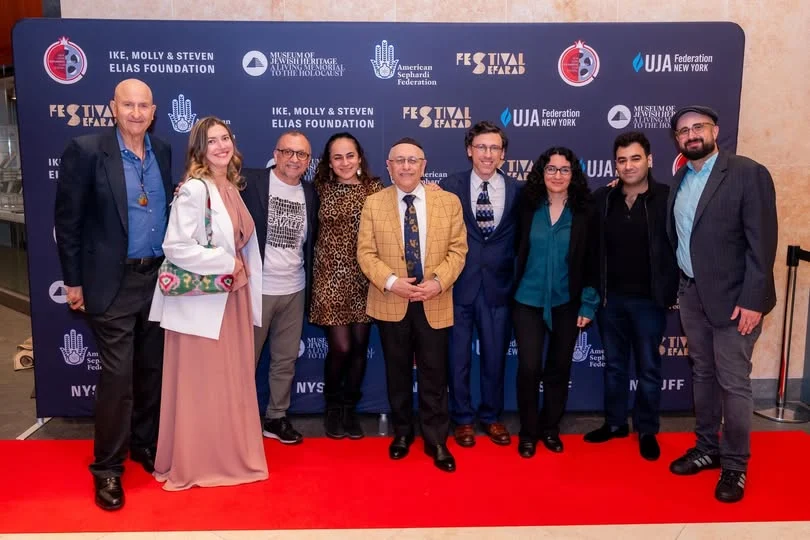
The journalist-turned-screenwriter, who co-created the Netflix hit Fauda with Lior Raz, was honored at the opening of the 28th New York Sephardic Jewish Film Festival, presented by the American Sephardi Federation, alongside fellow Pomegranate laureates Bernard-Henri Lévy, Murray Perahia, and Jeannette Sorrell.
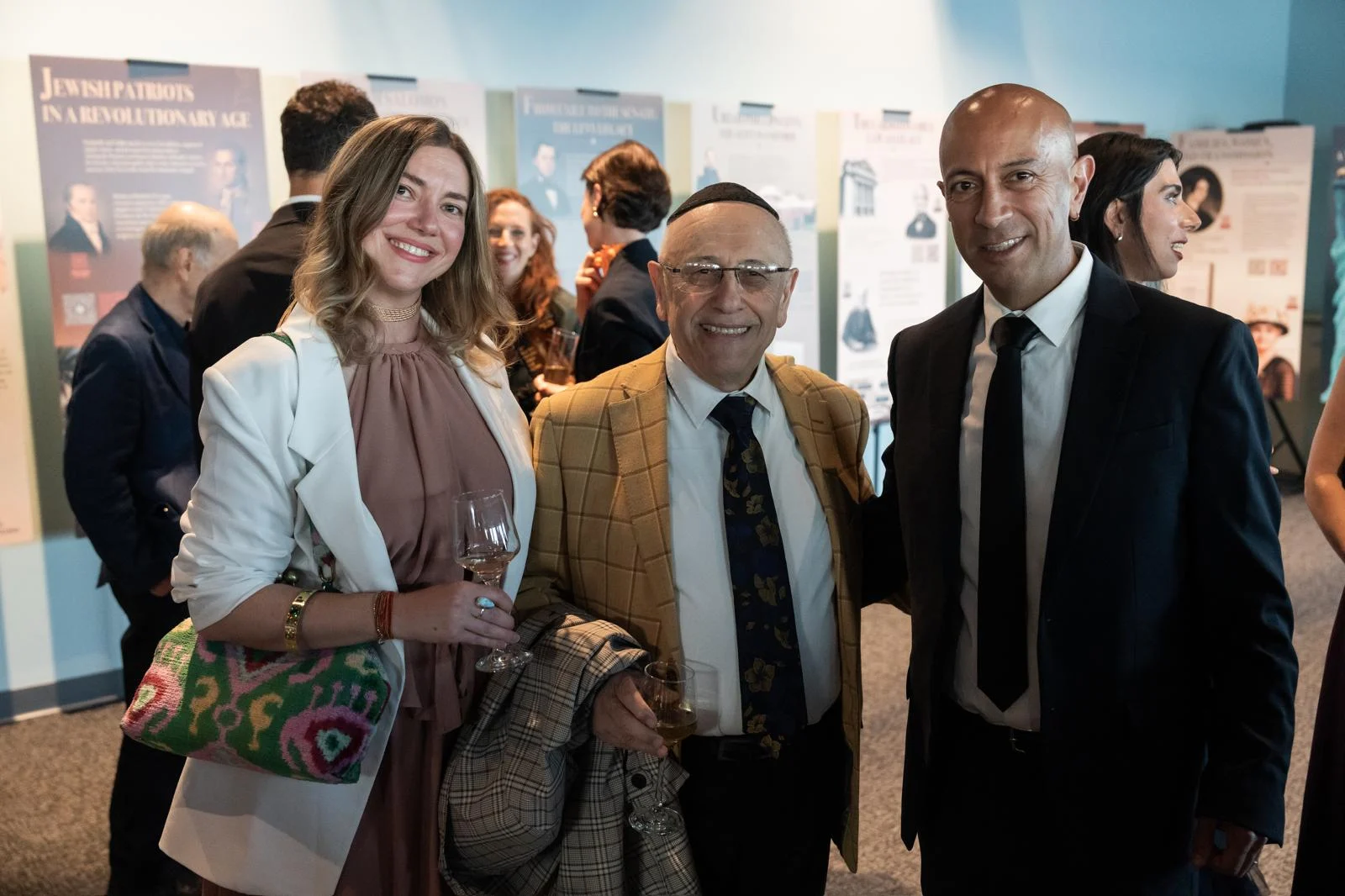
At the VIP reception, Bukharian Times Editor-in-Chief Rafael Nektalov invited Issacharoff to visit our community in Queens — where a photo of him may one day join the wall of notable Bukharians at Aron Aronov’s one-of-a-kind Bukharian Jewish Museum.
In his acceptance speech, Issacharoff credited his storytelling to his Kurdish grandmother, Shoshana Simanto, who arrived from Qamishli, Syria, at age 12 by cart and donkey. Illiterate her whole life, «my grandmother did know how to tell a story.» He closed with a dream: to write a novel about her and his late mother, Tzipora — «two very brave women.»
Days later, he spoke with us by phone from Tel Aviv about the other half of his heritage—a side whose details, he admits, remain murky to him.

Erin Levi: You’re a seventh-generation Bukharian Israeli on your father’s side. What do you know of that history?
Avi Issacharoff: My father’s family came around 1870. They were among the founders of the Bukharian Quarter — one of the first neighborhoods outside the walls of the Old City of Jerusalem. They opened the big synagogue that is still there, and an orphanage that later moved to the center of Jerusalem. My father grew up in the Bukharian Quarter, but later my grandparents moved to Rehavia. I don’t remember if they came from Samarkand or Tashkent — one of them. They spoke Bukharian; I don’t know it at all. I grew up in Givat Shaul, next to my mother’s family, praying in the Kurdish synagogue my maternal grandfather built — where, he notes, he first learned Arabic.
(The only Bukharian Israelis Avi knows are his own relatives; he knows of none who emigrated from the Soviet Union.)
EL: How did you as a journalist end up creating Fauda?
AI: Almost by accident. I was covering the West Bank and Gaza, and during reserve service in Duvdevan, the undercover unit where Lior and I both served, we met and decided to try writing a TV show. After Netflix bought Fauda, we suddenly understood there was another career. I still write columns for Yedioth Ahronoth and Ynet, but 99% of my time is TV and film.
EL: Might you ever make a film about Mizrahi Jews?
AI: In Fauda, they’re all Mizrahi — all the team members. Maybe I’ll write a book someday that deals with Mizrahi Jews. If I find a good story — definitely yes.
EL: Who do you look up to as filmmakers, and how is the industry in Israel these days?
AI: I love Eric Newman, Taylor Sheridan, Noah Oppenheim — very famous TV creators and writers [known for Zero Day and Yellowstone]. The TV industry in Israel is not an easy one, but it’s very creative and manages to break the glass ceiling in many aspects in the international arena. The war definitely didn’t make it easier on Israeli TV and movie creators.
EL: Season five has just aired in Israel. How is it being received?
AI: It’s still very popular, but many people in Israel find it hard to watch, because it deals with October 7th. Fauda was never a light, funny comedy — to put it as an understatement. But now it deals with a real massacre, so it’s even more difficult than former seasons.
EL: Have you ever been to Central Asia?
AI: No — but definitely one day. I want to go to Uzbekistan and visit Tashkent, Samarkand, and Bukhara.
By Erin Levi