SPORTS
When President Shavkat Mirziyoyev travels abroad for high-level meetings in the United States, the ripple effects are not always confined to diplomacy and trade.
According to Farrukh Niyazimbetov, founder and president of the International Turon Federation (ITF), those visits have become a source of energy for Uzbek communities living far from home — and, in his telling, the spark behind the federation itself.
“President Shavkat Mirziyoyev’s visits to the United States and high-level meetings have further increased Uzbekistan’s influence in the international arena,” Niyazimbetov has said.
“After each visit, our compatriots abroad gain new strength and confidence. This energy unites people and increases initiatives.” The creation of the International Turon Federation, he added, “is also a manifestation of this renewed spirit.”
That connection between diplomacy abroad and grassroots ambition in Uzbekistan and among the diaspora is, in many ways, the origin story of a sport now stepping onto the world stage.
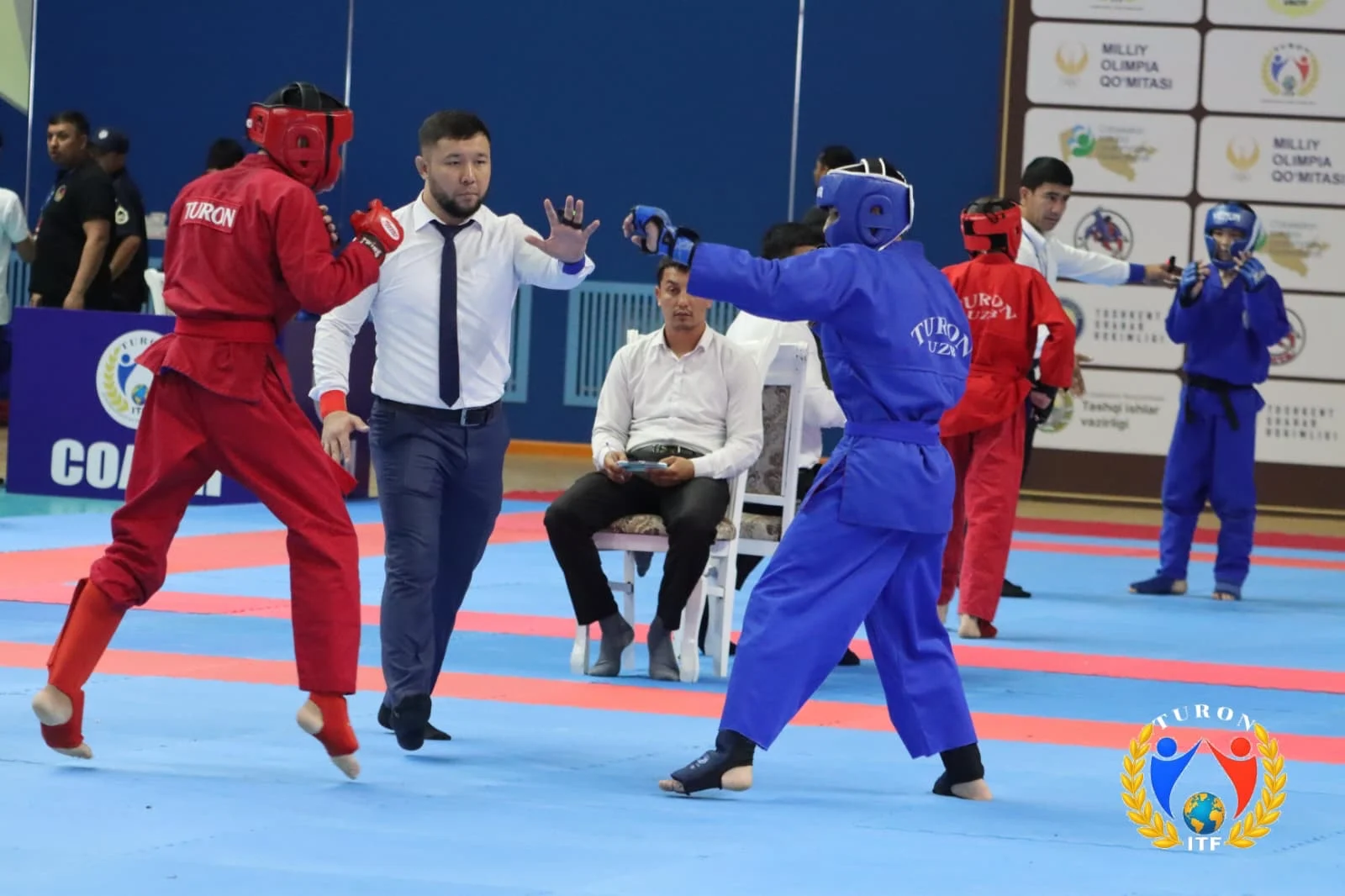
Founded in New York in 2025, the ITF marked its first anniversary July 15 after a year of rapid international expansion for Turon, an Uzbek martial art rooted in centuries-old traditions that has touched competition mats on nearly every continent.
Turon traces its roots to the era of Amir Temur, when skilled fighters were said to have escorted and protected merchant caravans traveling the Great Silk Road. Those combat techniques, refined over generations, were eventually codified into modern sporting rules in 1991 by Bahodir Saidov and formally recognized on Uzbekistan’s official list of national sports the following year. The name itself, drawn from ancient Turkic, Persian, and Sanskrit roots, evokes qualities of agility, strength, and courage — the very traits the sport asks of its athletes.
The ITF’s founding conference, held at the Tashkent City Department of Sports, brought together officials from Uzbekistan’s Ministry of Sports, the Asia Single Combat Turon Association, and the Turon Martial Arts Federation of Uzbekistan, alongside coaches and athletes from across the region. Niyazimbetov was elected president by vote and immediately tasked with two major responsibilities: registering the new organization in New York and organizing the sport’s first world championship in Tashkent. Since then, the ITF has been recognized under United States law as a non-profit international nongovernmental organization, giving it a formal legal foundation to govern Turon competitions and coordinate its development worldwide.
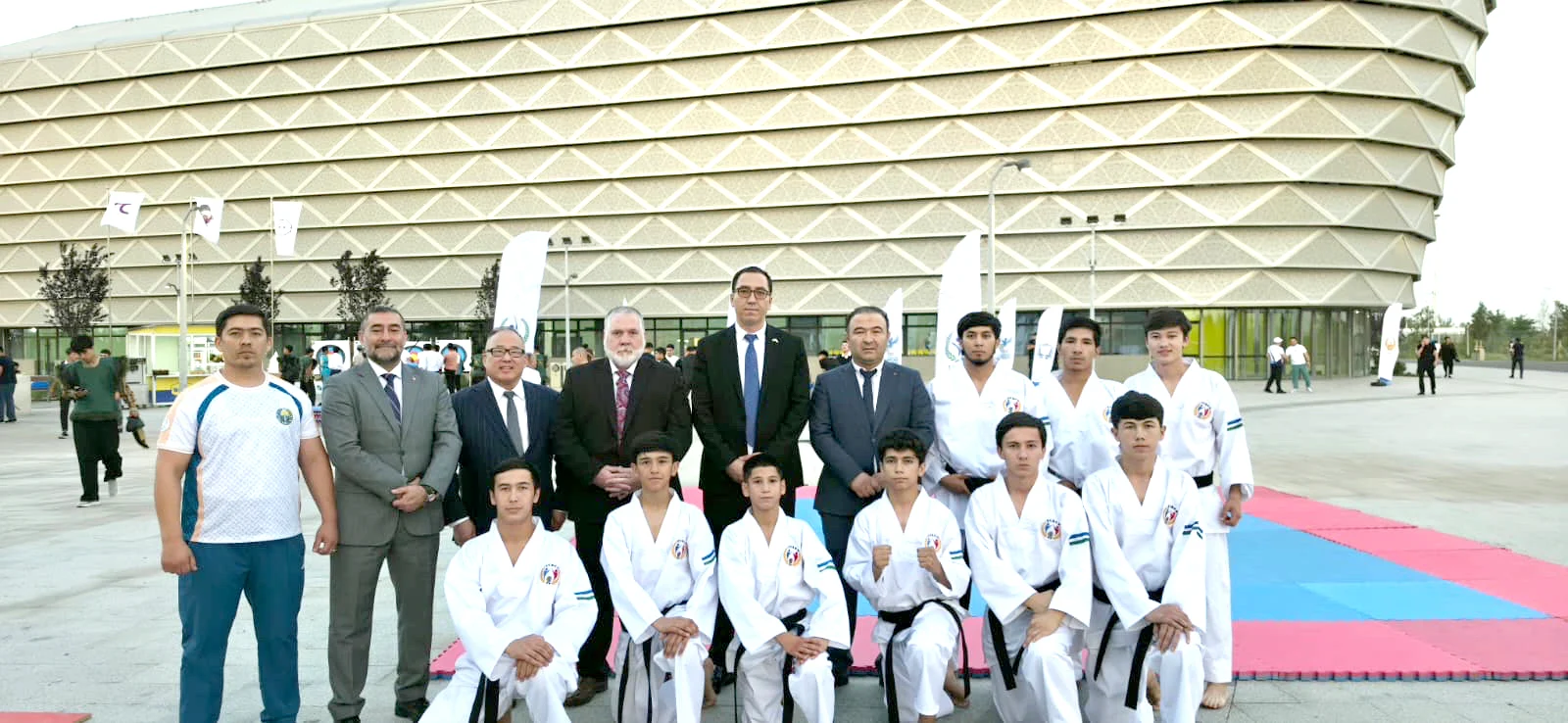
That mandate did not stay confined to paper for long. On December 1-3, 2025, representatives from six countries — the United States, Canada, Great Britain, Turkey, Japan, and host nation Uzbekistan — gathered for a conference dedicated to expanding the sport’s governing structure and strengthening cooperation between national federations.
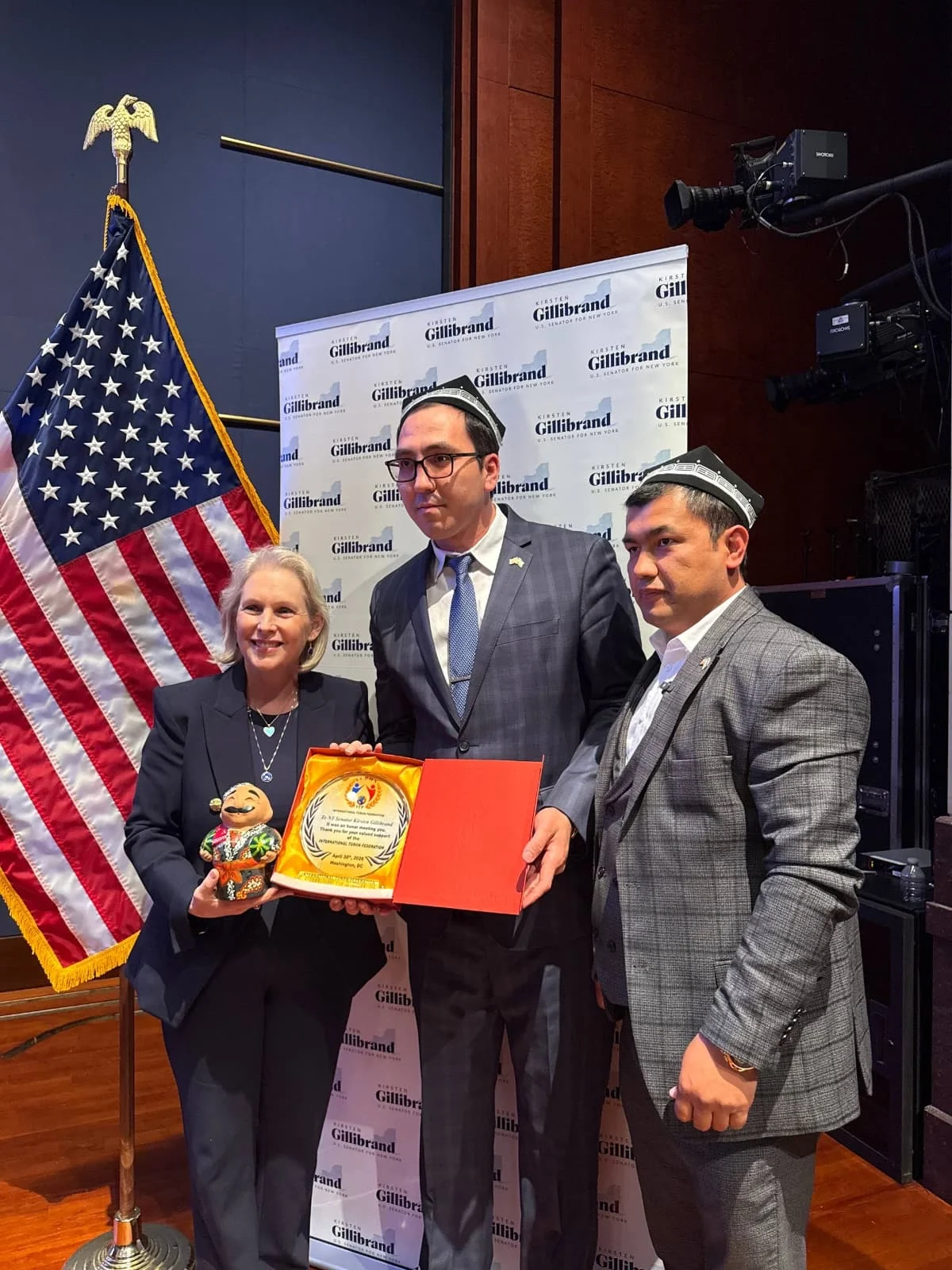
The federation’s standing in the United States grew further in February 2026, when it received formal congressional recognition from Rep. Nicole Malliotakis, followed by a meeting in April with New York Senator Kirsten Gillibrand — milestones that underscored the ITF’s growing footprint in American political and civic circles just as it prepared for its biggest competitive test yet.
That test came in the form of the first-ever Turon World Cup, held in Uzbekistan from June 1-5, 2026. The event featured competition across three age divisions — U-15, U-17, and U-19 — and drew more than 500 athletes to Uzbekistan, representing primary delegations from the United States, Canada, Chile, Venezuela, Bolivia, Great Britain, Turkey, Poland, and Egypt, and other countries, with total participation exceeding 25 nations.
The federation’s rapid expansion has not been limited to competition. Over its first year, the ITF established governing bodies in the United States, Bolivia, and Great Britain, while forging partnerships with sports authorities across Latin America, Europe, and Asia.
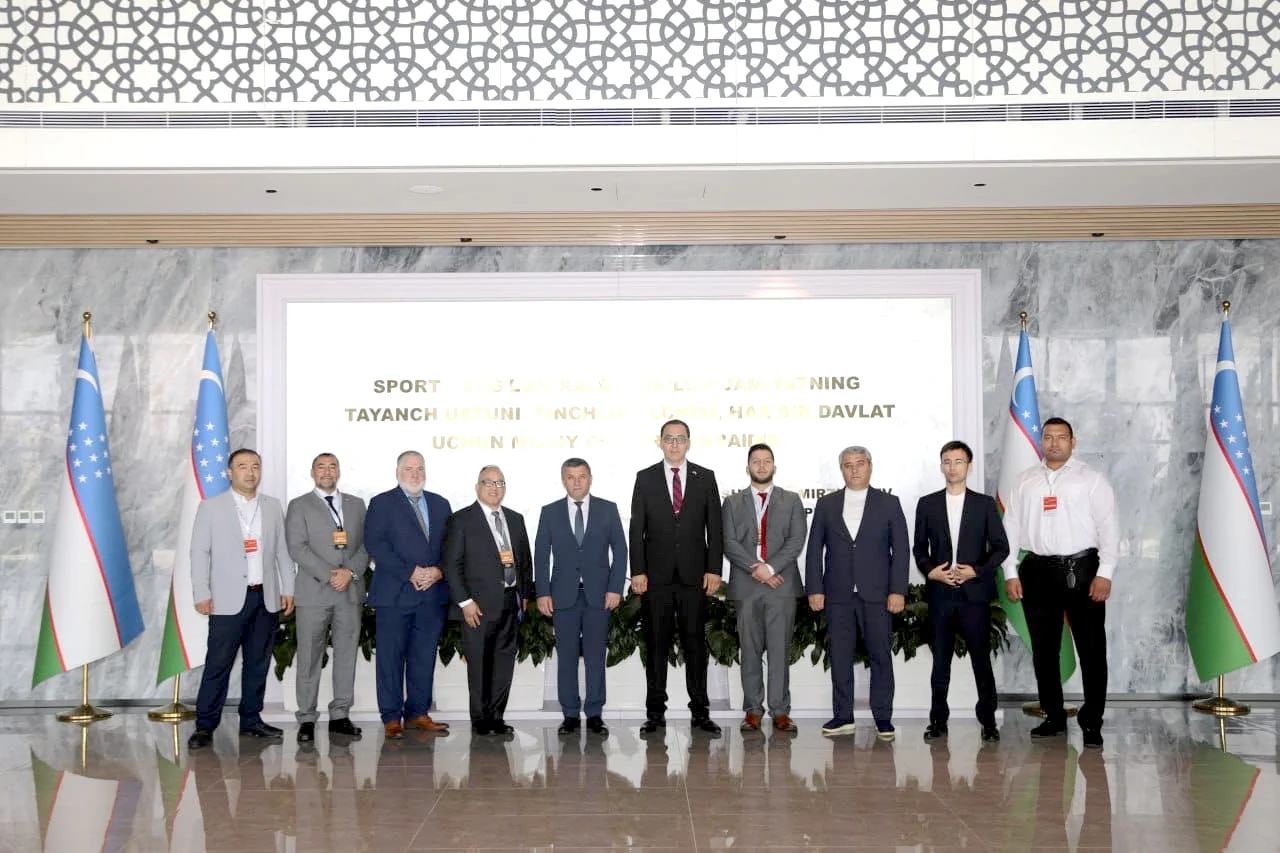
In Bolivia, the national federation has worked directly with state sports authorities to confirm Turon’s official status. In Britain, the newly formed British Turon Association now serves as the sport’s governing body for the region.
Despite this growth, the federation has been deliberate about preserving what makes Turon distinct — a discipline rooted firmly in Uzbek heritage rather than diluted by its international spread.
Marking the anniversary this month, Niyazimbetov reflected on a year that, in his words, was about building “more than an organization.” In a letter released to commemorate the occasion, he wrote that the federation set out “to create a home for a tradition that carries the discipline, history, and spirit of Amir Temur’s era into the present day.” He credited the federation’s rapid growth — from its New York headquarters to new governing bodies in Bolivia and Great Britain — to the members, coaches, and supporters who built it from the ground up, while emphasizing that none of that growth came “at the expense of what matters most.”
Niyazimbetov also used the occasion to thank the federation’s international partners, including the British Turon Association and the broader network of national federations that have joined the ITF’s structure over the past year.
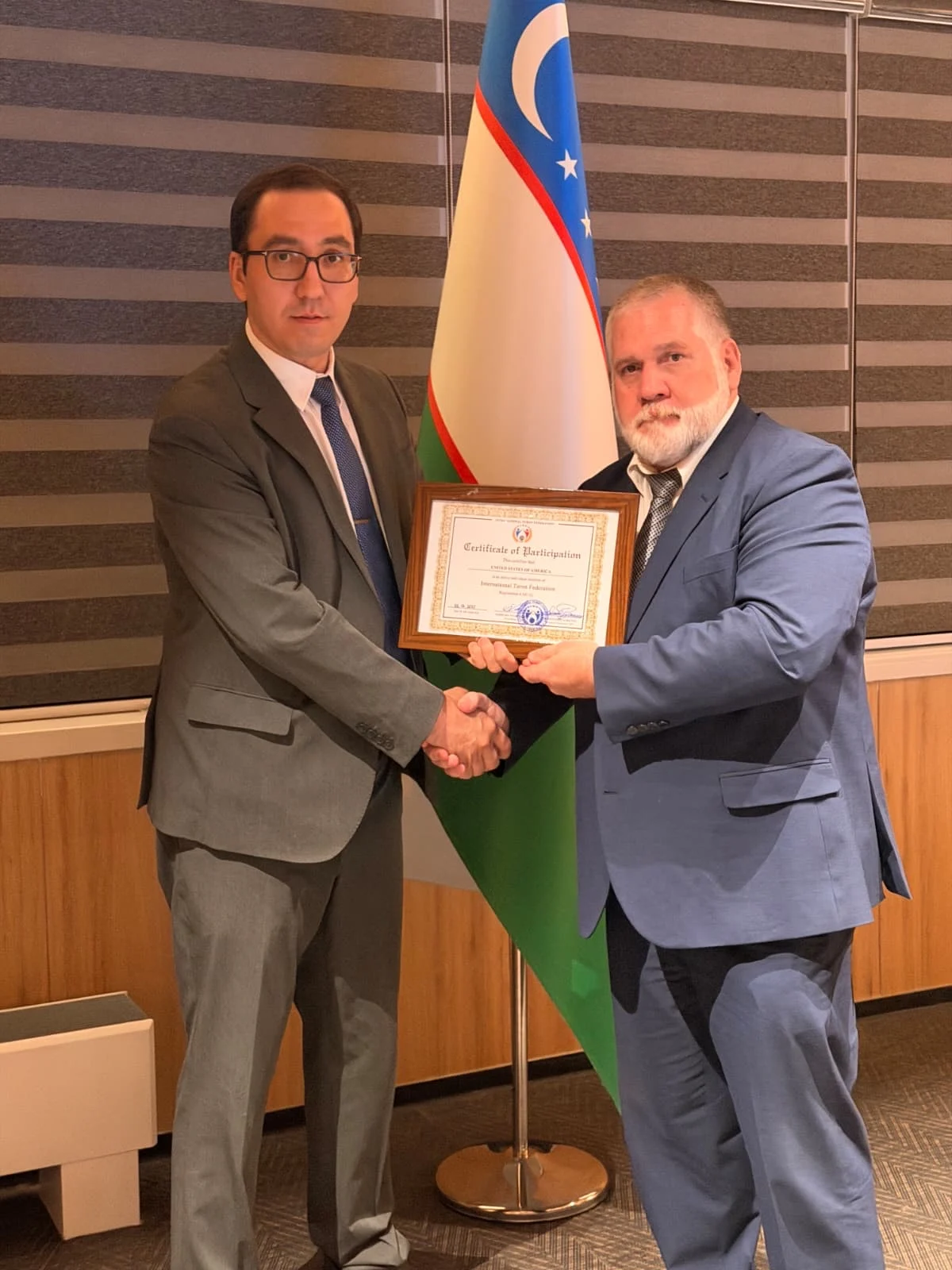
“Every new partnership and every new country we reach represents not just growth in numbers,” he wrote, “but a wider circle of people committed to preserving something worth preserving.”
Looking ahead, Niyazimbetov struck an optimistic tone about where the federation goes from here, pointing to continued growth, deeper international friendships, and further competitive milestones on the horizon.
For a sport that only a few years ago existed largely within Uzbekistan’s borders, the federation’s first year suggests its next chapter may extend the tradition of Amir Temur’s era considerably further across the map.
By Fatima Mukimova and Feruza Rahimova