
Leadership
Editor’s Note: Rabbi Simon Taylor, 42, has been named Director of the Bukharian Jewish Congress of North America. A London native from the Ashkenazi community, Taylor most recently served as National Director of Community Engagement at the Orthodox Union. Early on in his career, he worked with Aish UK and was a chaplain in the British Armed Forces. In his new full-time professional role, he will lead the BJC’s day-to-day operations alongside the organization’s President Chagit Sofiev-Leviev.
When Simon Taylor speaks about joining the Bukharian Jewish Congress, he describes it as a new chapter in his career. But in some ways, his connection to the Bukharian community goes back almost as far as he can remember.
Taylor grew up in Stanmore, a large Jewish community in northwest London. At the time, the community was overwhelmingly secular, although its synagogue was enormous.
“When I was growing up, our shul was the largest synagogue in Europe,” Taylor recalls. “There would be thousands of people there for the Yamim Noraim.”
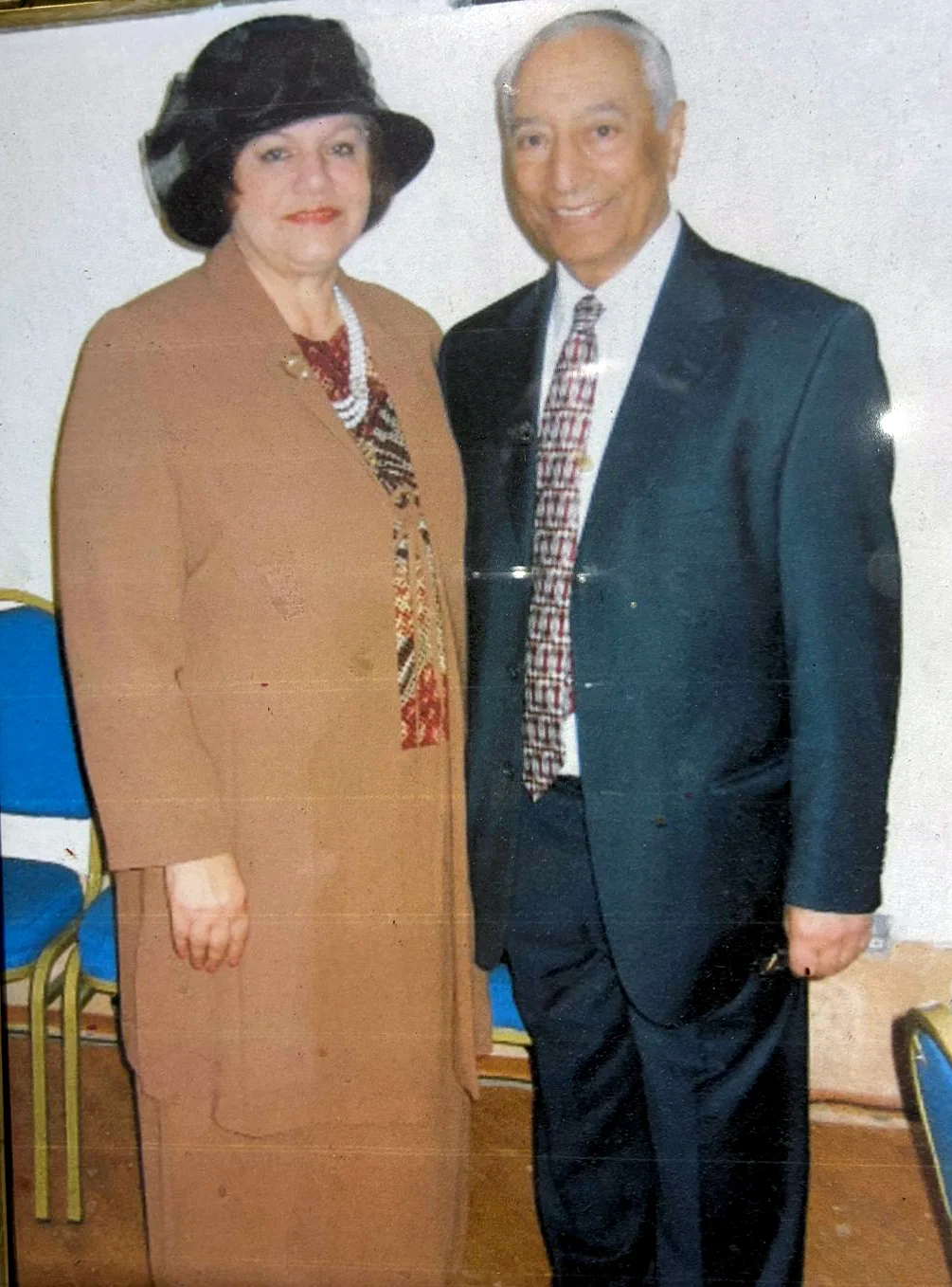
Just a few doors away from the Taylor family lived one of the neighborhood’s relatively few other Orthodox families: the Moradoffs.
“Rebbetzin Shoshana Moradoff was Bukharian, and the Moradoff home was a very traditional Sephardic home,” Taylor recalls. “Their children were like uncles and aunts to us. When my parents went away, they were the family who took care of us. So although I didn’t appreciate it at the time, the truth is that Bukharian Jews have been part of my life for as long as I can remember.”
At the time, Taylor could hardly have imagined that decades later he would be helping to lead an organization serving the Bukharian Jewish community in America.
It was only after moving to the Five Towns with his wife, Leanne, in 2018, he says, that he began to fully appreciate the remarkable size, strength and growth of the Bukharian community in New York.
“The Bukharian community is incredibly hardworking and has made unbelievable progress in just one generation,” Taylor says. “I believe the next decade is going to see explosive growth.”
That growth — and the challenges and opportunities that come with it — will now be a central focus of Taylor’s work with the Bukharian Jewish Congress.
Drawn to Vision
“I’m very excited to welcome Simon to the Bukharian Jewish Congress,” expressed BJC President Chagit Sofiev-Leviev.
“He is an exceptionally talented professional with extensive experience creating impactful programming within leading Jewish organizations. I believe his experience, creativity, and energy will be a tremendous asset as we continue to build meaningful programs and invest in our community.”
Taylor says one of the primary reasons he was attracted to the opportunity was the vision and commitment of Sofiev-Leviev.
“I like to work with people who have a strong vision and a real dedication to making an impact on the Jewish community,” he says. “That’s what I saw in Chagit. She is unbelievably dedicated to the Bukharian community.”
Her ability to balance that communal commitment with the demands of her family and business particularly impressed him.
“She’s a mother of five and runs a company, and I honestly don’t know how she finds the time,” Taylor says. “But her dedication to the community is extraordinary.”
In a sense, there is also a symmetry to this latest chapter of Taylor’s career.
His first professional position after college was working with Rabbi Shlomo Farhi, a prominent Sephardic educator and rabbi in London, now rabbi of the Safra Synagogue in NYC.
“I remember visiting his father’s synagogue in Deal, New Jersey, for the first time and being amazed by the Syrian Jewish community,” Taylor recalls. “There was such a powerful sense of community, tradition and connection.”
More than two decades later, Taylor finds himself once again inspired by the strength of a deeply traditional Sephardic community — this time with the opportunity to help shape its next stage of growth.
The Power of Organization
Taylor comes to the Bukharian Jewish Congress after 12 years at the Orthodox Union, where he held a number of leadership positions.
He began as a NCSY director in Boston before moving into a leadership role in New York. Following COVID, he transitioned into the OU’s national office, where his work increasingly focused on community engagement and helping Jewish communities develop programs, partnerships and communal infrastructure.
When the pandemic hit, Taylor was tapped to lead Project Community, an OU initiative that engaged teens, college students and Yachad members in volunteering, Jewish learning, and recreation across 30 cities, drawing more than 4,000 participants. Its success led the OU to create a new department, and in March 2021 he was named National Director of Community Engagement.
In that role, he oversaw initiatives such as Living Smarter Jewish, a resource focused on financial literacy for Orthodox families, and Generation Aleph, a research-based program to strengthen parent-child relationships, while tracking data to measure impact.
He also led the OU’s emergency response after Russia’s invasion of Ukraine in 2022, coordinating with Vaad Hatzalah, Chabad and overseas partners. The effort delivered more than 200 tons of food and medicine and helped raise $6 million.
His years at one of the largest Jewish organizations in the country taught him many lessons, but one in particular stands out as highly relevant to his new role.
“The more organized a community is, the stronger it can be,” Taylor says. “Organization allows you to leverage communal dollars more effectively, build stronger institutions and maximize the political impact of the community.”
For Taylor, building an effective communal organization does not simply mean creating another layer of bureaucracy. It means helping individual communities accomplish things collectively that they would struggle to accomplish alone.
As the Bukharian population continues to expand beyond its historic center in Queens, he believes that kind of organization will become increasingly important.
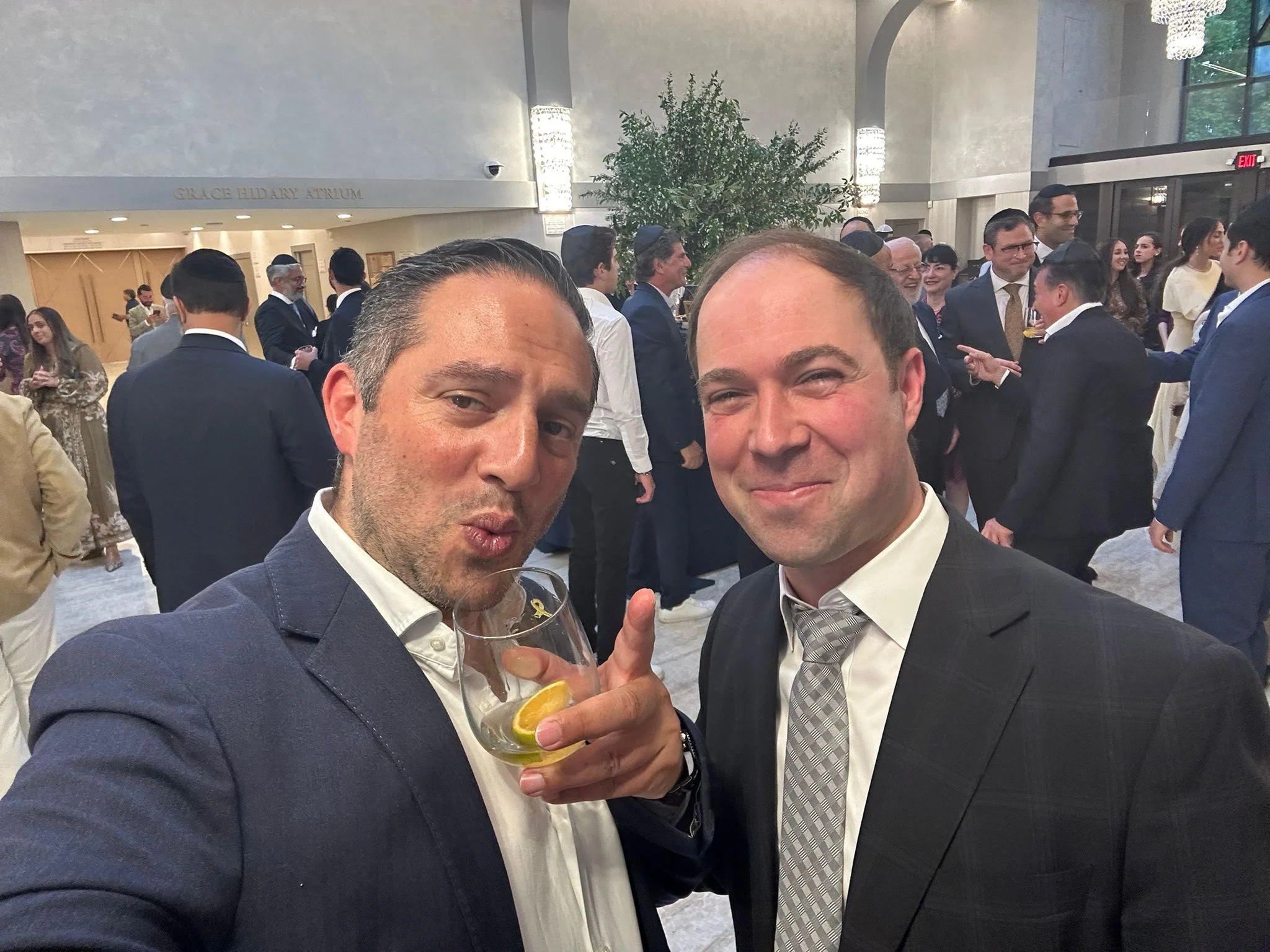
“This is absolutely a key moment for the community,” he says. “There has been incredible progress already. But as the community grows and spreads beyond Queens, we need to make sure everyone remains connected. That is going to become more challenging, and it is something the Congress can play an important role in.”
“I’m a Relationship Guy”
Despite his years working within major Jewish institutions, Taylor does not primarily describe himself as an organizational strategist or administrator.
“At the end of the day, I’m a relationship guy,” he says. “I like getting to know people, and I love working with people from all different backgrounds.”
That approach, he believes, will be particularly important as he begins working with a community that has its own unique history, traditions and culture.
Taylor is well aware that he is entering the Bukharian community as an outsider. He sees that not as a disadvantage, but as an opportunity.
“I actually think an outsider may be just what is needed,” he says. “Someone who is eager to learn about the community and listen to people, but who also brings experience from working with major Jewish organizations and communities in New York, Boston, London and Manchester.”
His goal, he emphasizes, is not to arrive with predetermined answers.
“I want to meet people. I want to understand the different communities, hear what they need and learn what is already working,” he says. “Then we can look at how the Congress can help bring people together and add value.”
Community as a Family Value
Taylor’s commitment to communal life is deeply rooted in his upbringing.
“I come from a family of people who are dedicated to the Jewish community,” he says. “My grandparents and my parents taught us that there is almost nothing more important than community.”
That message clearly took hold.
Taylor’s siblings have also devoted much of their lives to Jewish communal leadership. His older brother serves as President of the British Jewish community, his younger brother is the rabbi of Shaarei Shomayim Synagogue in Toronto, and his sister is the rebbetzin of Suburban Torah in Livingston, New Jersey.
“For us, being involved in the community was just part of how we were raised,” Taylor says.
Still, his own path into communal work wasn’t a given. His parents, both attorneys, encouraged their children to pursue professional careers, and Taylor was even studying architecture at university. But after two years of yeshiva in Israel, he began teaching Judaism informally on campuses across Northern England—while still a student himself. Seeing the impact, he realized he would rather help build Jewish communities than buildings.
Community is a value he now hopes to bring to his work with the Bukharian Jewish Congress: strengthening existing communities, helping emerging communities develop and ensuring that a rapidly growing Bukharian population remains connected to its heritage and to one another.
Looking Ahead
Taylor believes the next decade could be transformative for Bukharian Jewry in the United States.
The success of the community over the previous generation, he says, has created enormous opportunities. Families are establishing themselves in new neighborhoods. New institutions are developing. A new generation is entering business, philanthropy and communal leadership.
But growth also brings a risk of fragmentation.
“The challenge is making sure that as the community becomes bigger and more geographically spread out, we don’t lose that sense of being one community,” Taylor says.
That is where he sees the Bukharian Jewish Congress playing an increasingly important role — connecting communities, strengthening institutions and helping Bukharian Jews wherever they live feel part of something larger.
Asked how he will know whether this new chapter has ultimately been successful, Taylor’s answer is simple.
“Success will be when all of the communities we serve genuinely feel that the Bukharian Jewish Congress is bringing them value,” he says. “And when they are proud to say that they are part of it.”
For someone whose own understanding of community was formed as a young boy in London, just a few doors away from the Moradoff family, it is perhaps a fitting mission.
His formal role in the Bukharian community may only now be beginning.
His Bukharian story, however, began a long time ago.
The Bukharian Jewish Congress is launching a new website ahead of Sukkot and growing its social media presence. To follow along, find the Congress at @bukharian_congress.
Photos from Simon Taylor