REFLECTIONS
There are moments that at first seem completely ordinary, but later you understand that they become part of your personal story.
For me, such a moment was Sukkot — a holiday that I did not just watch for the first time, but actually built with my own hands.
I live in Ashdod — a city where you can clearly see a big community of French Jews. I speak French, and it was the language that unexpectedly helped me meet the person with whom I was soon going to build my first sukkah.
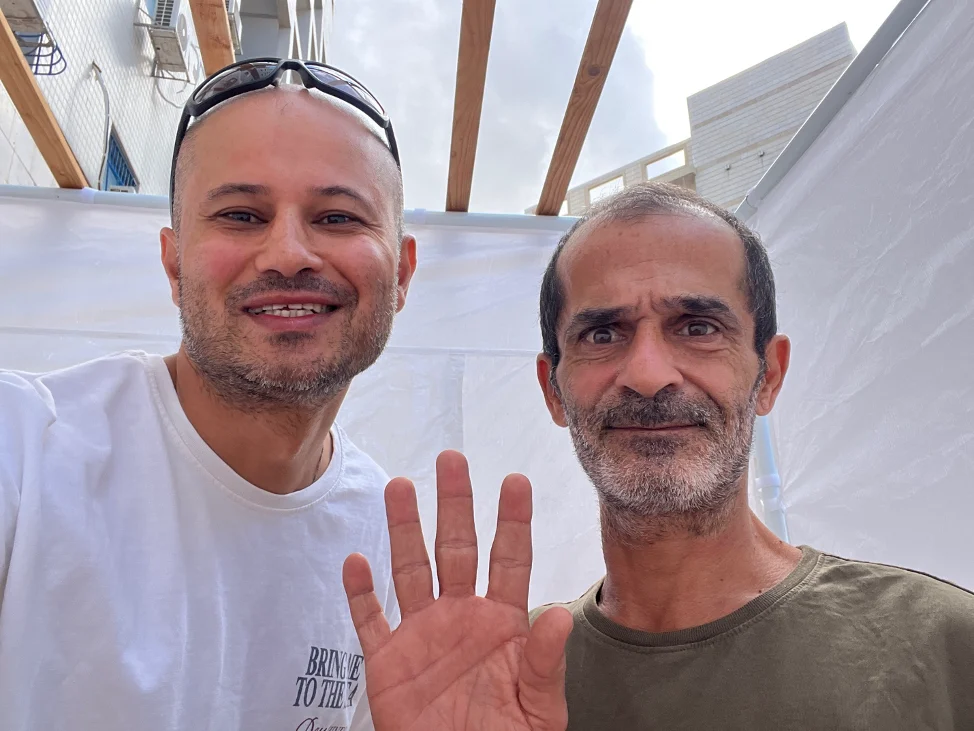
His name is Mauricio Baruch. He has lived in Israel for about thirty years. He has a wife and three children: two daughters and a son. His wife comes from a family of Moroccan Jews.
We met through work. One day after work, we met and decided to build a sukkah together at his house.
For me this was a completely new experience. I was building a sukkah for the first time in my life.
In Tajikistan, where I grew up, I never saw people around me building sukkahs. It was a different reality and a different time. That is why it was especially interesting for me to learn this tradition already in Israel—not from a book and not from someone’s words, but by taking part in it myself.
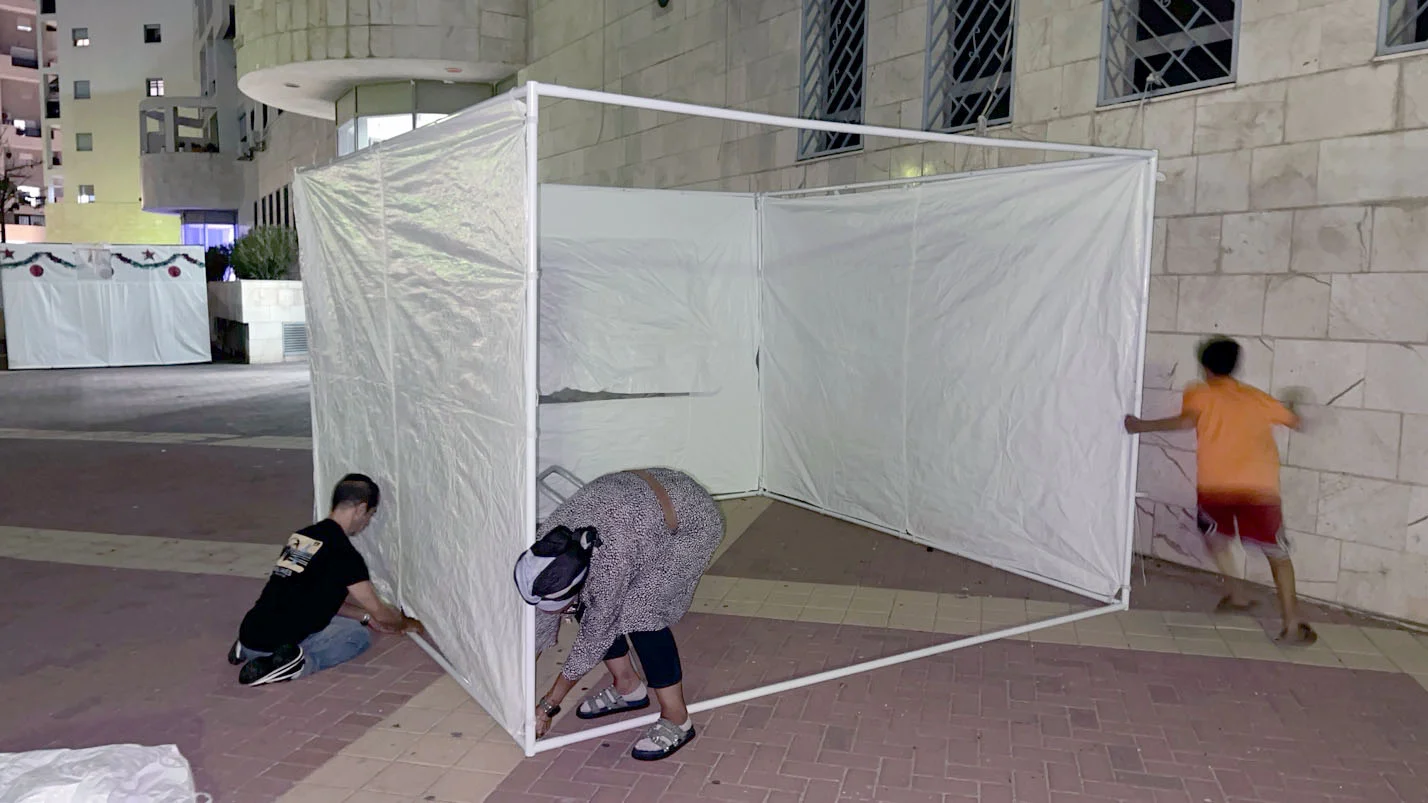
That evening Mauricio’s wife also joined the work. We started putting up the walls and the fences, slowly creating a space that was already beginning to become a real sukkah.
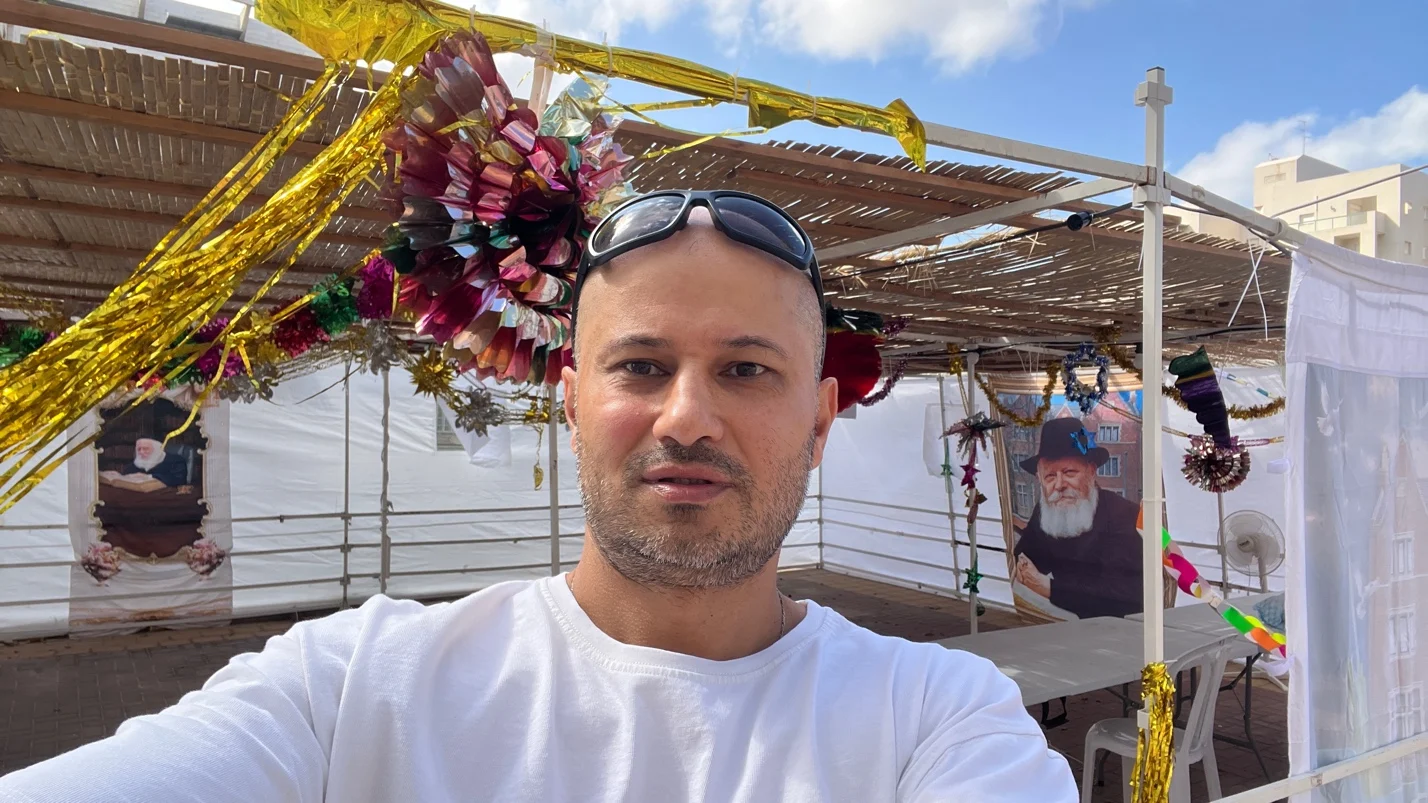
The work continued the next day. We made the roof (schach), one of the most important parts of the sukkah. When everything slowly started to look finished, I caught myself thinking that for me this was much more than just building.
I was getting to know the laws of the Torah in practice for the first time.
Before that I could read, listen, and ask questions. But here I was holding the materials in my hands, putting up the walls and the roof, and understanding that the ancient Jewish tradition continues to live today—in an ordinary Israeli city, in the yard of an ordinary house, among families, children and neighbors.
They also trusted me with the design of the sukkah, and this became an especially pleasant part of the work for me. I tried to make it not only correct from a practical point of view, but also beautiful.
Probably my profession played a role here. I work as a photojournalist and special correspondent for the newspaper The Bukharian Times, and I also study in the master’s program at Ariel University in Communication, Public Advocacy and Combating Antisemitism.
That is why it was important for me that the space looked expressive. I looked at the sukkah not only from the perspective of the person building it, but also as someone who is used to noticing details, composition, atmosphere and the people around him.
THE EVENING OF SUKKOT
When we finished the work, we agreed to celebrate Sukkot together in the evening.
Mauricio’s wife’s parents came to us. They were very pleasant, open people. We talked, prayed, sat at the holiday table and spoke about life.
At some point I decided to ask them questions—like a journalist, although this time it wasn’t an interview, just a conversation around the holiday table.
I asked Mauricio’s wife’s mother if people build sukkahs in Morocco.
She answered that yes, they do.
And I asked her husband what Sukkot means to him.
He told about the Jews leaving Egypt and about the historical memory that is connected with this holiday.
And then I felt once again how unusual my situation was.
I am a Jew from Tajikistan who came to Israel and for the first time is building a sukkah with Jews in Ashdod whose families are connected with Morocco and France, Hungary, Poland. We spoke in French, English and Hebrew with a touch of French culture, and at one table several languages, several countries and several generations of Jewish history came together.
THE SUKKAH AS A MEETING PLACE
It was especially interesting to watch what was happening around.
In our neighborhood there were many sukkahs. People knew each other, came to visit, congratulated each other on the holiday. Very many children came to our sukkah.
The children came in freely, introduced themselves, talked with us, and the adults congratulated each other on Sukkot.
And suddenly I understood that a sukkah is not only walls, a roof and decorations.
It is a meeting place.
A place you can enter.
A place where people talk, eat, remember the past and simply spend time together.
Perhaps this is what impressed me the most.
CONVERSATIONS AT THE HOLIDAY TABLE
At the table I also learned many new things about the family.
It turned out that Mauricio’s wife’s father works in cybersecurity and has his own company. He told interesting stories from his professional life.
We talked about the children. One of his granddaughters was soon going to join the army.
There was an amazing contrast: we were sitting in a traditional sukkah built according to the laws of the ancient Jewish tradition, and at the same time we were talking about modern technologies, cybersecurity, Israel and the future of the children.
It is exactly in such moments that you understand Israel especially well.
Here the past and the future are literally next to each other.
THE TASTE OF MY FIRST SUKKOT
Of course, it is impossible to talk about the holiday evening and not remember the food.
Mauricio’s wife prepared many different salads. I tried many of them for the first time, and everything was very tasty.
For the main course there was a lot of meat and rice. The rice reminded me of plov — and this immediately created a special feeling of home taste for me.
And for dessert there was ice cream and cream with nuts.
And of course there were challahs and wine.
It was Shabbat, so the atmosphere of the evening was especially calm and festive: prayer, conversations, food, family, guests and the sukkah that we had just built.
“WE HAVEN’T BUILT IT FOR FOUR YEARS ALREADY”
But perhaps the most unexpected thing for me was the conversation with Mauricio. He told me that for different reasons they had not built a sukkah for about four years. And then he thanked me for helping him build it again. For me it was very nice to hear this.
Because at some point I understood: I came to Israel and thought that it was me who would learn the traditions and culture here.
But it turned out that I can also bring something.
We both received something from this story. Mauricio built a sukkah again after several years of break. And I built a sukkah for the first time in my life.
FROM TAJIKISTAN TO ASHDOD
I have worked as a journalist for many years and I am used to watching people, photographing events, writing down stories and asking questions.
But sometimes the most interesting things happen when you yourself become part of the event.
In Tajikistan I did not build a sukkah.
Perhaps once it was even hard for me to imagine that one day I would stand in Ashdod, build it with my own hands, speak at the same time in French, English and Hebrew, and in the evening sit inside it at the holiday table with a Jewish family.
But that is exactly what happened. For me this sukkah became a small symbol of a big path—from Tajikistan to Israel; from watching Jewish tradition to taking part in it; from a journalist who is used to telling other people’s stories to a person who has his own story about Sukkot.
And now I can say with a smile: I also built a sukkah.
Baruch Hashem, I really got a wonderful chance. And perhaps the most important thing in this story is not even how beautiful the sukkah turned out.
The most important thing is the people who met inside it. Jews from different countries, different generations, different languages and different stories. And for a few hours all of this became one common space — a small sukkah in Ashdod.
By Moshe Sabirov,
Ashdod, Israel