
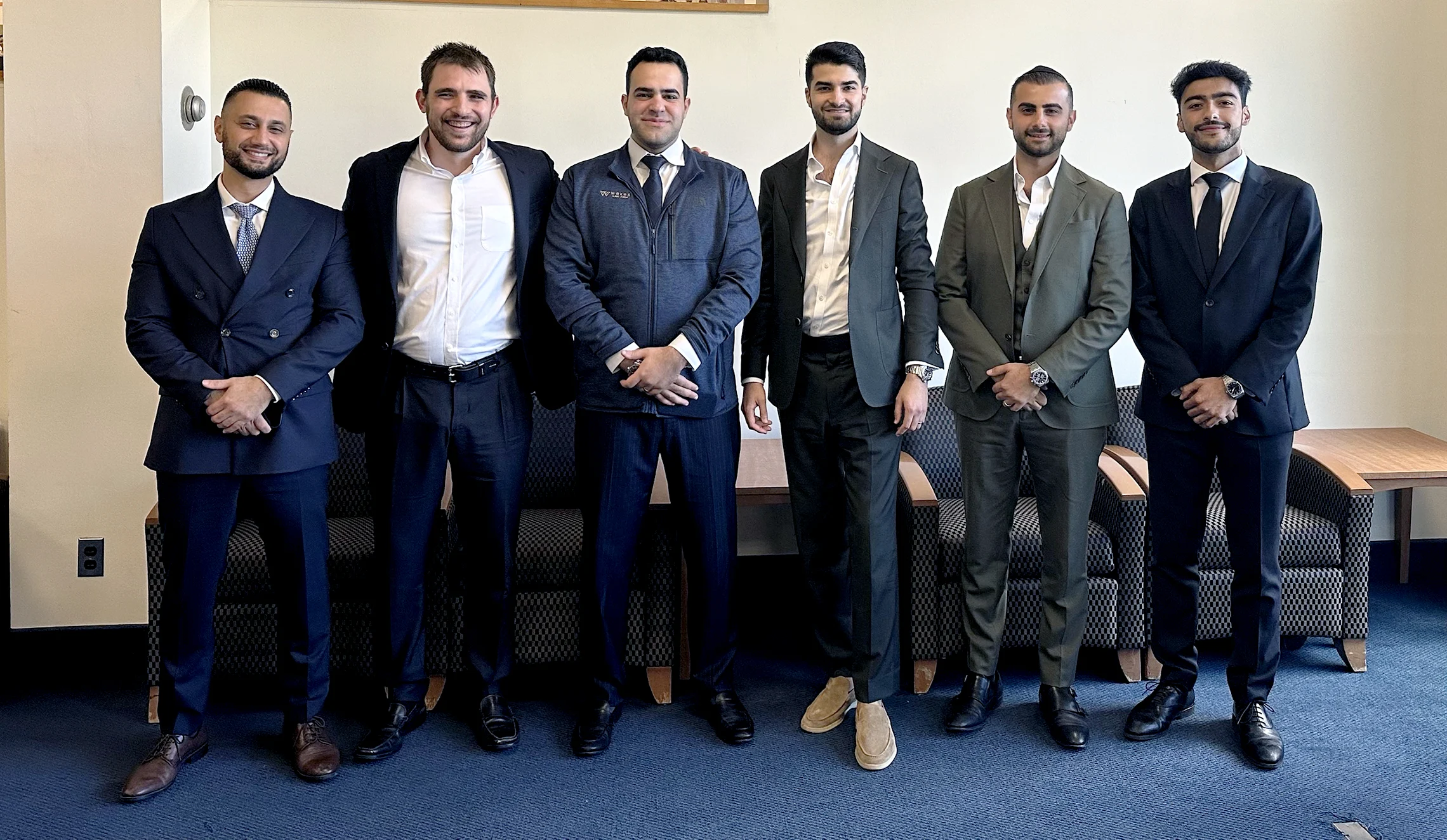
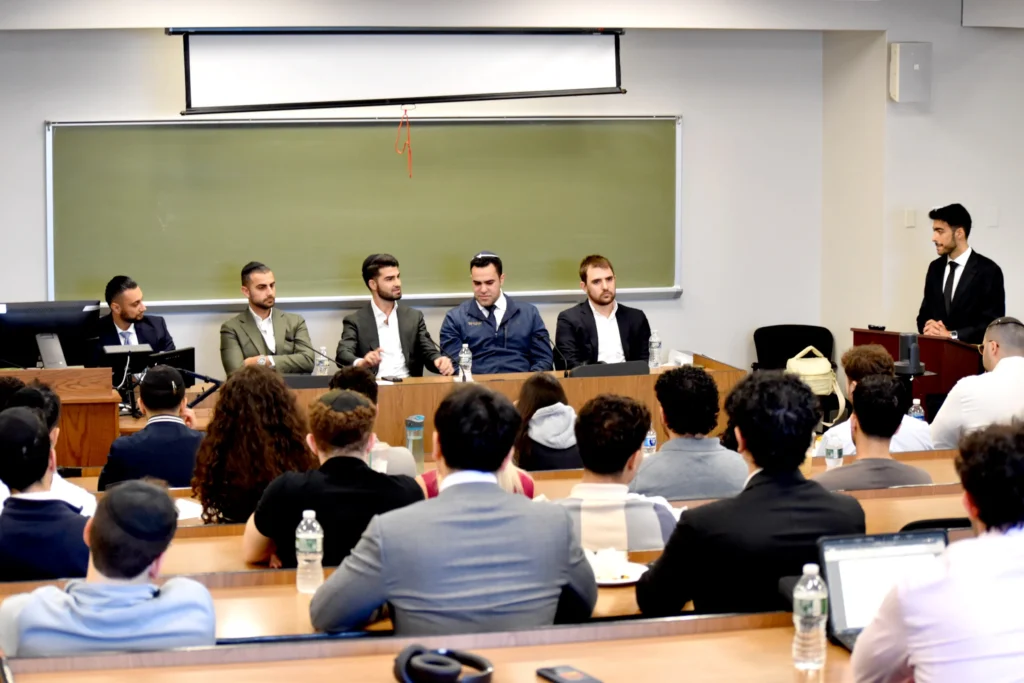
In personal injury law, a lawyer’s most valuable asset isn’t a billboard or a big verdict. It’s their name. That was the message four Bukharian attorneys, each of whom built a law firm from the ground up, delivered to a room of law students at Hofstra University on Monday, October 12.
The panel, “Building the Case: The Business of Personal Injury,” was hosted by Chabad at Hofstra Law at the Maurice A. Deane School of Law. About 50 students from Hofstra, St. John’s, Touro, Cardozo and Brooklyn Law School attended in person and on Zoom.
Jonathan Ustaev, a third-year Hofstra Law student and president of Chabad at Hofstra, organized and moderated the event. The series began last year under the group’s previous president, Joshua Raziyev. “Many schools don’t have resources for their Jewish community,” Ustaev said. “I’m lucky enough to carry the torch and give young Jewish students these opportunities.”
Moshe Borukh opened Levy & Borukh, PLLC, a personal injury and litigation firm, in 2022. Nison Mirakov opened his practice in 2023 and now leads two firms, Metro Injury and Mirakov Law, representing New Yorkers hurt in accidents. Boris Masheyev and David Aminov founded WRKRS Law Firm in 2025 and represent injured workers and employees in workplace disputes. Jack Viener of The Sanders Law Firm brought a big law perspective: his family’s firm dates to 1967, when Stanley Sanders began handling personal injury cases.
The founders said the hardest part was practicing law and running a business at once. “When your back is against the wall, you’ll always find a way to figure it out,” Mirakov said. “There’s beauty in the struggle.” Borukh warned against expecting success too soon. “Don’t mind other people’s plates,” he said.
On Early Mistakes
On early mistakes, Aminov said young lawyers underestimate the time they have. “Time is the most valuable thing everyone here has right now,” he said. Masheyev said success means nothing without a good reputation, and in a field where lawyers face the same attorneys and judges consistently, that reputation is built or lost one relationship at a time. Viener praised networking events as a source of referrals from unexpected places, but cautioned that careless behavior there can follow a young lawyer for years. Mirakov added that young lawyers often let their most demanding clients control their schedules.
On marketing, most agreed a firm must keep testing and drop what doesn’t work. Aminov told students to track where their cases come from and invest in what the numbers support. Borukh, whose firm has more than 200,000 social media followers, said genuine content beats outspending established competitors. Masheyev said relationships built WRKRS, which now works with about 110 referring firms nationwide.
The New Hire That Never Sleeps
AI is part of daily work at these firms. Mirakov said it lets younger attorneys compete with lawyers who have decades more experience. At WRKRS, AI answers after-hours calls and helps the attorneys prepare for complex medical depositions. Borukh’s office uses it to review long medical records. Viener warned students never to trust AI-generated legal work without checking it.
Reputation, Reputation, Reputation!
The conversation closed on character. Borukh and Masheyev both urged students to be fierce, relentless advocates for their clients, with the discipline to know how to use that strength. As Masheyev put it, borrowing an old saying, “It is better to be a warrior in a garden than a gardener in a war.”
Their final advice, on which all five agreed: reputation is the most important currency you have.
Chabad at Hofstra served a kosher lunch and plans more panels this year, starting with real estate on October 27, followed by criminal law, women in law, and trusts and estates.
— The Bukharian Times