
STAR-STUDDED EVENT IN TASHKENT CELEBRATES FILMMAKERS FROM CENTRAL ASIA AND THE CAUCASUS
Uzbekistan took center stage on October 23–24 as the Golden Globes brought its Silk Road Tribute Gala to Tashkent, celebrating achievements in film and television across Central Asia and the Caucasus.
The special regional event marked a significant moment for Uzbekistan’s film industry, bringing together Hollywood stars, international filmmakers and prominent cultural figures for two days of recognition and cultural exchange.
Among the celebrities walking the red carpet were two-time Academy Award winner Adrien Brody, recognized for his performances in The Pianist and The Brutalist, along with Kiera Chaplin, Olga Kurylenko, Svetlana Bondarchuk, Laysan Utyasheva and Alexey Vorobyov.
HONORING A CINEMATIC LEGACY
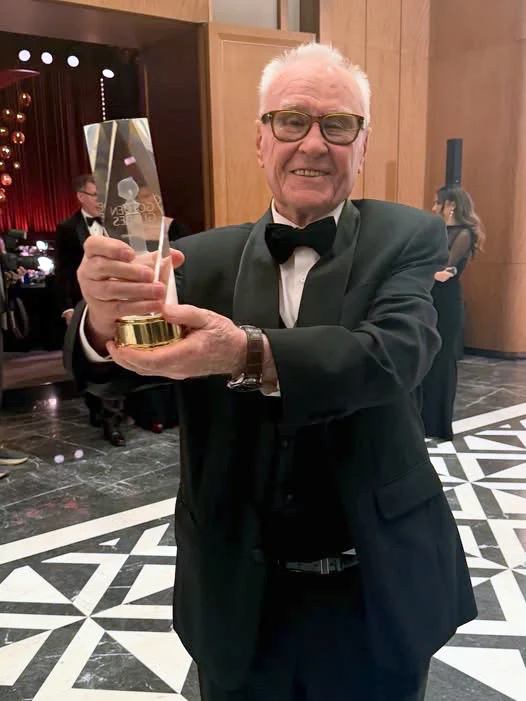
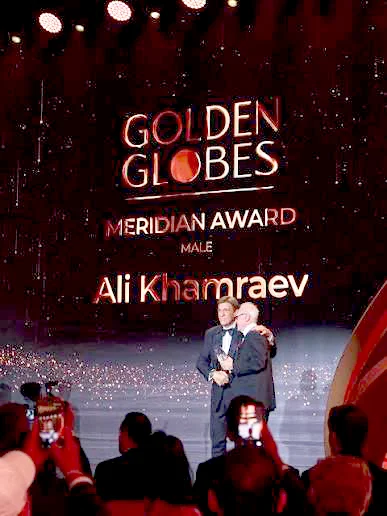
Among the evening’s most distinguished honorees was legendary Uzbek filmmaker Ali Khamraev, who received the Meridian Award in recognition of his contributions to cinema. Actress Gulchehra Jamilova, a People’s Artist of Uzbekistan, was also honored with the award.
Khamraev, whose career spans seven decades, delivered an emotional acceptance speech reflecting on the power of cinema to transcend borders and generations.
Invoking the ancient Silk Road, he thanked Golden Globes President Helen Hoehne and her team for bringing the celebration to Tashkent, describing the occasion as a revitalizing force for filmmakers young and old.
He recalled a formative childhood experience: watching Charlie Chaplin’s City Lights at a Tashkent cinema when he was just 10 years old. Overwhelmed by the film’s ending, he realized that he wanted to devote his life to filmmaking.
«Seventy years I have stood behind a movie camera on film sets—and now I stand before you with a Golden Globe in my hands,» he said.
Khamraev thanked his family, mentors and cinematic influences, including Akira Kurosawa, Orson Welles, Alfred Hitchcock and Federico Fellini. He also urged younger Uzbek filmmakers not to become overly dependent on artificial intelligence but to cultivate their own creativity and talent.
Although his career has taken him to Tajikistan, Kazakhstan, Russia and Italy, Khamraev reaffirmed his enduring connection to his homeland.
«I was, I am, and I will always be an Uzbek director,» he declared.
CELEBRATING REGIONAL TALENT
The gala also recognized emerging and established talent from across the region. Azerbaijani filmmaker Tahmina Rafaella and Georgian director Levan Koguashvili received Trailblazer Awards for their creative contributions to cinema and television.
Kazakh actress Shugyla Yeshen and Armenian actor and theater director Samvel Tadevosyan received Beacon Awards, recognizing a new generation of regional talent.
A CULTURAL BRIDGE TO NEW YORK
For New York’s Bukharian Jewish community, Khamraev’s recognition carries particular significance. His visits to the United States have included film screenings at Manhattan’s Asia Society and appearances at the Bukharian Jewish Community Center in Queens, where audiences have gathered to celebrate his work and reconnect with Uzbekistan’s cultural heritage.
In a congratulatory message, The Bukharian Times Editor-in-Chief Rafael Nektalov described Khamraev as a leading figure in contemporary Uzbek cinema whose influence extends far beyond his homeland.
«Every visit you make to New York is the greatest gift to film lovers and your compatriots in America,» Nektalov wrote.
He recalled how Khamraev’s screenings in Manhattan attracted critics and appreciative audiences, while his appearances in Queens became eagerly anticipated gatherings for Uzbekistani expatriates.
According to Nektalov, these evenings transcend ordinary cultural events, offering opportunities to revisit familiar streets, flavors and traditions through Khamraev’s stories. He praised the filmmaker’s distinctive humor and ability to communicate in Russian, Uzbek and Bukharian Jewish, creating an atmosphere in which audiences feel part of an extended family.
Nektalov described Khamraev as a «global Uzbek,» whose cultural identity transcends geography and politics.
«Such evenings do more than bring the joy of reunion,» he wrote. «They preserve that invisible but enduring bond between generations and cultures that Uzbekistanis carry in their hearts, wherever in the world they may be.»
He concluded with an expression of gratitude and respect: «Katta rahmat, Ustoz!» — «Thank you very much, Master!»
The Silk Road Tribute Gala underscored the growing international visibility of Central Asian cinema, bringing Tashkent closer to Hollywood while celebrating the region’s distinctive artistic traditions.
This was translated from Russian and has been edited for length.
By Dinara Shamukhamedova