
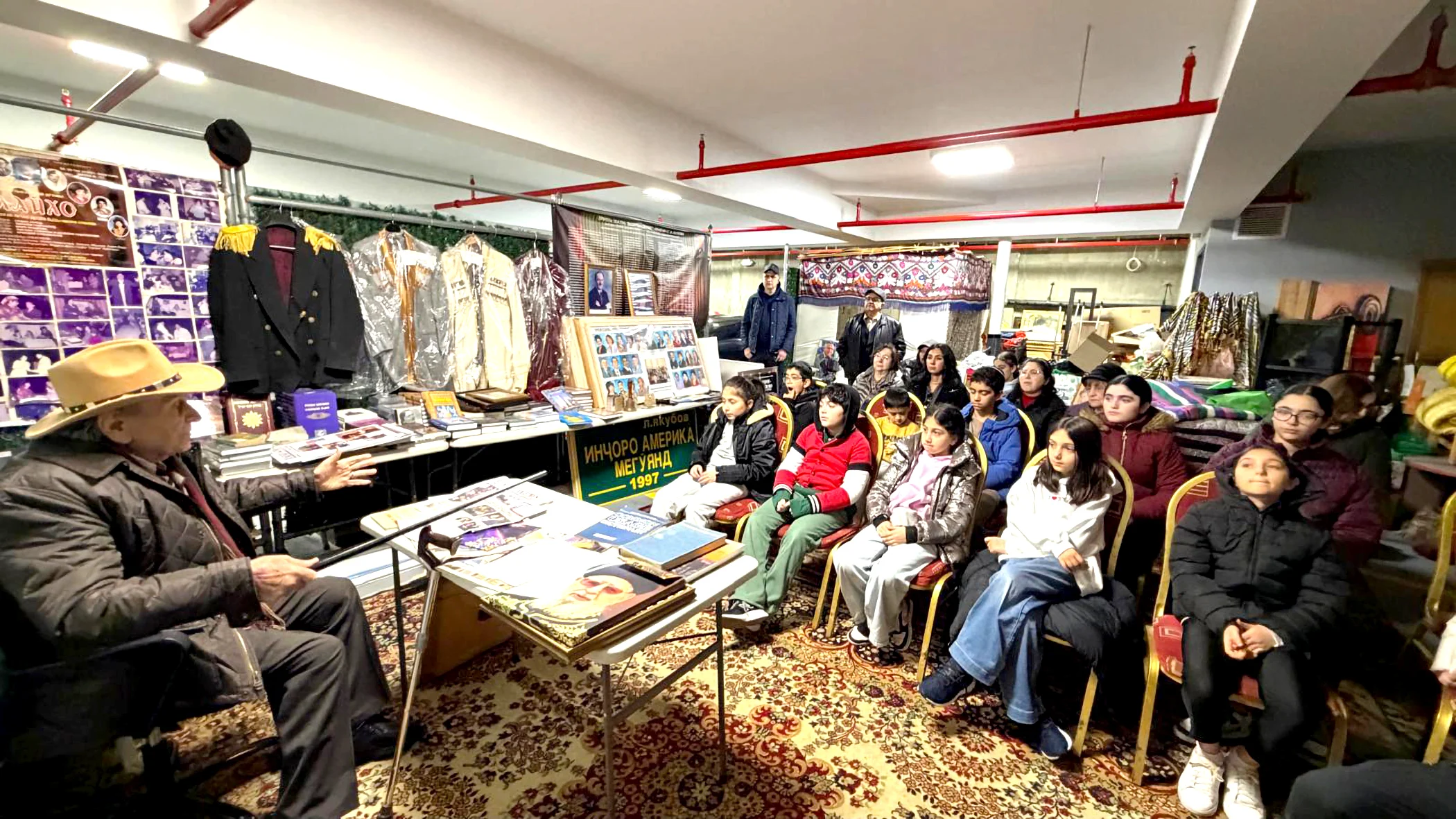
On Sunday, November 15, as autumn leaves blanketed the streets of New York in gold, the Bukharian Jewish Heritage Museum, located at the intersection of 99th Street and 63rd Avenue in the heart of Queens, was given over entirely to children — students of the Art Studio led by artist and educator Yakov Kandinov.
“There are things that cannot be conveyed to children through words alone. They must see them, feel them and connect with them through their souls,” Kandinov said as he introduced the exhibition, hoping the children would gain a deeper appreciation of the unique history and heritage of the people to which they belong. “We want to introduce them to the traditions, everyday life and spiritual values of the generations that have left us such a rich historical legacy.”
Among the parents and children who visited the Bukharian Jewish Heritage Museum that day were members of the Kalontarov family — Moshe and his daughter Adele — as well as the Abramov and Nektalov families; Adina, Michelle and Maya Davydov; Aida, David and Michelle Badalov; and members of the Yakubov and Akbashev families.
As is customary, museum founder and expert on historical artifacts and cultural heritage Aron Aronov began with an engaging and memorable tour. Seated before a world map, pointer in hand, he introduced the children to ancient Israel, the history of the Twelve Tribes of Israel, the dispersion of Jews throughout the world and the establishment of Jewish communities across the diaspora — in Iran, Afghanistan, Uzbekistan, Turkmenistan, Tajikistan, Kazakhstan and Russia, the lands where their distant ancestors once lived.
Aronov then led the children into the museum’s exhibition hall, where they discovered a world of antique household objects and learned how they were used in everyday life. Among them was the traditional tandoor oven, in which matzah and various breads and pastries were baked, including tunuk, noni toki, kulcha, goshchija, sambusa and non. He also showed them various household jugs, different types of menorahs and winemaking vats.
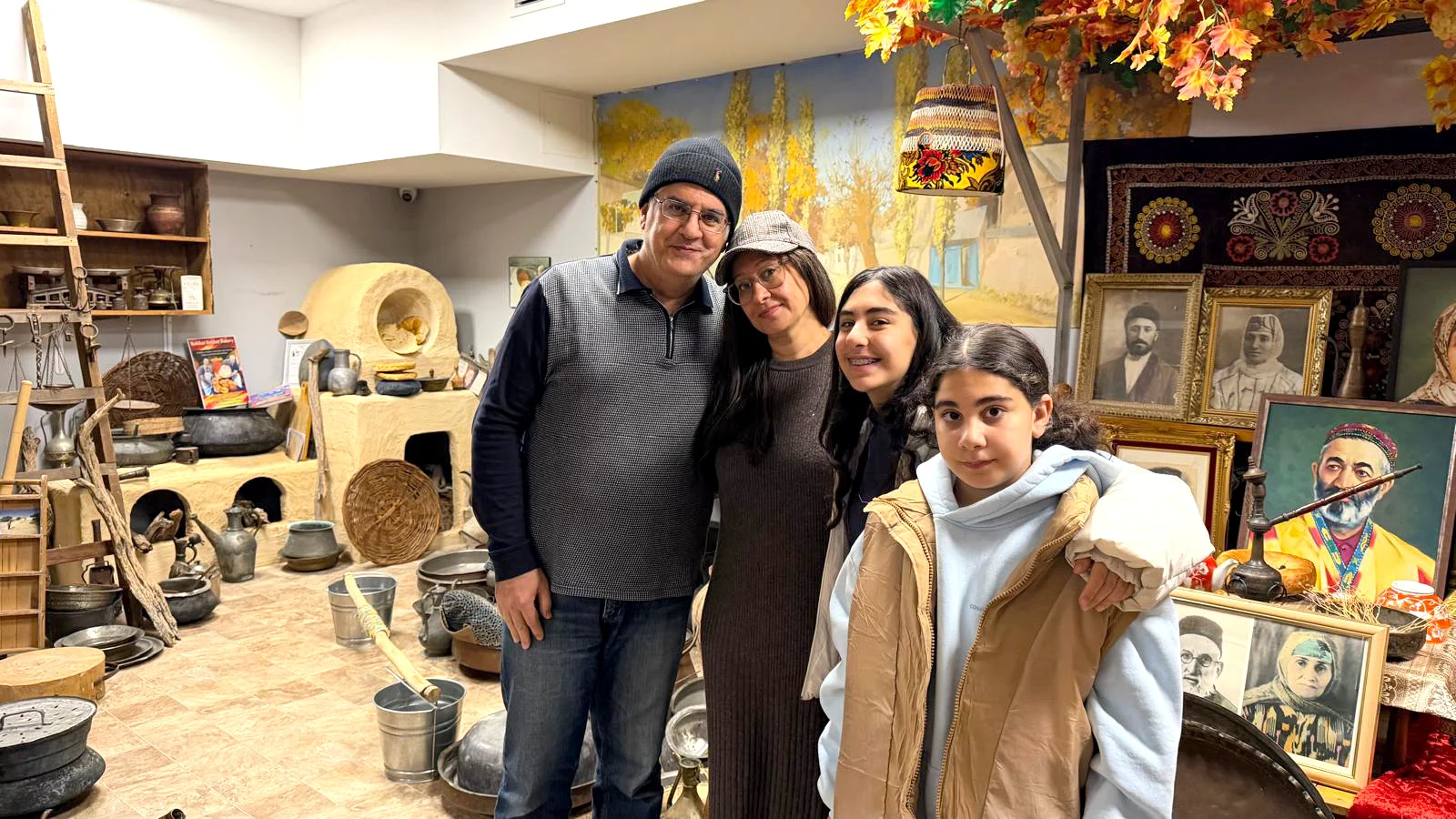
Behind every object lies the history of a people, a family tradition and the warmth of home. The children were particularly fascinated by the garoba, a traditional infant cradle, as well as the summak and kurpachi, traditional quilted mattresses.
The traditional clothing also attracted considerable attention from both children and parents: magnificent garments, dresses, embroidered skullcaps, traditional headdresses and kippot.
These objects reflect the aesthetics, craftsmanship, artistic sensibilities and distinctive cultural identity of the Bukharian Jewish people. Aronov invited the children to try on the headwear while explaining its historical significance.
He also demonstrated how an early 20th-century gramophone worked, playing a record featuring a song performed by singers from the 1940s and 1950s. The children could scarcely believe that this was how people listened to recorded music a century ago.
In the section devoted to the Soviet era, the children learned about the period of Young Pioneer neckerchiefs (red neck scarves) and military side caps. Everyone had an opportunity to pose for photographs with these historical artifacts and examine various forms of lyanga, a traditional children’s kicking game.
It was particularly heartwarming to witness the meeting of artist Yakov Kandinov and his three third cousins, Adam, Ethan and David Nektalov — descendants of Yuhanan Morudukhaev (1870–1966), a merchant of the First Guild of the Russian Empire. Aronov, who had known Morudukhaev personally, shared his memories of him with the children.
“I told my young relatives and Art Studio students about the life of our remarkable ancestor and how he was arrested simply for uttering the words ‘Ba simchoi Yerushalayim!’ at the Passover table,” Kandinov said.
“The entire Bukharian Jewish community paid its respects as he was laid to rest following Yom Kippur,” recalled Kandinov, who, together with Aronov, had attended the funeral procession.
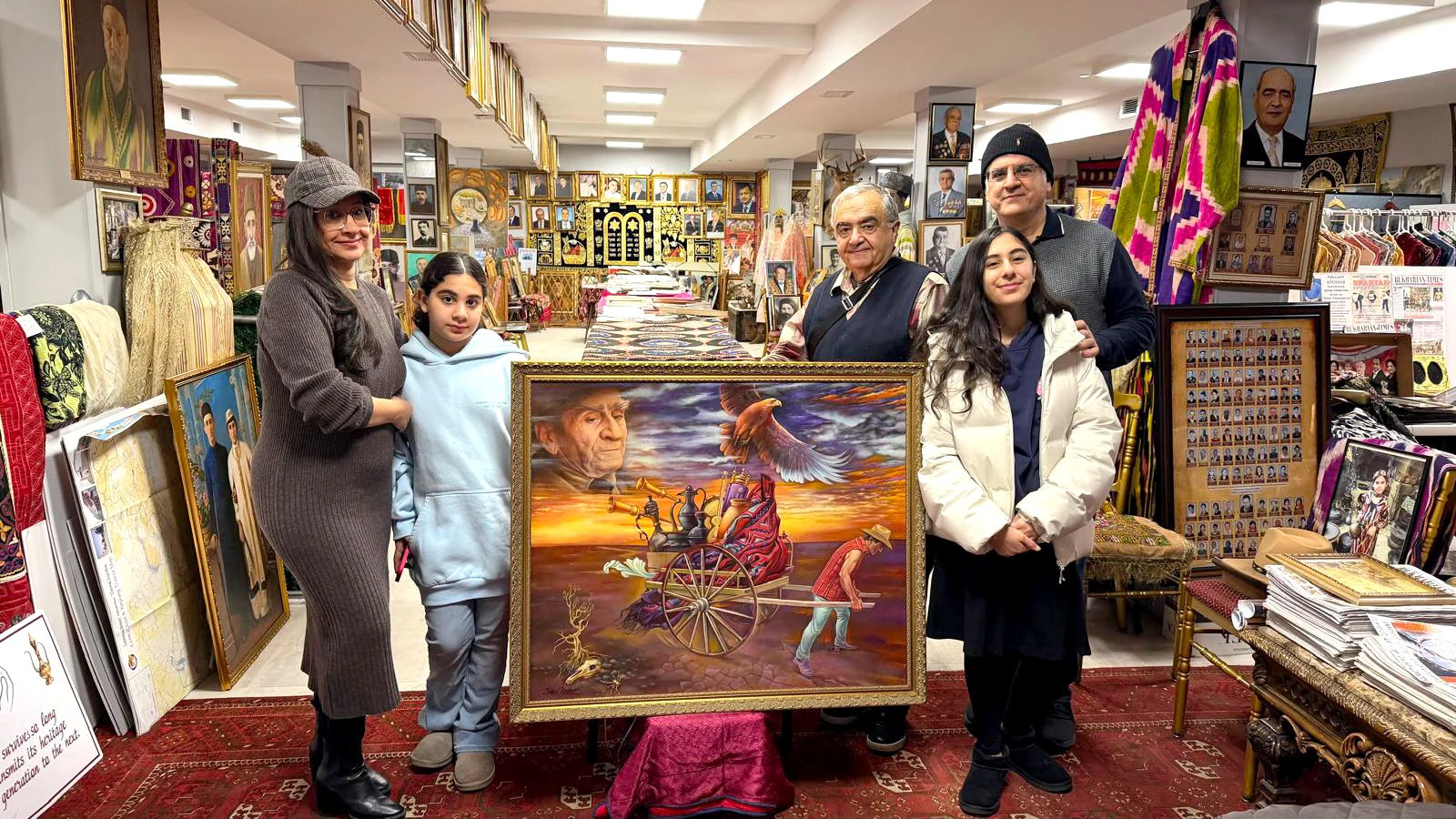
The parents were particularly intrigued by a traditional horse-drawn cart, or arba, with forged metalwork and wheels measuring half a meter in diameter. Only Aronov knows the story behind how this magnificent cart came to be!
Equally important is the historical exhibition covering the period from 1920 to 1950. It was a complex and transformative era marked by revolutionary changes, shifts in the social order, World War II, the hardships and hopes of ordinary people, the development of the Central Asian republics and the experiences of Jewish families during this period.
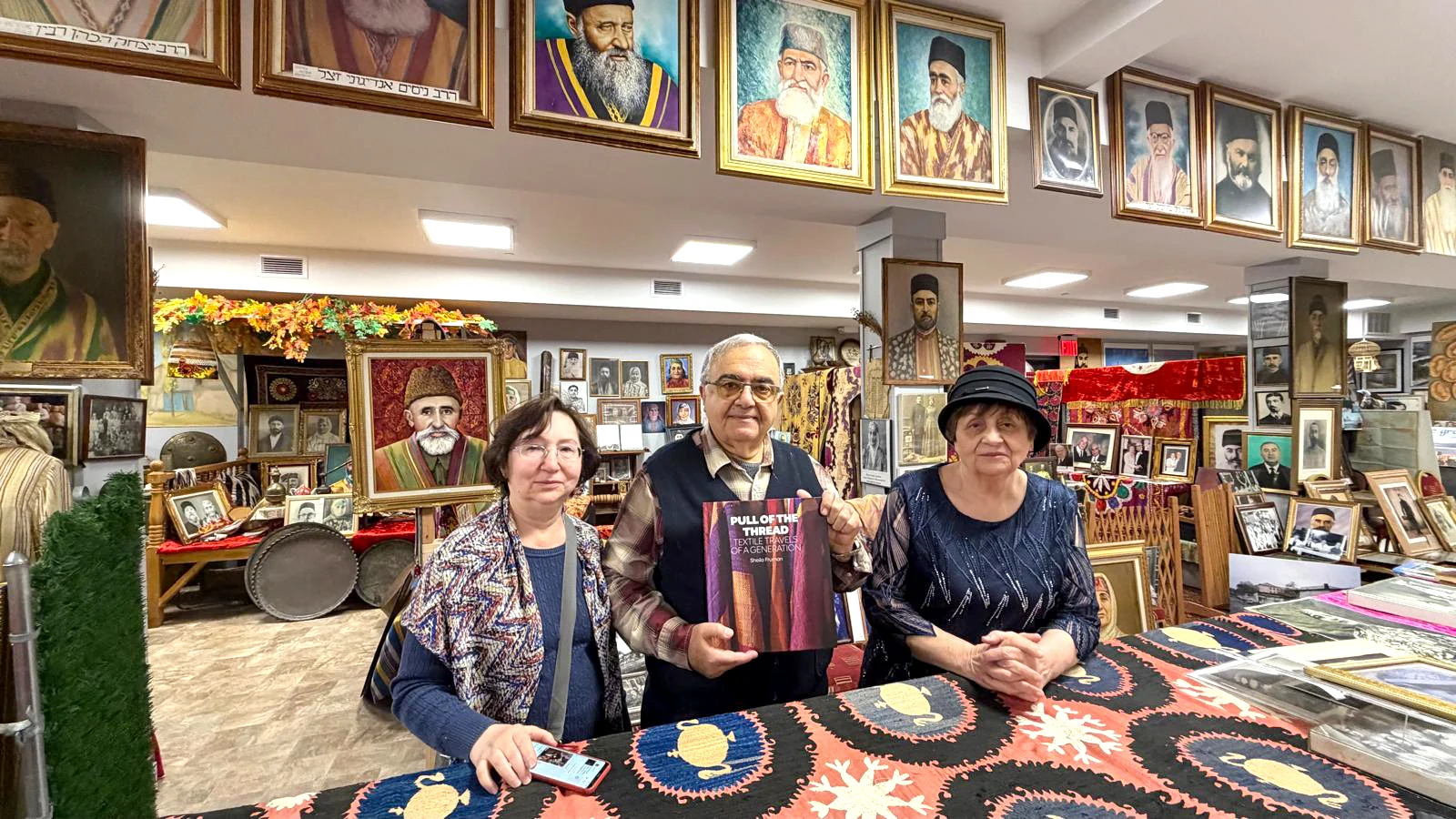
It is especially important for children to understand that history is not merely a collection of dates, names and events, but the stories of real people. To this end, Aronov has assembled a collection of portraits of remarkable individuals who helped shape history.
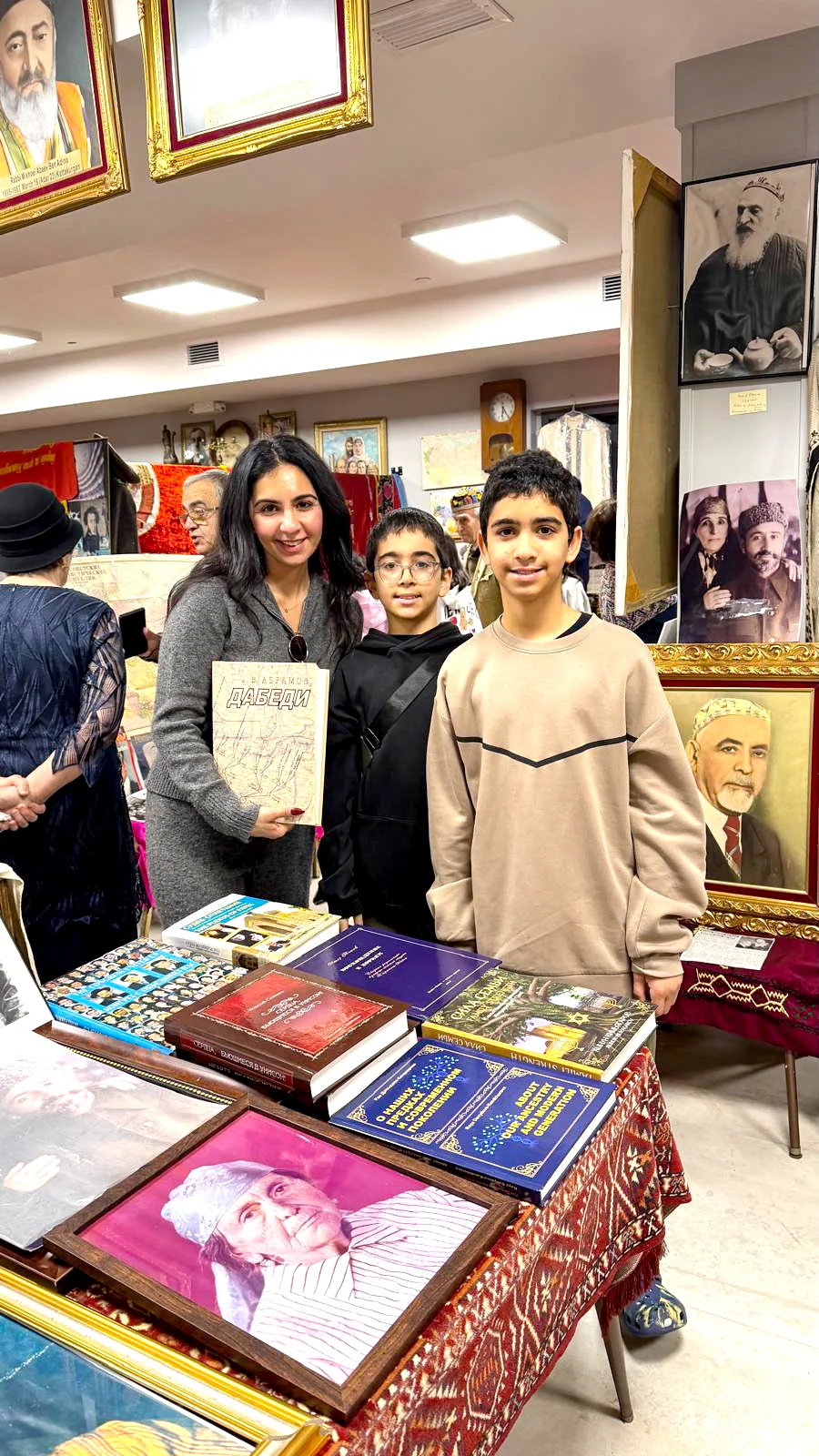
The museum also houses books documenting Bukharian Jewish genealogy. Violetta Nektalova-Davydova, for example, showed her sons the history of the Dakhbedi family lineage, which includes her parents and grandparents on the side of her grandfather Abramov.
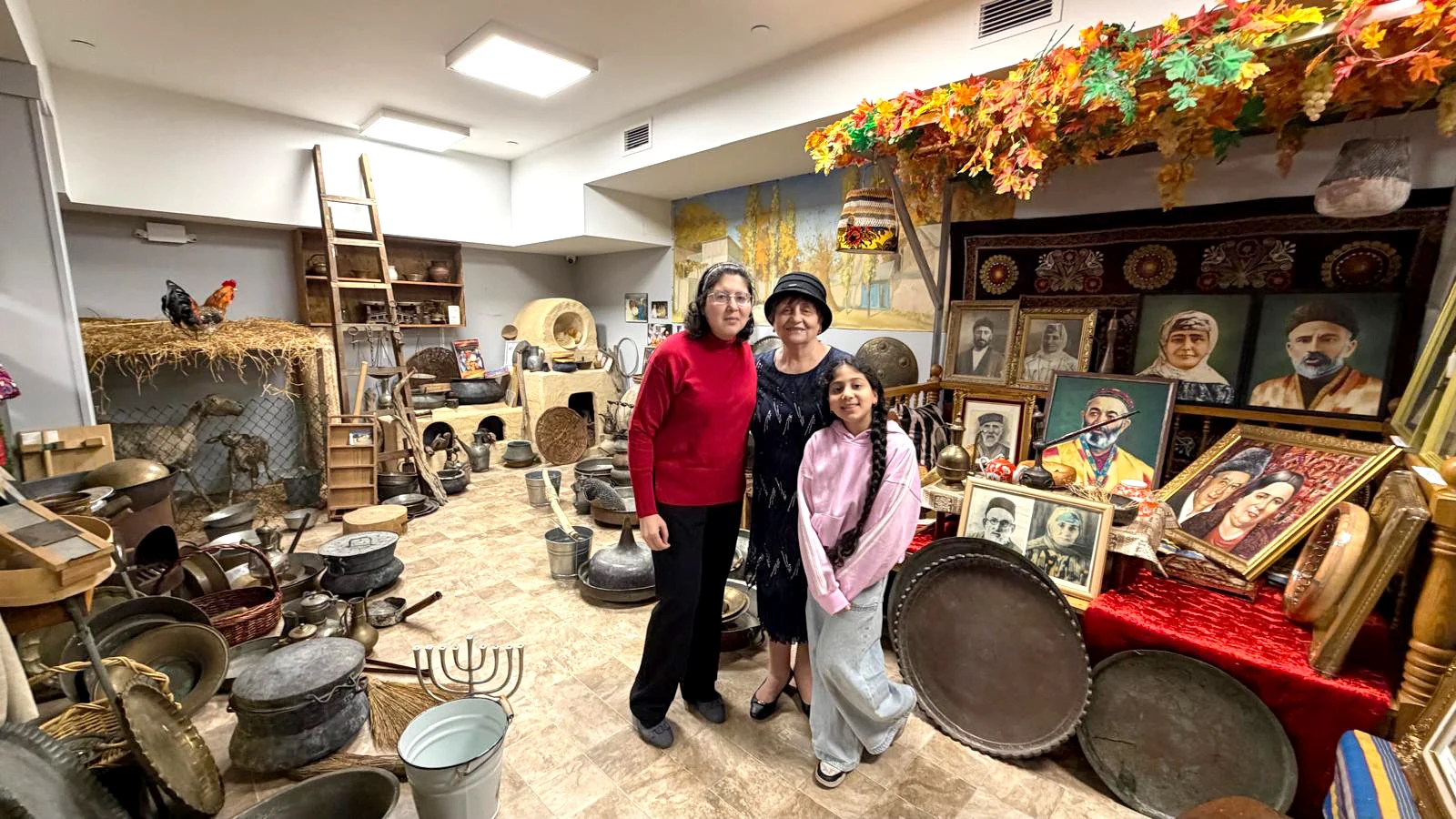
Thanks to the creative collaboration between historian Aron Aronov and artist and educator Yakov Kandinov, an entire chapter of the children’s ancestral history was opened up to them.
It is essential that children growing up in America understand where their roots lie, who their ancestors were, what their world looked like and what values they carried across generations.
“Memory of the past is a bridge connecting generations, and it is very important that this bridge rests on solid foundations. In this respect, the Bukharian Jewish Heritage Museum serves as both a time machine and a space for dialogue. Its exhibitions prevent history from becoming a dusty archive. They tell the story of the past in a language accessible to children and parents alike, helping pass family and cultural values from one generation to the next,” Kandinov said.
He emphasized that the museum’s exhibits are not presented digitally or on screens, but through tangible objects in a physical space that helps visitors understand the history of an entire people.
This was translated from Russian
By Alla Aronova