
Sports & Culture
For thirty years, a unique community of Bukharian Jews has thrived in Atlanta. It has become an example of how one can build and create, how to develop and work so that choosing a new country to live in becomes more than just a search for material prosperity, but a space filled with spiritual and cultural substance. I was convinced of this once again when I recently found myself back in this remarkable city.
A Film Premiere
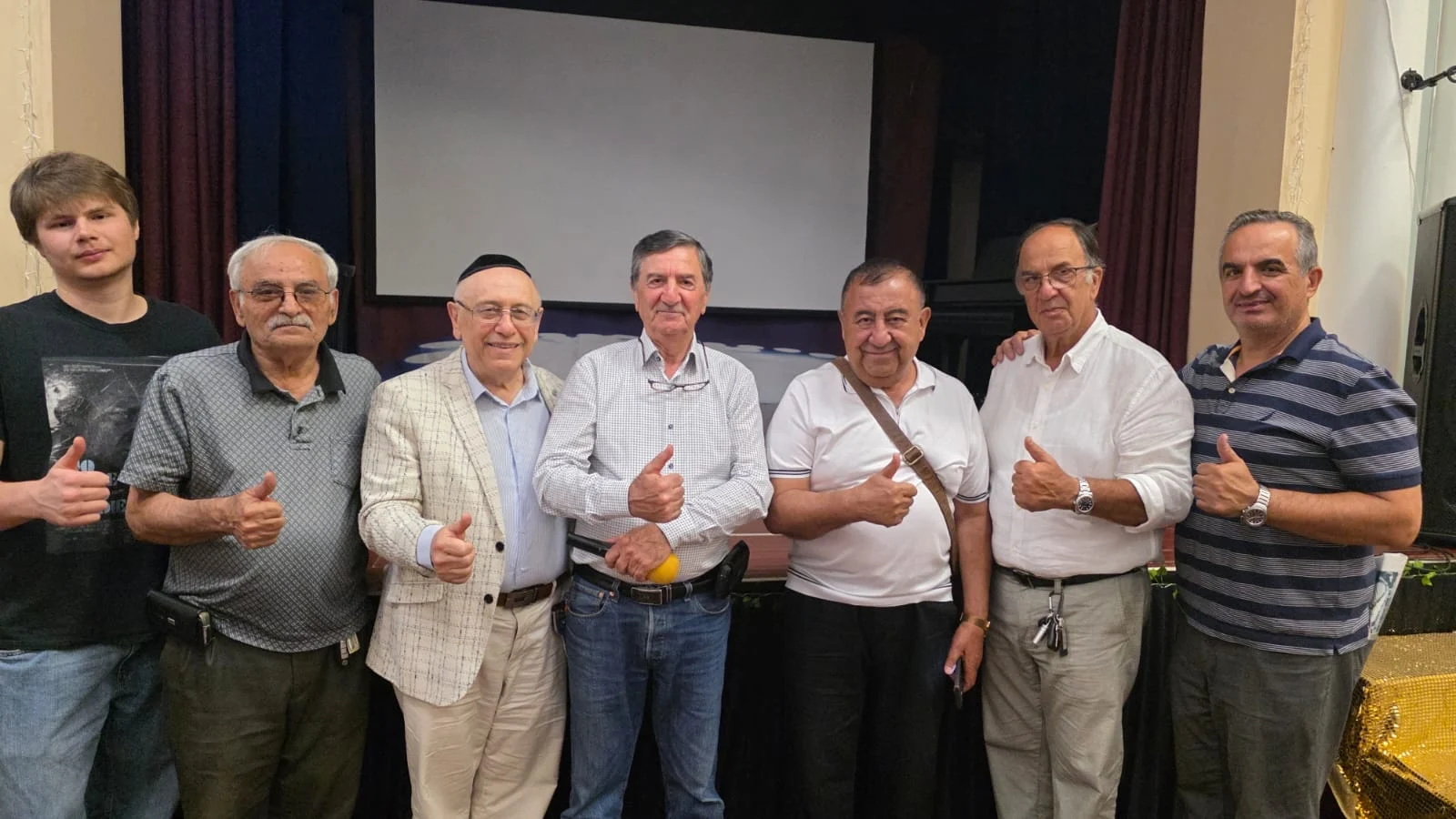
On June 25th, the Cultural Center of Atlanta hosted the premiere of the Uzbek-American film “Goal Across the Ocean.” The film was presented by producer Keldiyor Khodjayarov and screenwriter Rafael Nektalov.
«We came here to support our footballers—the participants in the World Cup,» K. Khodjayarov said in his opening remarks. «After the premiere at your center, we will head to the Lagman Center restaurant to show the film to our partners from the organization Mahalla USA. Tomorrow, the film will be shown at the Uzbekistan Culture Festival, organized specifically for fans who have arrived in Atlanta from various cities across the US, as well as from Uzbekistan, Kazakhstan, Kyrgyzstan, Tajikistan, and Turkmenistan.»
The audience watched Goal Across the Ocean with great interest and asked questions of the creators. As it turned out, the interest in Uzbekistan—in its history and culture—is preserved not only by those who were born there but also by young members of the community whose passports list the United States as their place of birth.
«I love Uzbek music and songs, which are distinct for their lyricism and melody,» shared Malka Mullokandova, one of the attendees.
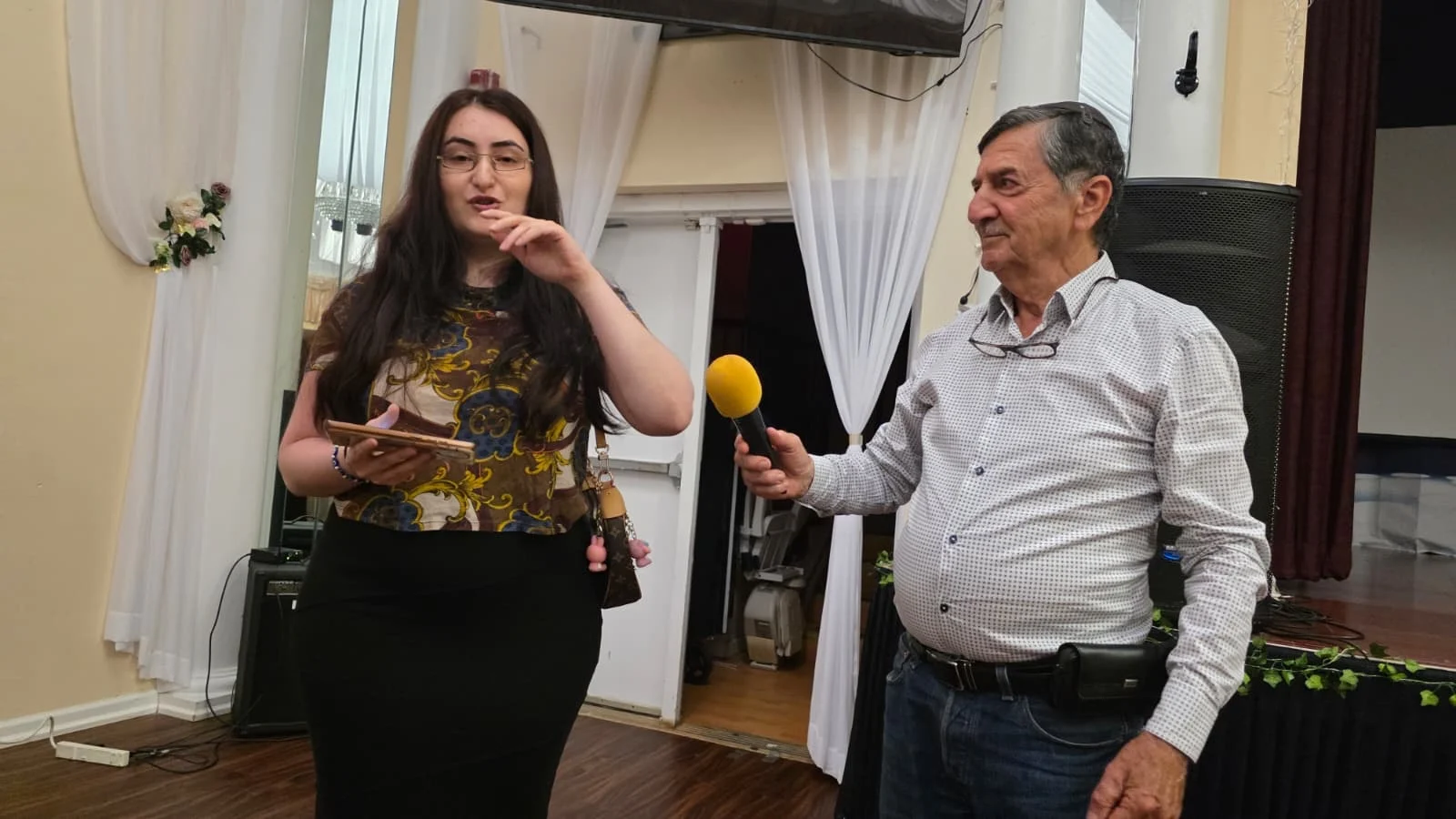
Her grandfather, Valery Mullokandov, is one of the closest relatives of the People’s Artists of Uzbekistan, Mikhail and Gavriel Mullokandov. My interlocutor then turned on a backing track on her phone and sang, in Uzbek, a verse of the song «Umr o’tar» (Life Passes) by the outstanding Uzbek singer and bastakor from Khorezm, Ortiq Otajonov.
Life passes, time passes, Khans pass, thrones pass, Luck passes, happiness passes— But I will never forget Your walks, Your laughter.
Admittedly, I was surprised by the choice of this young, highly educated Bukharian-Jewish girl, as I know her parents are from Tajikistan and her ancestors are from Samarkand.
When I asked her why she began singing in Uzbek and chose this particular song, Malka replied: «First and foremost, because of the beautiful music. The song was in the repertoire of the famous Bukharian-Jewish singer and maqomist Amnun Babadustov.»
«I started listening to it, then found the poems of Omon Matchan translated into English, and I was struck by the poet’s high lyricism and philosophy,» continued Malka, a 22-year-old American. «Listen to these words: ‘Life passes, time passes, khans pass, thrones pass, luck passes, happiness passes, but I will never forget your walks, your laughter…’ This enchanted me, and I decided to sing it in the original language.»
Then, Malka turned the backing track on again and sang a verse of a classic Uzbek song, asking the audience not to record it on their phones as her performance was amateur and far from perfect.
«I couldn’t believe my ears! To come to Atlanta and meet such a beautiful and spiritually inspired girl, who was inspired by one of the most beloved songs of the Uzbek people!» exclaimed Keldiyor Khodjayarov, turning to Malka Mullokandova. «You have simply made me happy with your singing in the Uzbek language!»
Meeting with Diaspora Leaders
That same evening, along with Anatoly Iskhakov, we went to the «Lagman Center,» where we were awaited by the president of the Uzbek Association Mahalla USA, Abdumalik Akhmedov; the president of the Turkestan-American Association, Abdulla Khodja; and the chairman of the local Uzbek community, Abdumalik Gulyamov. They all looked tired but happy to be of service to the national team of Uzbekistan, which played two matches in the USA.
The film was warmly received by our compatriots, and after the screening, our friends thanked us fervently for this work and for coming to Atlanta for the World Cup to support the national team.
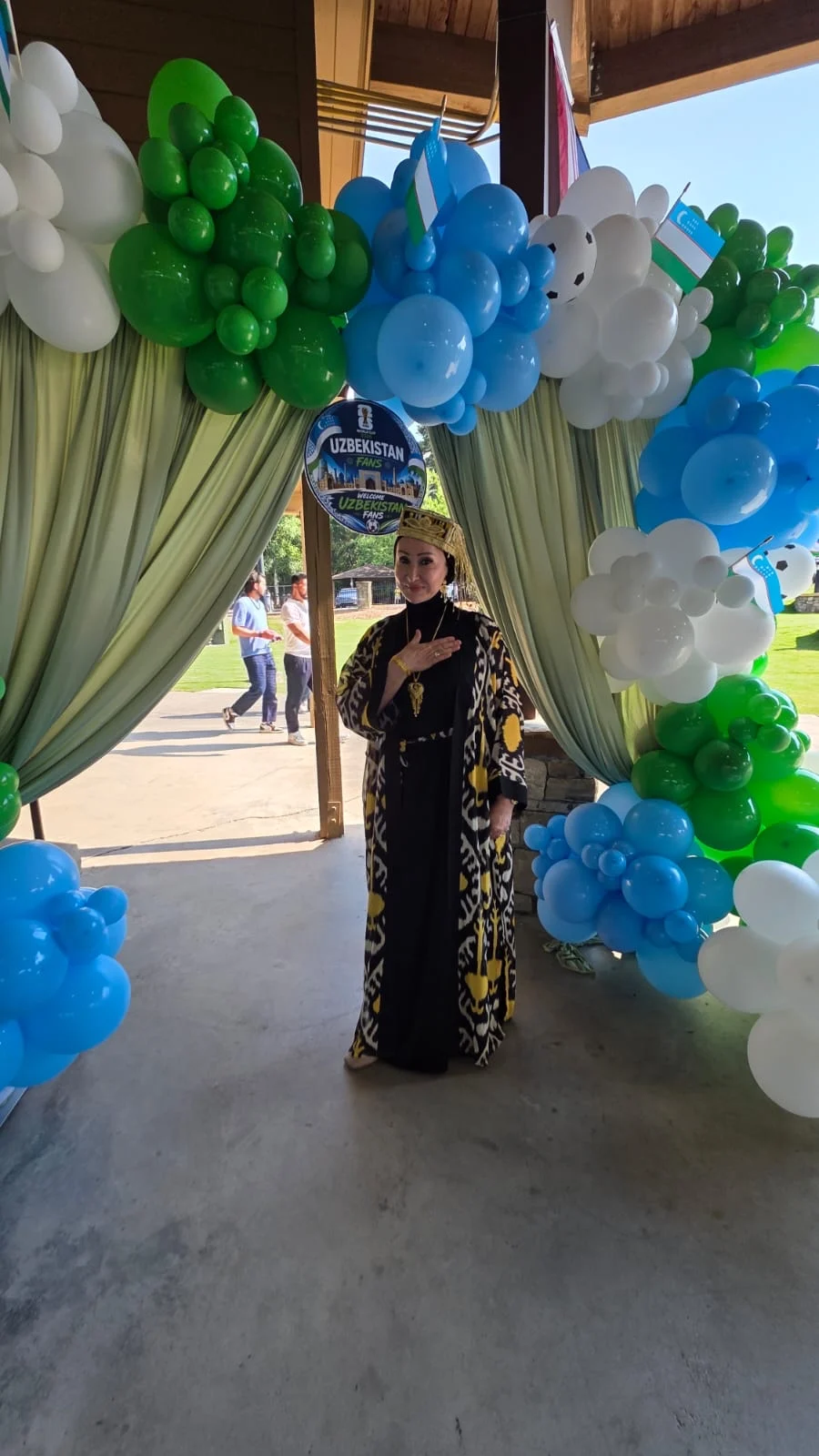
On Friday afternoon, we met with fans and activists from the Uzbek communities of America who had gathered in the park. Tables were set, plov was cooking, and stars of the Uzbek variety scene were performing.
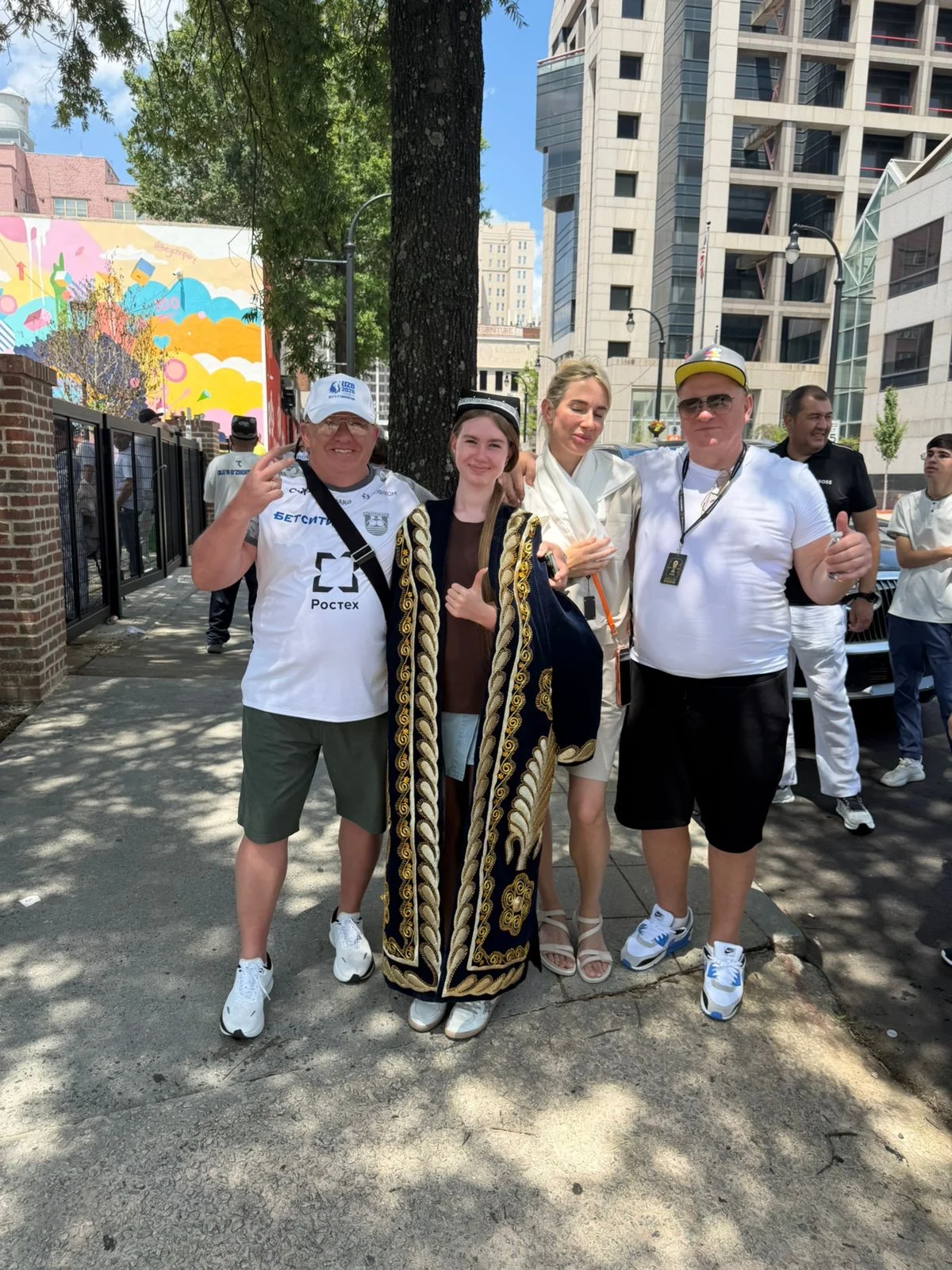
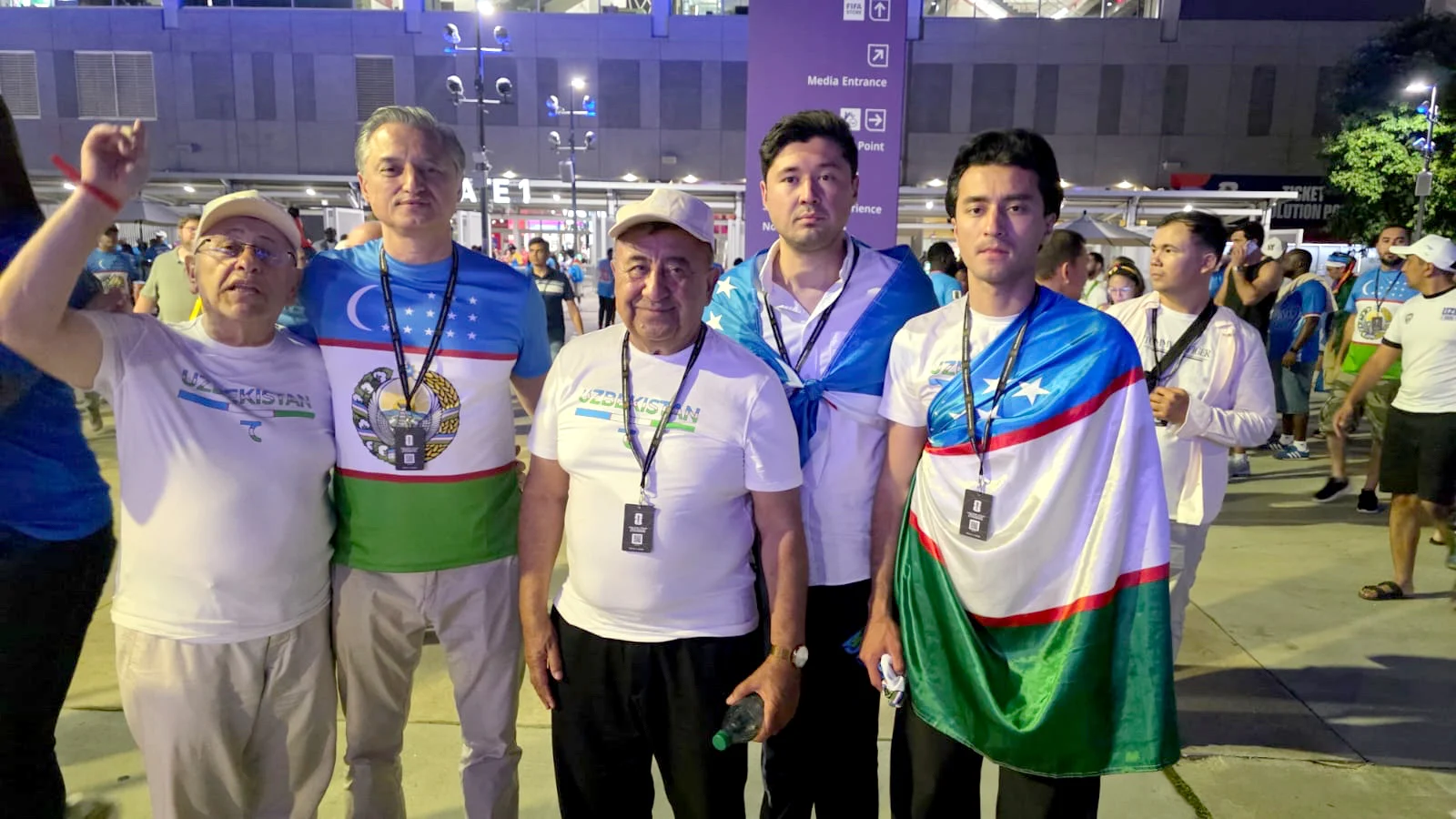
The next day, together with Keldiyor Khodjayarov, Anatoly Iskhakov, and Zhora Gavrielov, we headed toward the Olympic Stadium, near which a fan group had set up. Popular young singers and dancers performed for them.
Among the group of guests who arrived in Atlanta, we met with the chairman of the «Vatandosh» society, Odiljon Sattarov, who has been working closely with the Congress of Bukharian Jews of the USA and Canada for a number of years. I introduced him to the president of the city’s Bukharian-Jewish community, Iskhakov.
«It is a pleasure to meet our compatriots who live in Atlanta and continue to love Uzbekistan,» Sattarov said upon learning that the premiere of Goal Across the Ocean had taken place at the community cultural center an hour earlier. «I propose showing the film tomorrow as well at the festival, before the start of the match between the national teams of Uzbekistan and Congo.»
It was pleasant to see the respect local Uzbeks have for Anatoly Iskhakov. Many of them, it turned out, took their first steps in emigration working in his companies.
«He is a very kind and pleasant person, always ready to lend a helping hand to his fellow countrymen,» said Dilshod Makhmatkulov, a Samarkandi, about him.
Shabbat at Beit Yitzhak Synagogue
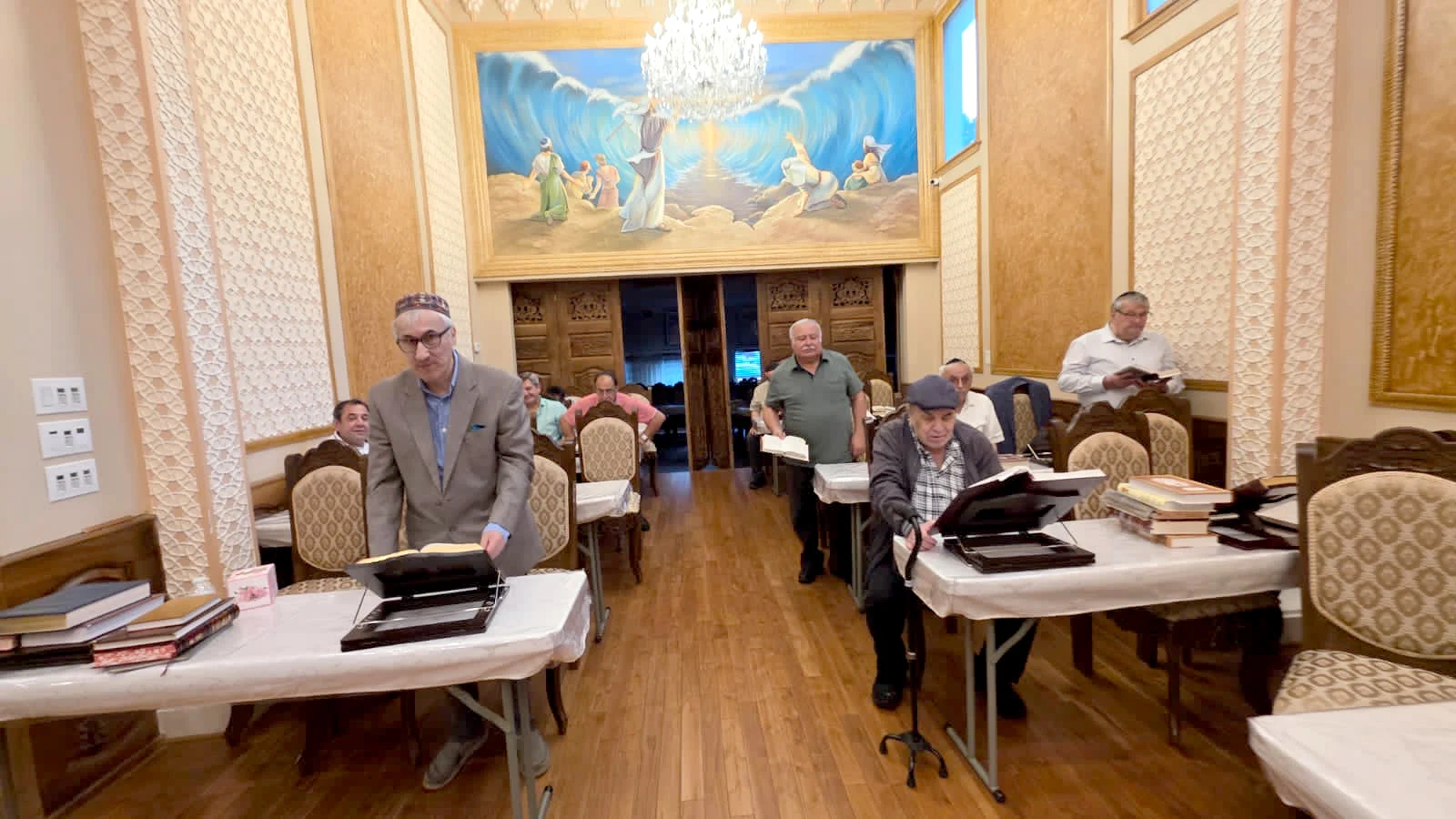
The community operates one of the most beautiful synagogues in America—»Beit Yitzhak.» It was built based on a design by Anatoly Iskhakov. The interior was executed by Samarkand craftsmen using walnut wood. There is a mikvah for women, a mikvah for dishes, playgrounds, the only Bukharian-Jewish cultural center in the US, a kindergarten, a center for working with the elderly, kosher kitchens, and a hall for community events.
Since September 2024, Rabbi Yitzhak Akhunov, invited from Vienna, has been working here. He conducts significant work aimed at the unity and strengthening of the Bukharian-Jewish community of Atlanta. A native of Dushanbe, he repatriated to Israel with his parents in 1972. There, he graduated from the «Shaarei Zion» yeshiva, then emigrated to Vienna, where he worked at the Central Synagogue of Bukharian Jews.
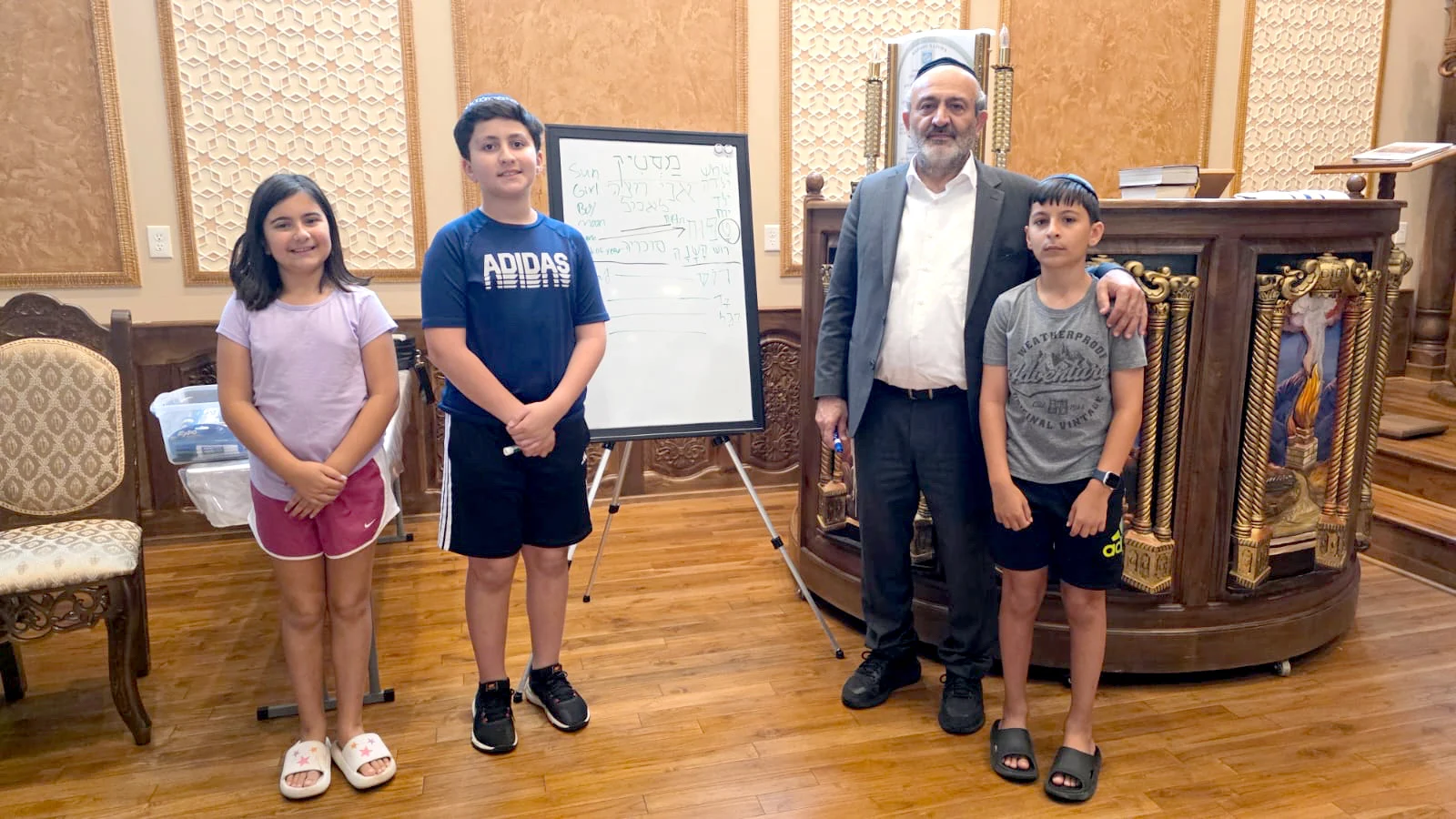
“I have my own experience from working in Vienna, and I think about transferring it to Atlanta, where Bukharian Jews live in different parts of the city,» Yitzhak Akhunov told me. «It so happened that some settled in the Lavista area, others in Dunwoody, and the majority in Norcross, where the ‘Beit Yitzhak’ synagogue is located. Therefore, in accordance with my own schedule and the wishes of the community members, I travel to different locations and conduct lectures and classes on the Torah, Jewish traditions, and laws in private homes. For example, a group of 10 people gathers at the home of Dr. Garik Suleymanov (Solomon). We pray together, and then we hold classes. Then, a week or two later, we hold meetings in the homes of other Bukharian Jews.»
«For now, full minyans gather three days a week—Friday, Saturday, and Sunday and on holidays—at our ‘Beit Yitzhak’ synagogue,» the rabbi continued. «On weekdays, we meet in homes. We also conduct individual lessons with students and pupils of public schools.»
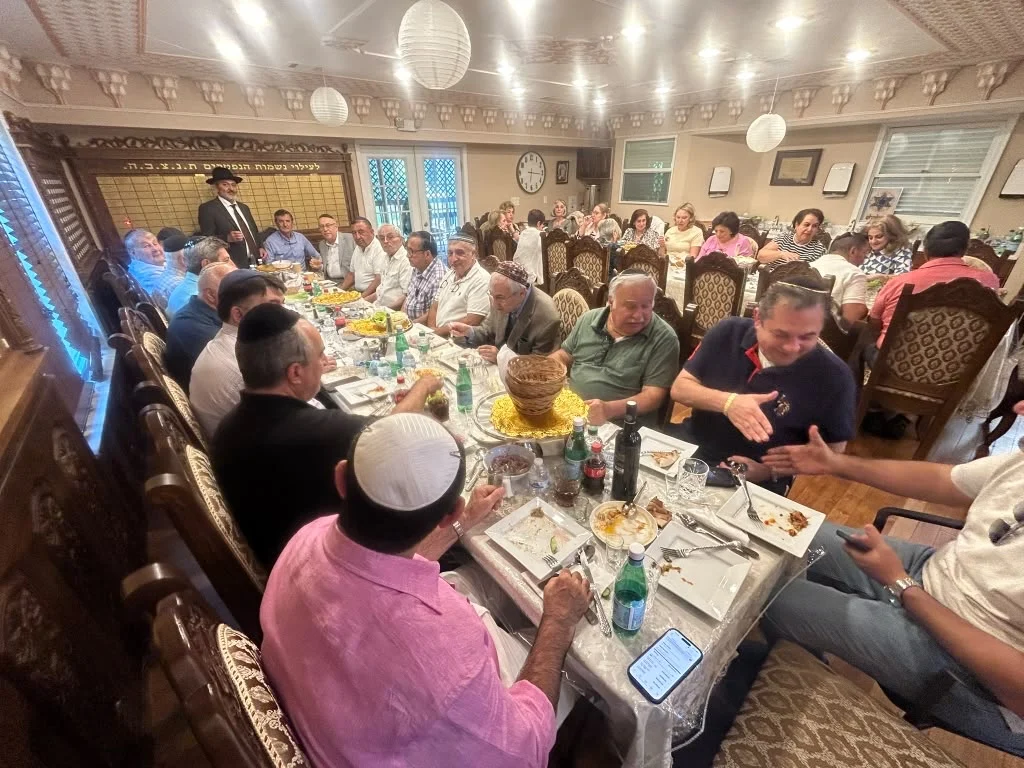
It has become a good tradition to celebrate the new moon—Rosh Chodesh—in our synagogue. It is a kind of gashtak (social gathering), held at the expense of four sponsors. This time, they were Anatoly Iskhakov, Alik Iskhakov, David Davydov, and Slavik Istakharov, the leader of the Mountain Jewish community of Atlanta.
The Mitzvah of Lev Leviev
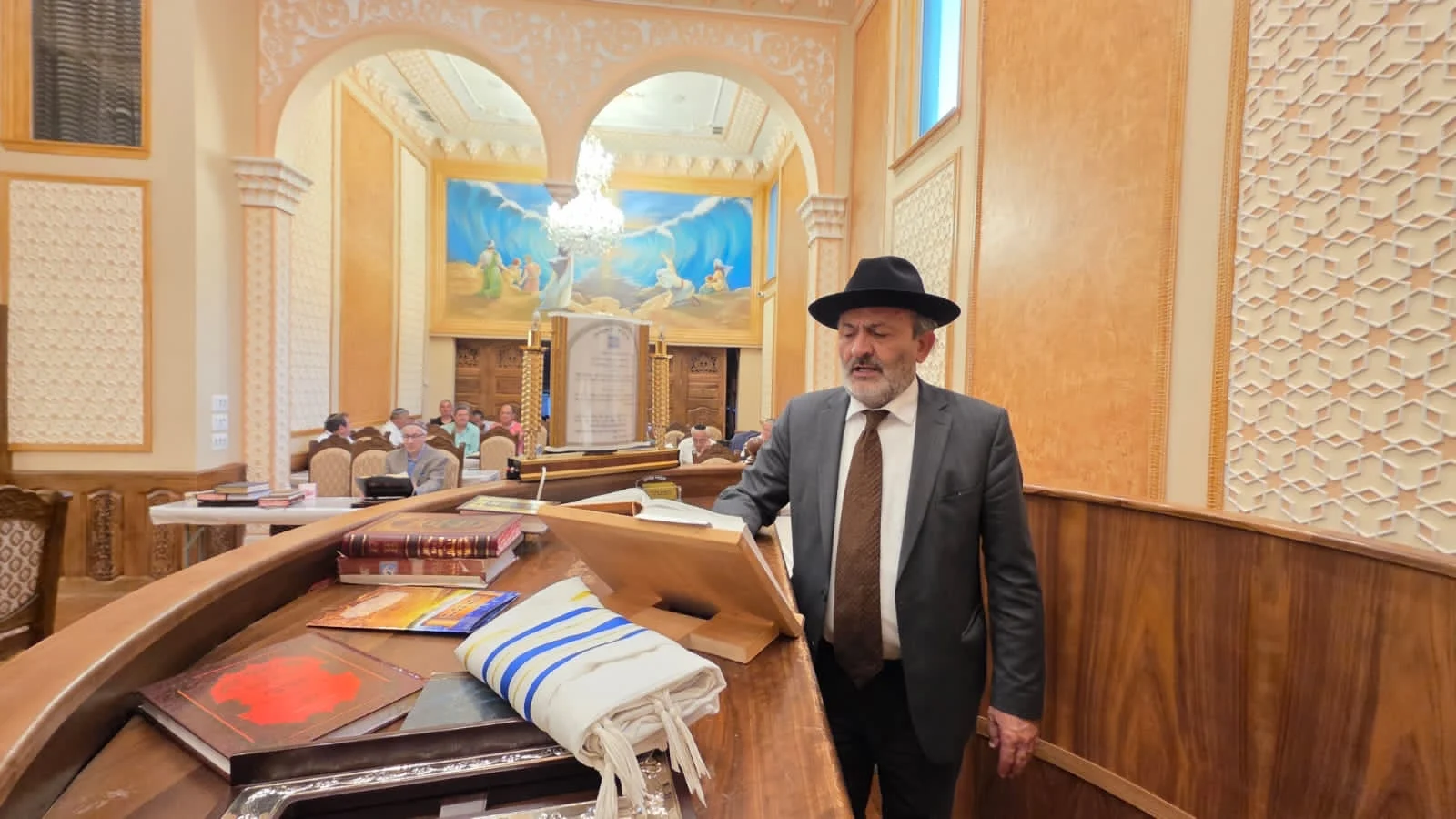
I had the opportunity to speak during the Sabbath service at the synagogue. Noting the special role of the Bukharian-Jewish community of Atlanta, I called for intensifying the religious and Jewish education of the younger generation and striving to hold a minyan daily. In this regard, I spoke about the historic initiative of the President of the World Congress of Bukharian Jews, Lev Leviev, who created his own $50-million fund. These funds are intended to attract our children from general education schools to yeshivas, as well as to create kolels at synagogues where older generations can improve their knowledge of Judaism.
This information caused a stir in the hall, and people began to thank Lev Avnerovich for this noble mitzvah, aimed at preventing assimilation and supporting the Bukharian-Jewish community of America as a whole.
Initiatives of Community President Anatoly Iskhakov
On Sunday, Anatoly Iskhakov and I visited the Bukharian Jewish section of the local cemetery—a place I had first seen a quarter century ago. I asked him about the community’s plans for the future.
«We are one community,» he began, «but we may eventually have two or even three synagogues, depending on our needs. Right now, we are working to open a branch in the LaVista area so Bukharian Jews can walk to synagogue without violating Shabbat.»
«We’re committed to supporting that project both financially and organizationally.»
Then he surprised me.
«We’re already preparing for Pesach.»
«So early?» I asked.
«Yes—and here’s why. At our King David Center, we’ve installed two tandyrs where we’ll bake matzah for Pesach.»
«In keeping with our own traditions?» I asked. «I still remember the enormous wooden boxes filled with matzah, the strong men kneading the dough, the women singing, and the cushions on which the freshly baked matzah was placed before it went into the tandyr. The entire process brought families together and strengthened the spirit of the community before Pesach.»
«There really was something special about it,» Iskhakov replied. «We want to recreate those memories from our childhoods in Samarkand, Shahrisabz, Tashkent, Dushanbe—everywhere we once lived. Families will come together to bake matzah that they’ll eat throughout the eight days of Pesach. We’re consulting with rabbis now and hope to launch the project soon.»
«With tandyrs already in place,» I said, «perhaps you’ll also start baking noni toki and tunuk.»
He smiled before moving on to the next initiative.
«Our second project is to establish our own shechita, so we can provide affordable kosher meat for the Bukharian Jewish community. Kosher meat has become so expensive that many families simply cannot afford it. I read in The Bukharian Times that New York has been discussing a similar idea.»
«Yes,» I replied. «It’s raised every year before Pesach as prices continue to climb, but so far it hasn’t moved beyond discussion.»
He then turned to what he considers the community’s most important undertaking.
«Our third project is the most significant. Because Atlanta’s cemeteries are privately operated and not owned by the Jewish community, it isn’t always possible to observe all the requirements of Halacha. There have been cases where heavy equipment has driven through Jewish burial grounds or where monuments were removed to make way for new graves.»
«We recently witnessed one such incident,» he continued. «A monument was dismantled, an excavator drove over the site, and a new grave was dug beside it. It was heartbreaking for everyone who saw it.»
«I know the issue well,» I replied. «For years we’ve reported on similar disputes at New Mount Carmel Cemetery in Queens, where families such as the Danielovs, Kaykovs, and Yagudaevs have faced comparable challenges.»
«That’s exactly why we’ve decided to purchase land for a cemetery that will belong to the Bukharian Jewish community,» Iskhakov said. «It will be built according to Halacha, with a khonako (funeral hall), a chevra kadisha, a room for the ritual preparation of the deceased, landscaped grounds, and facilities for monument installation. The keys will remain at our community center so we won’t be dependent on someone else’s operating hours or policies.»
«But that’s an ambitious—and expensive—project,» I observed. «Can a community of your size make it happen?»
«We know the challenge,» he answered. «That’s why we turned to Levi Leviev, President of the World Congress of Bukharian Jews. He pledged his support and offered us a $500,000 loan to help us begin.»
«In New York,» I said, «we face many of the same issues and hope one day to build a cemetery that meets these same standards.»
Iskhakov smiled.
«As experience has shown,» he said, «everything starts in Atlanta.»
This was translated from Russian, and has been lightly edited.
By Rafael Nektalov
Editor-in-Chief of The Bukharian Times