
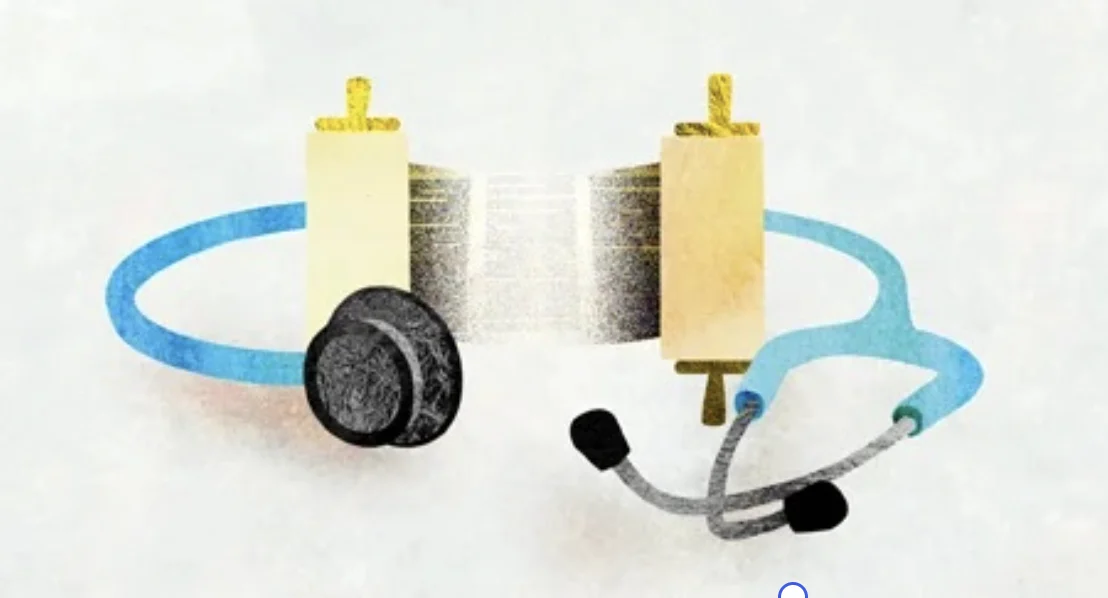
A person can stand in front of a mirror and think everything looks perfect. Clothes are nice, face is clean, everything seems in place. But deep inside, something doesn’t feel right. Maybe it was one comment we said that hurt someone. Maybe it was a look of jealousy. Maybe it was a negative thought that stayed in our heart. Parashat Tazria-Metzora comes and teaches us a very deep message: life is not only about what people see on the outside, but about what is really happening inside us.
The Torah speaks about something called “tzaraat.” At first glance, it looks like a skin problem. But our Sages explain that it is much deeper than that. It is not just physical—it is spiritual. It is like a mirror from Hashem, showing a person: “Look inside. Something needs to be fixed.” Sometimes in life, we are so busy looking at others that we forget to look at ourselves. These parashot come to wake us up and help us grow.
TOPIC 1: THE POWER OF SPEECH – TO BUILD OR TO DESTROY
The Torah spends many pesukim describing tzaraat. Why so much detail? Because it is teaching us something very important—how powerful our words are. Chazal tell us that one of the main reasons for tzaraat is lashon hara, speaking badly about others.
Question: Why is speaking badly treated so seriously? It’s “just words,” right?
Answer: Words are never “just words.” Hashem created the entire world with speech—“Let there be light.” That means speech is creative power. When we speak, we are using a tool that is connected to Hashem Himself. If we use it properly, we can build people, give life, give strength. But if we use it negatively, we can break people, embarrass them, and destroy relationships.
Think about it—how many times in life does one sentence stay with a person for years? A child remembers one insult. A friend remembers one comment. Words don’t disappear—they stay.
Story: There was once a man who went to a rabbi crying. He said, “Rabbi, I spoke lashon hara. I feel terrible. How can I fix it?” The rabbi told him, “Take a pillow full of feathers, go outside on a windy day, open it, and let all the feathers fly.” The man did it. Then the rabbi said, “Now go collect all the feathers.” The man said, “Rabbi, it’s impossible!” The rabbi smiled and said, “Exactly. That’s what happens with your words. Once they leave your mouth, you can’t take them back.”
This story teaches us that we must be careful before we speak, not after.
Question: So what can we do to fix our speech?
Answer: The same mouth that can hurt can also heal. Instead of speaking negatively, we can choose to speak positively. Give compliments. Say “thank you.” Encourage someone who is down. Say a kind word to a family member. Even a small good word can change someone’s entire day.
If we use our speech the right way, we don’t just avoid damage—we actually create blessing.
TOPIC 2: LOOKING DEEPER – NOT JUST THE OUTSIDE
When a person had tzaraat, they didn’t go to a doctor—they went to a Kohen.
Question: Why a Kohen? Why not a professional doctor?
Answer: Because tzaraat is not just a physical issue—it is a spiritual message. The Kohen represents kindness, peace, and love. Just like Aharon HaKohen, who loved every Jew and brought peace between people. In order to help someone fix themselves, you need someone who sees the good in them—not just the problem.
The Kohen doesn’t just look at the spot on the skin—he looks at the person. He reminds the person: “You are good. You just need to fix something.”
Story: A man once came to a rabbi and said, “I feel like I am nothing. I feel worthless.” The rabbi took out a piece of paper, crumpled it, stepped on it, and made it very dirty. Then he asked, “How much is this worth?” The man said, “The same as before.” The rabbi said, “That is you. Life may crumple you. People may step on you. You may go through hard times. But your value never changes.”
This is such an important lesson. Many times, people define themselves based on what others say or think. But that is a mistake.
Question: How can a person see their real value?
Answer: By looking inside, not outside. By remembering that every person is created by Hashem with a purpose. You are not an accident. You are not random. You have a mission in this world. When a person believes that, they start to live differently. They speak differently. They treat others differently.
When we look at others this way too, we stop judging and start understanding.
Topic 3: Loneliness – Punishment or Opportunity?
THE TORAH SAYS THAT THE METZORA HAD TO SIT ALONE, OUTSIDE THE CAMP—“HE SHALL SIT ALONE.”
Question: Why such a strong punishment?
Answer: Because this person created separation between people. With his words, he caused fights, distance, and pain. So now he experiences what separation feels like. But it is not just a punishment—it is also a gift.
Sometimes, being alone gives a person the chance to think. In the noise of everyday life, we don’t stop. We don’t reflect. We just keep going. But when everything becomes quiet, we can finally hear our own thoughts.
Story: There was a man who loved to talk about others. He didn’t realize how much damage he was doing. Slowly, people stopped inviting him, stopped calling him, stopped trusting him. One day he found himself alone. He felt hurt and confused. “Why is everyone leaving me?” he asked. Then someone honest told him, “Your words pushed people away.” That moment changed his life. He started working on himself. He began speaking kindly, giving compliments, staying away from gossip. Slowly, people came back.
Question: How can loneliness become something positive?
Answer: By using it to grow. Instead of feeling bad, a person can ask: “What can I learn from this? What can I fix?” When a person uses quiet time for reflection, it becomes the beginning of something new.
Sometimes, the greatest growth happens when no one is watching.
Parashat Tazria-Metzora gives us a message that is simple but life-changing: a person is not only what they do—but also what they say and what they think. Words have power. Thoughts have power. Actions have power.
A single word can build a person—or break them. A small act of kindness can change someone’s life. A moment of reflection can change your future.
If we take one step from all this—just one step—to be more careful with our words, to look for the good in others, and to use quiet moments to grow, we will already become different people.
Because at the end of the day, the real tzaraat is not on the skin—it is in the heart. And the most beautiful thing is that the heart can always be fixed.
And when a person fixes their heart, their words become kinder, their eyes become softer, their relationships become stronger—and their whole life becomes brighter.
Wishing you all a Shabbat Shalom,
Rabbi Asher VakninBJCC Rabbi of the Bukharian YouthI approve this message
By Rabbi Asher Vaknin