EDUCATION
For more than half a century, Yeshiva Primary has quietly opened the door to Jewish life for families who had drifted from it, first assimilating Americans and later Soviet immigrants — including a Bukharian Jewish alumnus who arrived from Uzbekistan as a boy and now helps lead it.
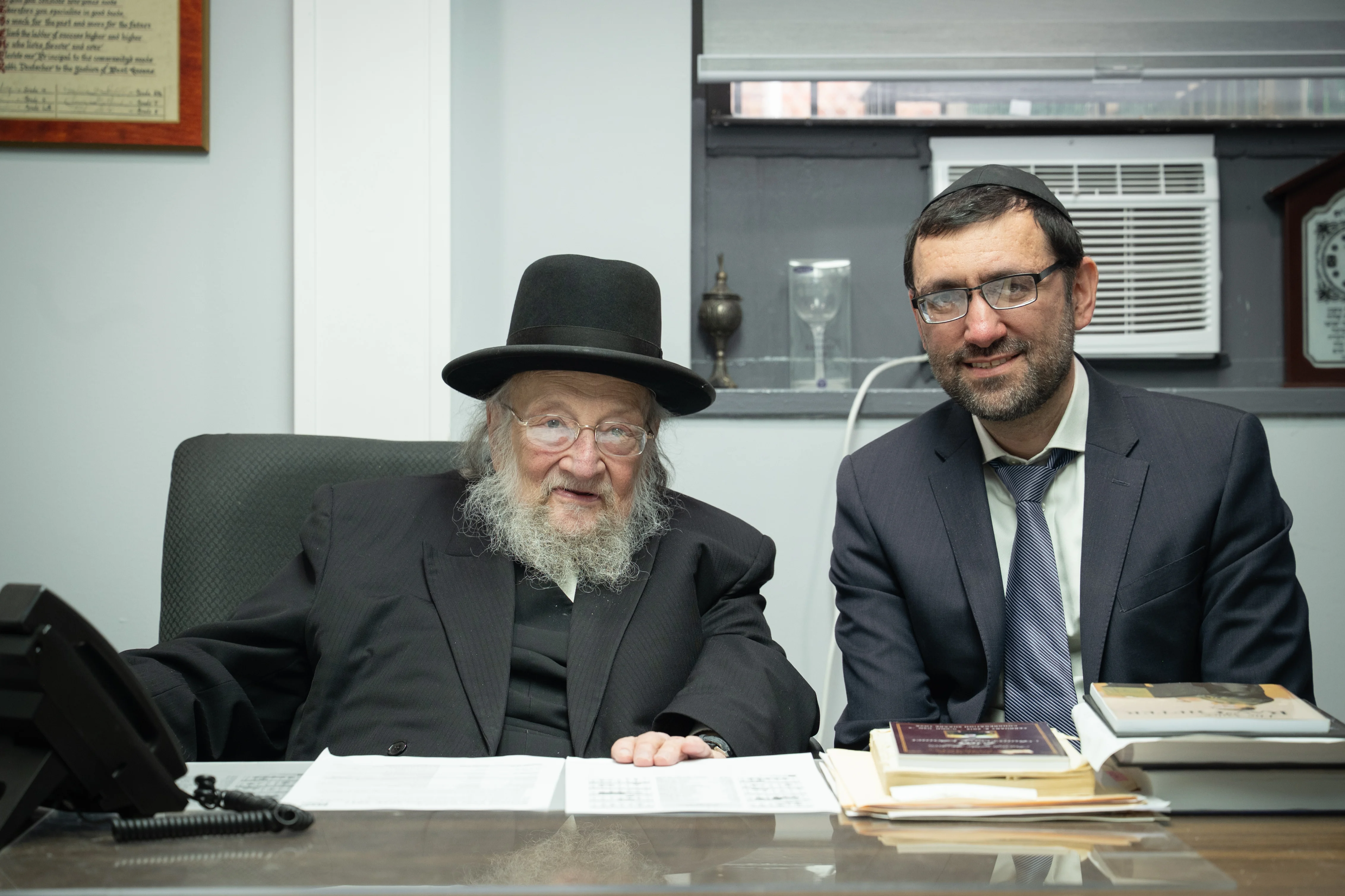
When Avner Yusupov arrived in New York from Kattakurgan, Uzbekistan in 1994, he was enrolled in public school, like many children of the immigration wave that followed the fall of the Soviet Union. His parents later signed him up at a small yeshiva in Queens. Today, Rabbi Avner Yusupov is the associate dean of that same school — Yeshiva Primary — working side by side with the man who first opened its doors.
“He inspires me,” says Rabbi Zalman Deutscher, the school’s founder and dean, of his former student.
That arc — from newly arrived immigrant child to the school’s leadership — is, in miniature, the story Yeshiva Primary has been telling for more than fifty years.
A SCHOOL BUILT FOR THE CHILDREN NO ONE ELSE WAS REACHING
I spoke with both rabbis over Zoom. Rabbi Deutscher — white beard, rosy cheeks, an infectious smile — has the easy warmth of a man who has spent a lifetime putting nervous parents at ease.
Born in Providence, Rhode Island, and raised in Williamsburg, Brooklyn, he is an alumnus of Mesivta Torah Vodaath who went on to study at the Institute for Higher Learning and Research in Monsey and to serve as a general-studies principal before setting out to build a school of his own.
He founded the yeshiva in 1969. “I was the chief cook and bottle washer when we started,” he recalls, “and I mean that literally.”
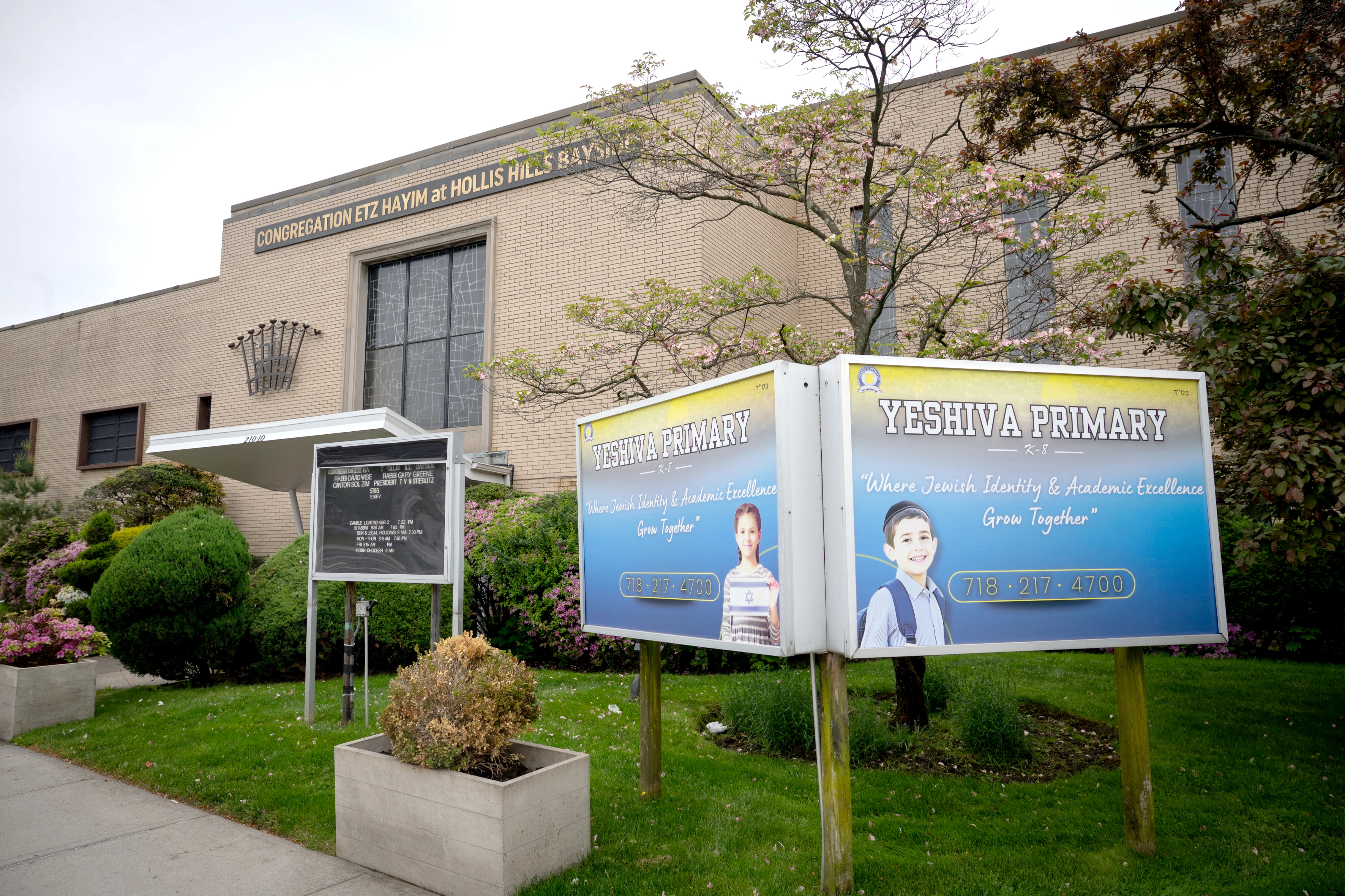
He chose the spot deliberately, scouting a corner of Queens — the Howard Beach–Ozone Park area — that no other yeshiva was serving. (Until 2003, when it moved to a different building, the school was known as Yeshiva Institute.)
The point, he explains, was never to draw students away from existing Jewish schools, but to reach children who were sitting in public school with no connection to Jewish education at all—and the families other yeshivas weren’t thinking about.
In those first years, Rabbi Yusupov notes, that meant third- and fourth-generation American Jews from areligious homes — children sitting in public school with little connection to Jewish life. Rabbi Deutscher had watched assimilation work its way down the generations, grandfather to father to child, and set out to interrupt it.
“We’re still an outreach school,” Rabbi Deutscher says. He looks for children from what he carefully calls “areligious” — not irreligious — homes, families who might feel out of place in a mainstream yeshiva. If a child would thrive elsewhere, he sends them there. “If they’re from a family that belongs in a mainstream school, I try to mainstream them right away. There’s no point in them coming to us.”
For years he believed 90 to 100 students was the ideal size. “Then you have a chance to know every child, every parent.”
That changed when the gates of the USSR opened and Jewish families began arriving in large numbers. “We had no choice,” he says. “They needed a yeshiva, needed a place to start.” Enrollment peaked near 295. “I was not happy about it, but under the circumstances there was no choice.”
Taking in the newcomers reshaped the school, and it lost much of the American crowd it had been built for.
“But he had a job to do,” Rabbi Yusupov says.
In time, as more yeshivas welcomed the arrivals, the pressure eased. “The whole community has evolved. You take a look at the community today and what it looked like forty years ago — it’s day and night.”
“TYPICAL AMERICANS” — AND A NATION OF REFUGEES
Today the student body is primarily Bukharian, drawn largely from families who came to America thirty to thirty-five years ago. “You’re talking about the second and third generation now,” Rabbi Deutscher says. “They’re typical Americans, with the pluses and minuses of American life.” Walk the halls and you rarely hear Russian — except, he laughs, when students would prefer the teacher not follow every word. “But the teacher gets the gist of why they switched languages all of a sudden.”
He sees the school’s families as part of a much older story. “We’re talking about our grandparents, our great-grandparents. Some came in the 1800s, most in the early 1900s. We’re a nation of refugees.”
That phrase stayed with me. His talk of the Old Country — and, it turned out, his own family’s roots in Pittsburgh — pulled me back toward mine. My grandmother, Tillie Greenfield Cohen, was born in Pittsburgh in 1925 to Russian Jewish immigrants who had fled the pogroms. Despite that history, she was an endless source of optimism and compassion — the same alchemy of hardship turned to warmth that runs through Rabbi Deutscher’s account of the families he serves.
HOW IT WORKS
Yeshiva Primary serves children from preschool, around ages four and five, through eighth grade. Boys and girls learn together — an arrangement that, Rabbi Deutscher notes, itself helps hesitant parents take the first step, with classes guided to separate from sixth grade on.
The model is unusual: the school takes in children who are not yet ready for — or not accepted by — a mainstream yeshiva, works with them, and then helps move them out. “As soon as they’re ready, we try to move them out,” he says. Most graduates continue to mainstream yeshiva high schools, and when they transfer, the school often pays for tutoring so they can catch up in Gemara and Mishnah, frequently out of its own budget. “The school gives them that support, not the parents,” Rabbi Yusupov explains, “because the parents might not be able to afford it, or value it yet. So the school is there for them.”
Tuition, Rabbi Deutscher insists, is never the obstacle. Most families receive scholarships, funded through the school’s own resources and a wide network of partner organizations. “It’s not that I feel a parent needs the scholarship — I want to make it easy for a parent to transition,” he says. “That’s another push to try the yeshiva.”
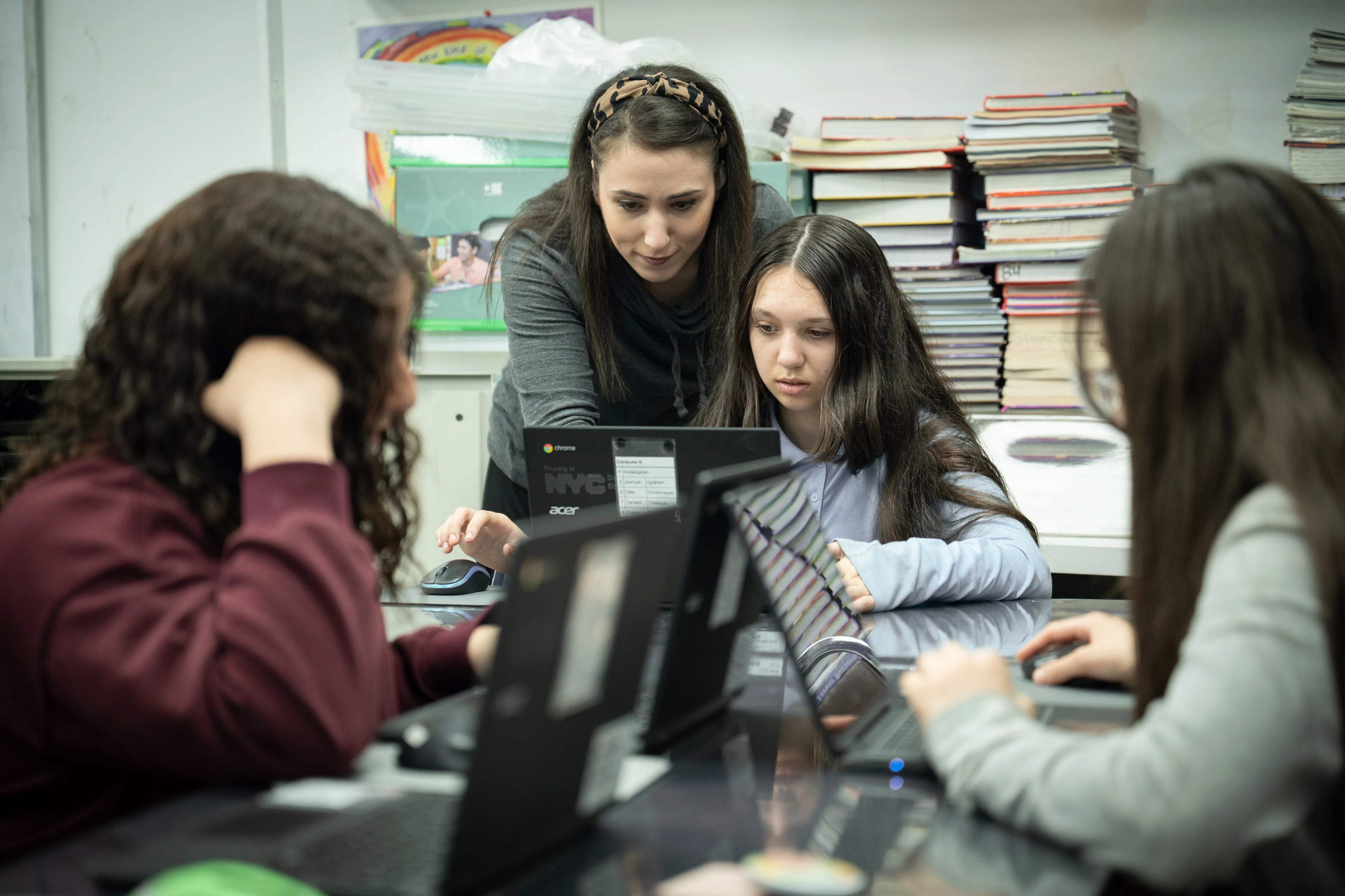
Inside the building, the offerings have grown well beyond the basics: a science lab, martial arts, smart boards, brand-new desks, and after-school programming. But the deeper curriculum, Rabbi Deutscher says, is a living Judaism — respect, gratitude, the rhythm of the holidays — experienced rather than imposed. “You don’t have to push,” he says. “You make it appetizing.”
THE DAY THE CHIEF RABBI CAME TO QUEENS
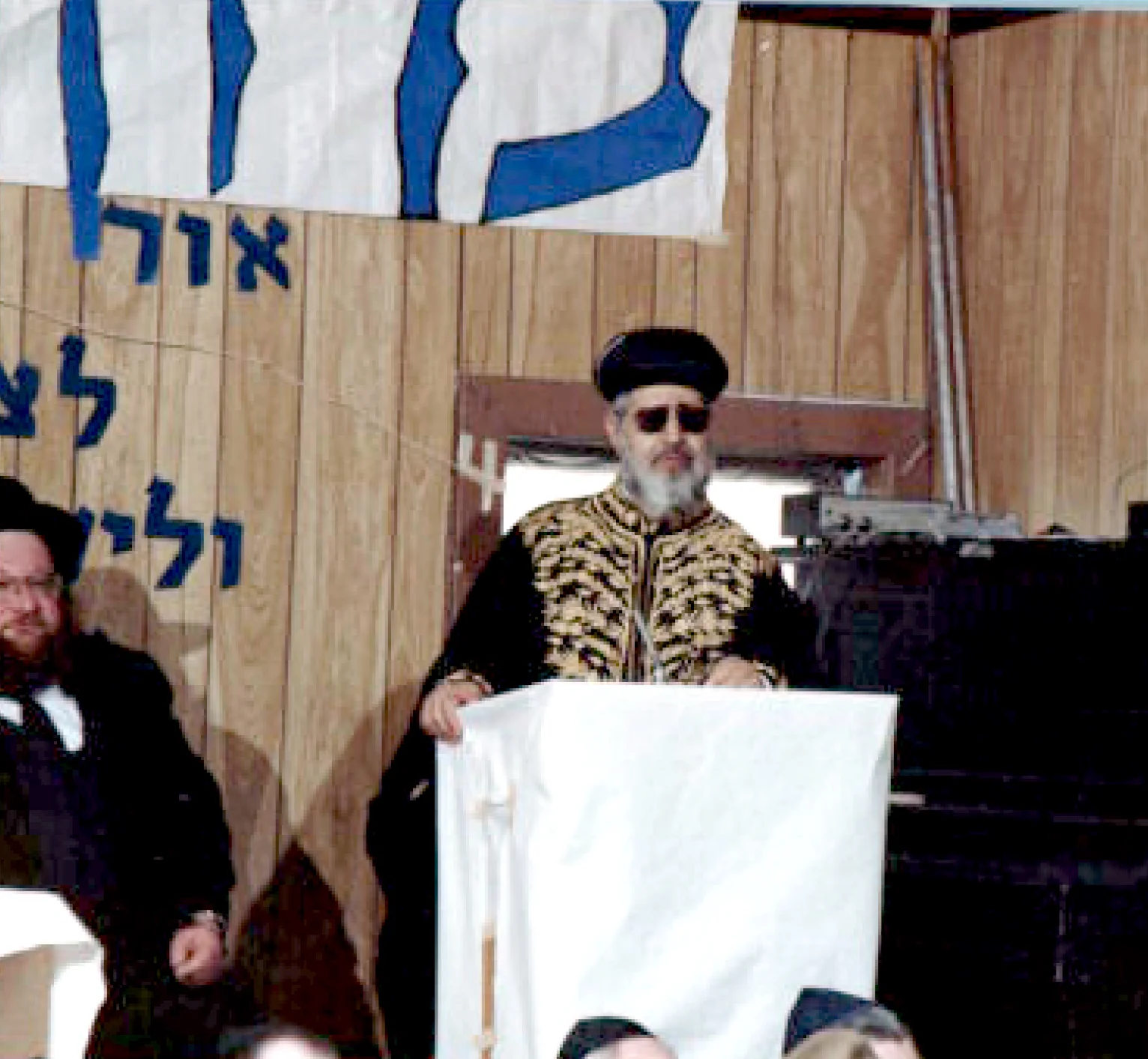
Over the years the school has hosted distinguished rabbinic guests, but one visit stands apart. In the early 1980s, Rabbi Deutscher had met Sephardi Chief Rabbi Ovadia Yosef in Israel, describing to him a “hole-in-the-wall school stuck somewhere in Queens.” To the astonishment of his entourage — who noted he could visit schools with a thousand students instead — the Chief Rabbi insisted on coming. He spent nearly two hours at Yeshiva Primary, spoke with every child, and gave them all blessings.
“The minute the politicians in Queens heard the Chief Rabbi was coming, they all came running — people I’d never seen before,” Rabbi Deutscher recalls. For families used to feeling on the margins, the message was unmistakable: the Chief Rabbi had come to see them.
“It put the school on the map—and its mission,” added Rabbi Yusupov.
[The Bukharian Times wrote about the more recent visit of Rabbi Lau to Yeshiva Primary in issue 1270.]
FROM A BAR MITZVAH MORNING TO ASSOCIATE DEAN
Rabbi Yusupov’s own path back to the school reads like the mission made flesh. Rabbi Deutscher had been invited to the bar mitzvah of Imanuel Babayev — a Yeshiva Primary student, now a dentist — and set out early one morning to find it in an unfamiliar neighborhood. Lost and ready to give up, he spotted a man walking with his children, a tallit under his arm, and went over to ask directions. They got to talking, and before long that man’s children — Avner Yusupov among them — were enrolled at the yeshiva.
From Yeshiva Primary, Rabbi Yusupov went on to Chofetz Chaim and Queens College. He, too, was on track to become a dentist — until, struck by how few Bukharian rabbis there were, he chose what he considers a more meaningful path, earning a doctorate in Talmudic law from the Rabbinical Seminary of America. Today he lives in Kew Gardens Hills.
Years later, the phone rang. “Rabbi Deutscher calls me up out of the blue. He needs a math teacher. I hadn’t spoken to him in years — and I can’t say no to Rabbi Deutscher.” A math teacher became an English teacher, then an administrator, and now the associate dean. “I’m learning a lot more now,” he says, “than when I was in the school.”
LOOKING AHEAD
Enrollment for September remains open, and the school pushes hard for a full 180-day calendar — every day of school, Rabbi Deutscher notes, is another day a hundred children are reciting the Shema. His measure of success is simple: children who mainstream, who transition into yeshivas, who find their way back to Jewish life.
“They all have grandparents and great-grandparents advocating for them,” he says. A nation of refugees, bringing home one child at a time.
By Erin Levi
The Bukharian Times English Editor