
ARGENTINA
During my visit to Buenos Aires this spring, I wrote about visiting the AMIA memorial—the Jewish Cultural Center destroyed in a terrorist attack on July 18, 1994. Prior to that, I had been invited to a memorial concert dedicated to Yom HaZikaron, the Day of Remembrance for the Fallen of Israel’s Wars and Victims of Terrorism, as well as Yom HaAtzmaut, Israel’s Independence Day from the British Empire.
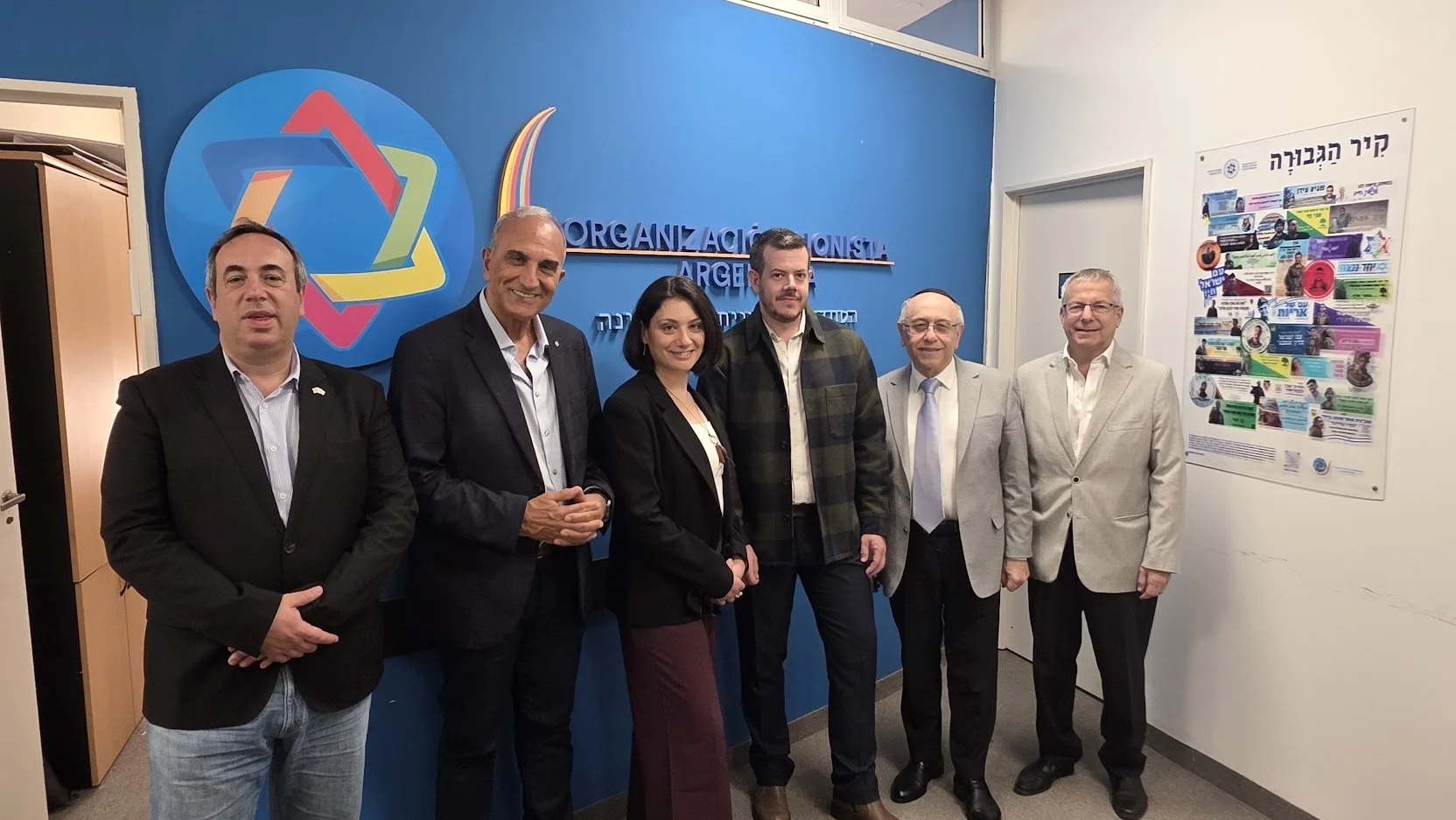
I will not hide that I was deeply impressed that evening by the speech of one of the leaders of the country’s Jewish community, Federico Nemetsky, who serves as president of the Organización Sionista Argentina (OSA), which is the local natural partner of the World Zionist Organization.
His speech was translated for me by Antonio, a local youth organization activist. I thought that I must meet him. That same evening, I contacted him directly, and two days later, a meeting with Federico Nemetsky was arranged for me.
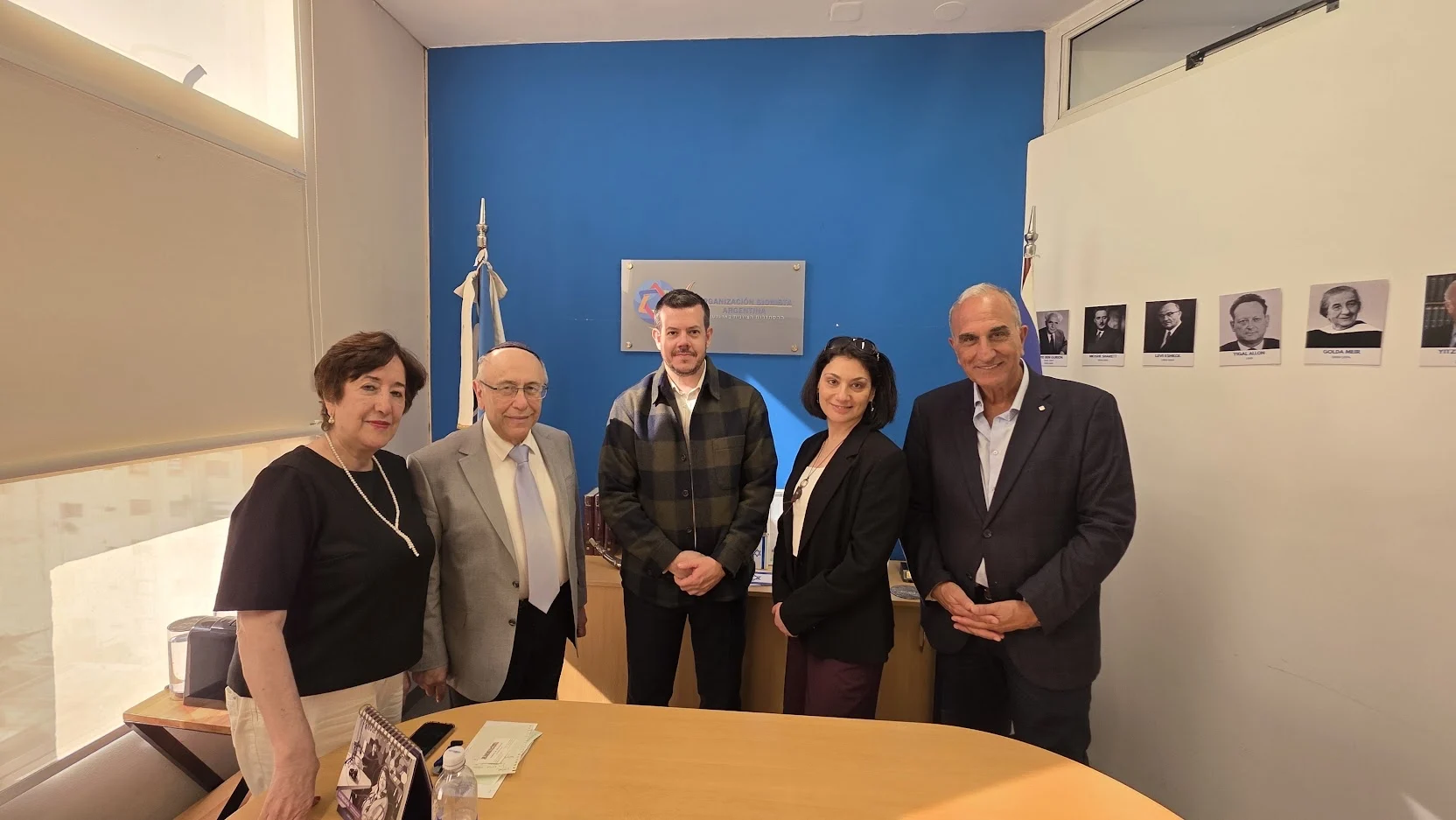
Our interview took place in his office at the AMIA building—the largest and main public organization in Buenos Aires, which is deservedly considered the center of Jewish public life in the Argentine capital.
Rafael Nektalov: Dear Federico, on the day of the celebration of Israel’s Independence Day in the huge concert hall of the Teatro Gran Rex, I saw how strong the country’s Jewish community is, as well as the Zionist movement within it. My question: Argentina is a very attractive country for Jews; they are treated with respect here, there are Jewish schools, museums, and an active cultural life. Tell me, how long have you been working in this system?
Federico Nemetsky: I was born in Buenos Aires, I have a bachelor’s degree in tourism, and I am currently a graduate student specializing in «Cultural Diversity.» I also completed a specialization in Jewish studies and Judeo-American studies at the National University of Tres de Febrero (UNTREF). Professionally, I work in the tech industry. Until 2025, I was the Secretary-General of the Argentine Zionist Organization and Vice President of Likud Argentina.
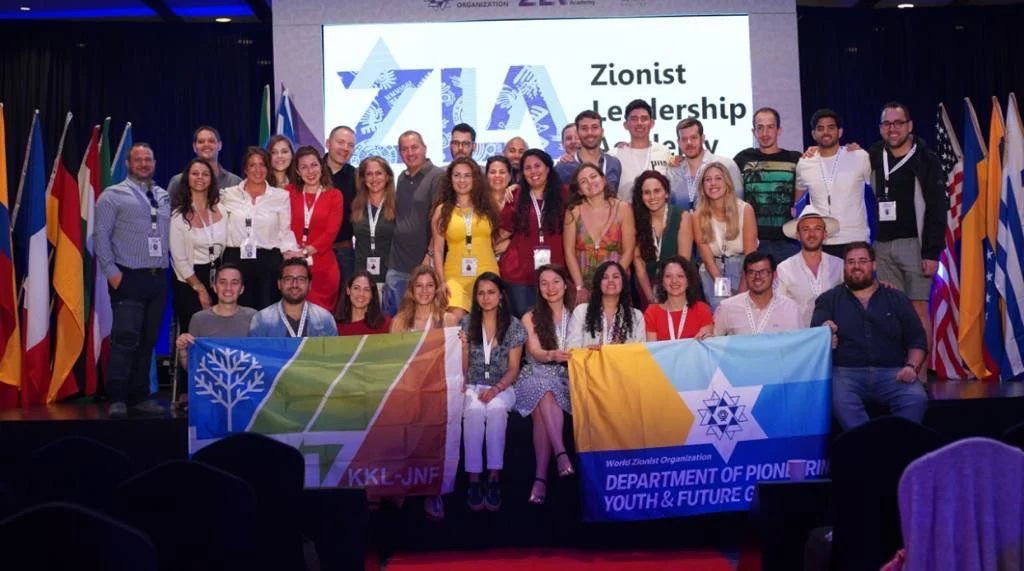
I am also an alumnus of the Zionist Leadership Academy, a program that embodies the idea of consolidating a new generation of Jewish Zionist leaders who not only manage local communities but also form the basis of global Jewish leadership.
About 175,000 to 200,000 Jews live in Buenos Aires. This is the largest Jewish community in Latin America and one of the largest in the world, alongside New York, Paris, and London, but there were more of us. Historically, more than 80% of all Jews in Argentina are concentrated in the capital and its suburbs. This means there is great potential for its development and for the implementation of various programs and projects.
R.N.: Your goal is based on the realization of the need to select people capable of becoming a kind of ambassador to Jewish communities around the world to work on this problem. How do you see this, and what do you think about it?
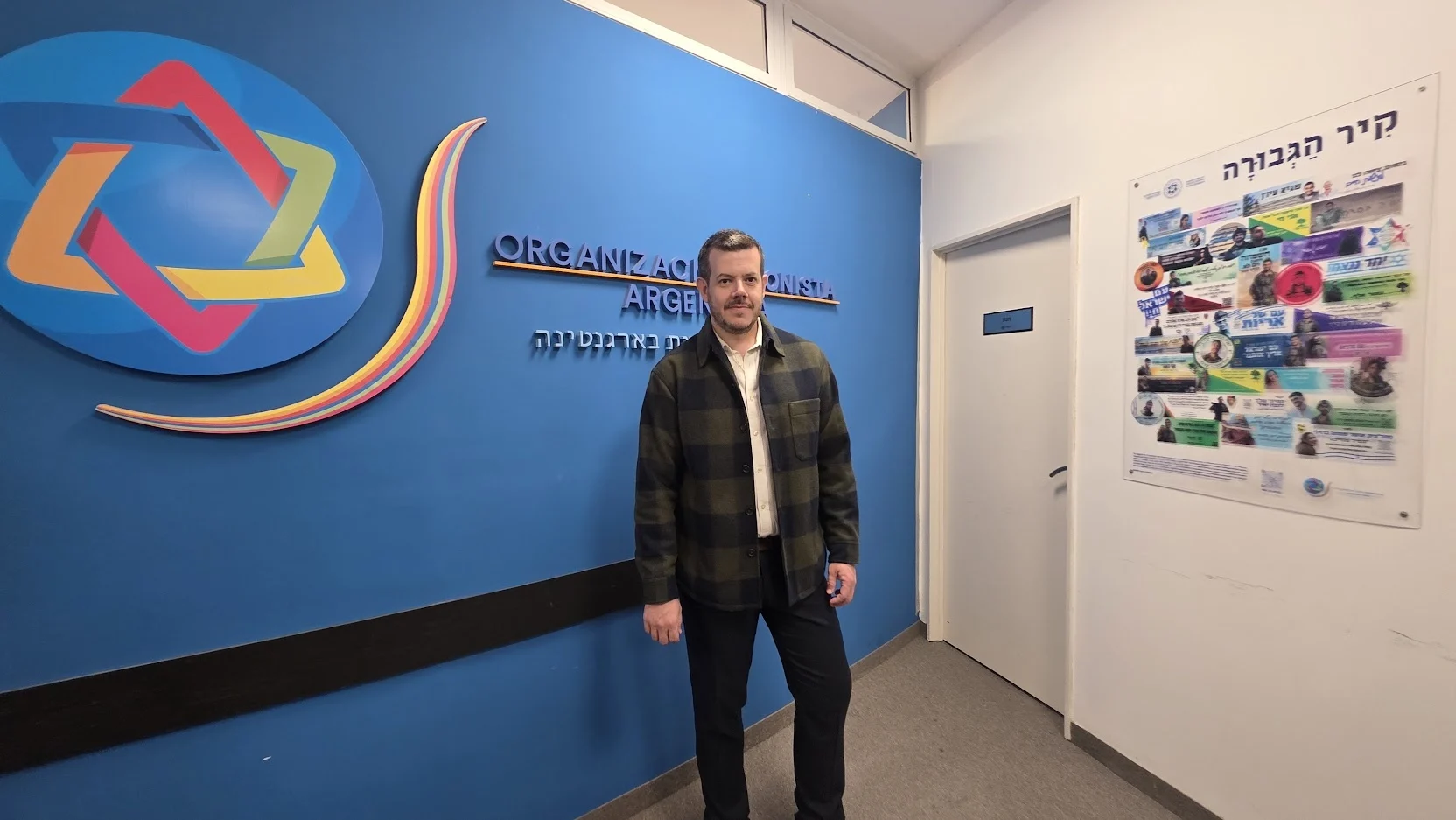
F.N.: My vision for all of this, and it is fully consistent with what the project’s leadership proposes, is that we are talking about young people who at some point will have to work for the benefit of the community, but we are talking about the present. This is a project aimed at the future, but already today. I managed to start successfully, and in December 2025, I took office as President of the Organización Sionista Argentina (OSA), where I have been working for almost half a year.
R.N.: For us, former Soviet Jews, Zionism was a forbidden topic, for which one could be sent to the GULAG! At the end of the 20th century, it meant repatriation to Israel, the desire to be part of the Jewish State, which had been at enmity with the USSR since 1967. How are things with this for you, in Argentina?
F.N.: Against the backdrop of what is happening in the world, in the countries of North and South America, and in Europe, Argentina is actually positioning itself more and more actively as a safe place for Jewish life. President Javier Milei’s government is actively strengthening ties with Israel and Jewish communities, confirming the relocation of the Argentine embassy to Jerusalem. Our country is home to the largest Jewish community in Latin America, and the country has historically served as a refuge for Jewish immigrants. High state posts in the country are held by representatives of the Jewish diaspora (for example, former ambassador Gerardo Werthein became Minister of Foreign Affairs), and the president himself has repeatedly demonstrated deep support for the Jewish people.
But that was not always the case. Pogroms against Jews occurred in the 1920s and later. From some Argentines, in confidential conversations, I have heard: «Oh, he is such and such, a bad person, and he has money, well, you understand he’s a Jew!» That is, antisemitism in its pure form, with a dislike for Jews because they are Jews.
R.N.: Like us in the USSR, where there was officially no antisemitism, but in reality, many «persons of Jewish nationality» hid their nationality and changed surnames and first names to have the opportunity for career growth.
F.N.: In the 1930s, a wave of Jewish emigration from fascist Germany began. The flow of Jews was large, and Argentina [had] an ideological approach [similar] to Nazi Germany. Therefore, Jewish emigration to Argentina was restricted, and a directive was sent to all the country’s European embassies: «do not issue visas to Jews!»
R.N.: What were Argentine Jews mainly doing in those years?
F.N.: Jews were engaged in various crafts: trade, clothing, and furniture. But unlike some European countries, many of them bought land and engaged in farming, livestock, and winemaking. By the beginning of the 20th century, Jews had integrated and were widely represented in all strata of Argentine society.
R.N.: According to official statistics, by the middle of the 21st century, 400,000 people lived in Argentina. Now, your community has shrunk significantly, and there are between 175,000 and 200,000 Jews in the country. What is the reason for this?

F.N.: Economic problems contributed to this. After the great Argentine default in 2001, many impoverished Argentine Jews realized that their homeland was Israel and emigrated there. But also [because of] Zionism. Argentina has a real Zionist community.
R.N.: But in 25 years, Argentine Jewry and the attitude toward them by the authorities have changed.
F.N.: Over the years, much has changed for the better, especially after the 1994 terrorist attacks, when the country realized its common civic responsibility to the Jewish community. In five years, a new center was built for AMIA. This attack was directed not only against the Jewish community but against all of Argentina. Among the victims were not only Jews but also Christians, and indeed all Argentines. The Memorial Day associated with July 18 is perceived as a wound not only by the Jewish community but by the entire Argentine people.
In March 2026, Argentina took over the presidency of the International Holocaust Remembrance Alliance (IHRA) for the first time in its history. The country officially adopted the IHRA working definition of antisemitism and concluded agreements with the Yad Vashem memorial complex on preserving Holocaust archival data and expanding educational programs in schools.
R.N.: And yet. Zionist ideology occupies a special position in the minds and hearts of Argentine Jews. Young people, who occupied most of that huge hall that evening, sang songs in Hebrew and Spanish, waved huge flags, and supported the speeches of the leaders. In this regard, I have a question. How do you see this relationship between Zionism and the diaspora?
F.N.: Zionism and the diaspora represent two interrelated concepts in Jewish history. Therefore, debates on this topic have not subsided even in our time. Zionism aims at the unification of the Jewish people in their historical homeland, whereas the diaspora describes the dispersion of Jews throughout the world.
Throughout history and after the creation of the State of Israel, the diaspora has provided powerful diplomatic, political, and financial aid to the Jewish state, and Israel serves as a guarantor of security for Jews all over the world. Therefore, our role in supporting Zionism in our countries of residence is becoming especially responsible.
R.N.: Did I understand you correctly that Zionism is, first and foremost, the unification, revival, and protection of the Jewish people in their historical homeland—the Land of Israel? Does that mean your goal, which I share, is preparing the Jewish population for Aliyah?
F.N.: Zionism is, first and foremost, the national movement of the Jewish people: the affirmation of our right to live freely, securely, and with self-determination in our historical homeland, the land of Israel. In that sense, Aliyah has always been, and remains, one of the most meaningful expressions of Zionism. Every Jew who chooses to build his or her life in Israel strengthens the Jewish State and becomes part of one of the most extraordinary projects in modern Jewish history.
But Zionism cannot be reduced only to preparing Jews for Aliyah. It is also about strengthening Jewish identity, deepening our connection with Israel, educating new generations, defending Israel’s legitimacy, and ensuring that Jewish communities around the world remain proud, active and committed.
The role of the diaspora is not secondary. On the contrary, it is increasingly important. We saw this with even greater clarity after October 7. In moments of tragedy, war, misinformation, and rising antisemitism, Jewish communities outside Israel became a vital front: supporting Israel, speaking out for the hostages, confronting hatred, mobilizing solidarity, and preserving Jewish pride in places where silence was not an option.
As President of the Organización Sionista Argentina, I believe our mission is to encourage Aliyah for those who choose that path, but also to build a strong, educated, connected, and courageous Jewish life in the diaspora. Israel and the diaspora are not separate stories. They are two expressions of the same people, the same history, and the same destiny.
Our goal must be to ensure that every Jew, wherever they live, understands that Zionism is not only about where we are physically located, but about where we stand morally, historically, and spiritually: with the Jewish people, with the state of Israel, and with our shared future.
R.N.: Why did you, personally, come to be an active figure in the Zionist movement? Are there other directions for Jewish socio-political activity in the diaspora?
F.N.: From a young age, I clearly realized my connection to Israel. That’s how my parents raised me. I was always interested in the history of Israel and the founders of the Jewish State; I have repeatedly attended international conferences organized for young activists. Thus, Zionism for me became a part of my life, a love for Israel, a sincere desire to support the country that all of us—Jews, regardless of our differences (Ashkenazi, Sephardi, Mizrahi, Orthodox, Ultra-Orthodox, Reform, and Conservative branches of Judaism)—are all one people!
R.N.: I agree. What is the main goal of the organization you lead? After all, the Jewish diaspora has changed seriously after that horrific massacre, which escalated into a major regional war between Israel and radical pro-Iranian proxies and, as a result, with Iran itself. We have now all become Israelis and Zionists. For many non-Jews, this has become a synonym.
F.N.: Our goal is to promote the ideas of modern Zionism in the diaspora. And I agree with you that our life outside of Israel has undergone serious changes, especially after the war on October 7, 2023, when 1,200 Jews were treacherously destroyed on the border with the Gaza Strip.
In this regard, the role of leaders of Jewish organizations in strengthening and developing the community is growing. In my opinion, work among the youth and the younger generation as a whole should be strengthened. This is the most important goal for us, which defines our educational work aimed at strengthening the identity of Jews in the country.
R.N.: In our community, as in the history of the Bukharian Jews of Central Asia, before emigration to Israel and the USA, Zionist ideas were also developed. This is a separate story that requires a special essay. These days, several Bukharian Jews are members of the Board of Directors of the World Zionist Congress. Among them are the President of the Congress of Bukharian Jews of the USA and Canada, Chagit Leviev Sofiev, Yuriy Danielov (USA), and Michael Ustoniyazov (Austria). Do you know anything at all about Bukharian Jews in America or Argentina?
F.N.: I knew that we had immigrants from Jewish communities in Asia and the Middle East: from Syria, Lebanon, Iran, Afghanistan, as well as Central Asia. But after meeting you, I have a new interest in the Bukharian Jews, whose community has become one of the most successful in North America.
R.N.: I would like to invite you to New York and introduce you to the leaders of our community, walk through the classrooms of our yeshivas created by the President of the World Congress of Bukharian Jews, Mr. Lev Leviev, show you the exhibits of the Museum of Bukharian Jewish Heritage, which was created by Aron Aronov, test the wonderful dishes of Bukharian-Jewish cuisine in our numerous restaurants, and, most importantly, attend a concert of our masters of musical art.
F.N.: I will definitely take advantage of this invitation to see and hear everything you offer with my own eyes. In fact, people in Argentina know little about your ethnicity.
R.N.: Therefore, I propose organizing and holding a Day of Bukharian Jews in Buenos Aires, where our masters of musical art will perform, young scholars will hold a conference in English to discuss the development of Zionist ideas in our time, and the history of the Bukharian Jews of Argentina will be revealed. As part of this event, there will be an exhibition of artifacts from the Museum of Bukharian Jewish Heritage, which could be held in one of the halls of the Jewish Museum of Buenos Aires. After all, Bukharian Jews emigrated from the Russian Empire to Argentina more than a hundred years ago!
F.N.: This is all very interesting, and I think that by expanding the framework of our cooperation with American Jewish organizations, we can include the Bukharian Jewish community of New York in our orbit. Today, more than ever, we must put all our efforts into the unity of Israel and the diaspora, which is built on the great ideas of Zionism.
By Rafael Nektalov Editor-in-Chief of The Bukharian Times