
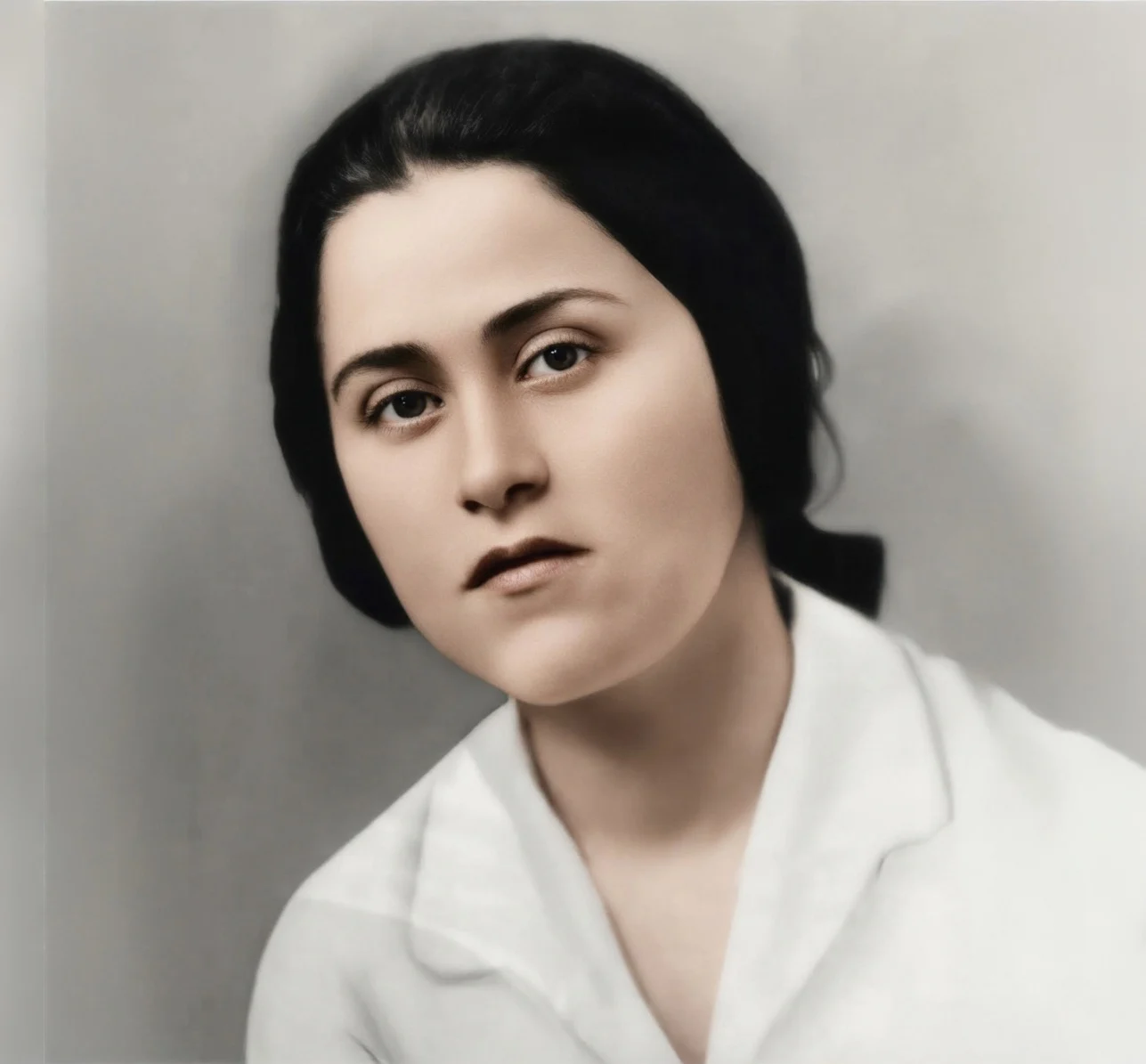
Come, friends, and hear the tale that I impart,
Of love, of grief, of anguish in my heart.
One day I rode in quest of fortune’s light,
And found a love pure-hearted, fair and bright.
Farida was her name, my cherished one,
Her face like Zuhra in the heavens shone.
No guile she knew, no treachery, no art;
Her beauty was the mirror of her heart.
How blessed was I beside my lovely one,
My flower-fashioned jewel beneath the sun!
Two daughters came—two moons of tender light,
Two fairy peris, delicate and bright.
A tender mother, loving, wise and mild,
Serene in manner, gentle with each child.
For seventeen sweet years, through joy and strife,
Beloved companion, dearest soul of life.
Then forty-seven brought that fatal May;
The twentieth turned our morning dark as night.
My fortune broke; my happiness was slain;
My living soul was torn from me in pain.
Farida, young and beautiful, was gone;
For all of us, the morning lost its dawn.
I wept for her; my tears I could not stay,
Then took my pen to give my sorrow way.
But how upon a lifeless page impart
The living image treasured in my heart?
The beauties of the world I oft had seen,
And heard men praise the fairest who had been.
A hundred towns I searched, a hundred books,
Yet none could match her beauty, grace, or looks.
And since my tongue falls short of beauty’s claim,
In Shahin’s manner now I’ll praise her name.
Ishoqboy’s daughter—blessed in face and fame,
Her beauty radiant, goodness crowned her name.
A sun in splendor, sweetness on her tongue;
By every word a thousand hearts were won.
In her, the moon and cypress seemed to meet;
Her ruby lips made sugar seem less sweet.
Beside those lips a dark, bewitching mole—
A precious lal, a seal upon the soul.
Each curling tress a chain where lovers lie;
Two worlds lay conquered by her darkened eye.
Her brows were bows, her lashes arrows keen—
What heart survived when once their shafts were seen?
Two drunken narcissi—her languid eyes—
Stole hearts from earth and reason from the wise.
Her radiant brow so kindled with its light,
It turned the deepest darkness morning-bright.
Her sculpted profile flashed with tempered grace,
A polished blade of beauty in her face.
What cypress in the garden dared compare
With that tall form, so delicate and fair?
In form and beauty, character and speech,
No other woman could her measure reach.
The less one sought, the more in her one found;
In goodness and in grace she knew no bound.
In wine and song, in ghazal’s flowing art,
No silence ever stilled her joyous heart.
Where music sounded, there her spirit flew;
With every song the world grew bright anew.
Farida—goodness honored in her name,
For beauty and for grace renowned by fame.
She drank with guests and welcomed every friend,
Rejoicing whenever paths would meet again.
When tanbur sang and strings of rud were stirred,
Her joy arose in every note she heard.
So delicate, so graceful and so fair,
No painter’s dream could fashion one so rare.
O friends, no beauty such as hers was born,
Not in this world, nor any age’s morn.
The people blessed her everywhere she went;
She gave but goodness, goodness heaven-sent.
Five-and-thirty years that peri knew;
From heaven itself her face its radiance drew.
The moon itself could not with her compete;
Her lips made even sugar seem less sweet.
Her brows were bows, her lashes arrows keen;
Their shafts flew forth wherever she was seen.
Her apple-chin—what apple could compare?
Each single hair seemed armed with beauty’s snare.
Two half-drunk narcissi—her languid eyes—
Could steal the heart and reason from the wise.
She sang and danced with such enchanting grace;
Her presence brought delight to every face.
Compassionate and tender, kind to all,
She wished no wounded soul should ever fall.
A rival’s sorrow filled her soul with pain;
A friend’s good fortune brought her joy again.
And so this peri from the world withdrew,
The balm of Mahvash’s soul, beloved and true.
Her daughters’ hearts she left with wounds of grief;
For kin and stranger there was no relief.
Whoever heard the tidings of her fate
Would sigh from deep within, disconsolate.
Farida, honored name, had passed away;
For me and for our daughters, black the day.
Though from my eyes a river flowed as well,
What water could the fire within me quell?
Her brief and precious life dissolved in night;
In grief it bowed its head and lost its light.
May none of you, my friends, behold such woe;
May neither friend nor foe such sorrow know.
May none endure the darkness of that day—
May grief like this forever pass you by.
Itzhak Mavashev
May 20, 1947
Translated from Bukhori by David Mavashev.
The poem is dedicated to David’s father’s first wife Farida who died during childbirth at age 35.