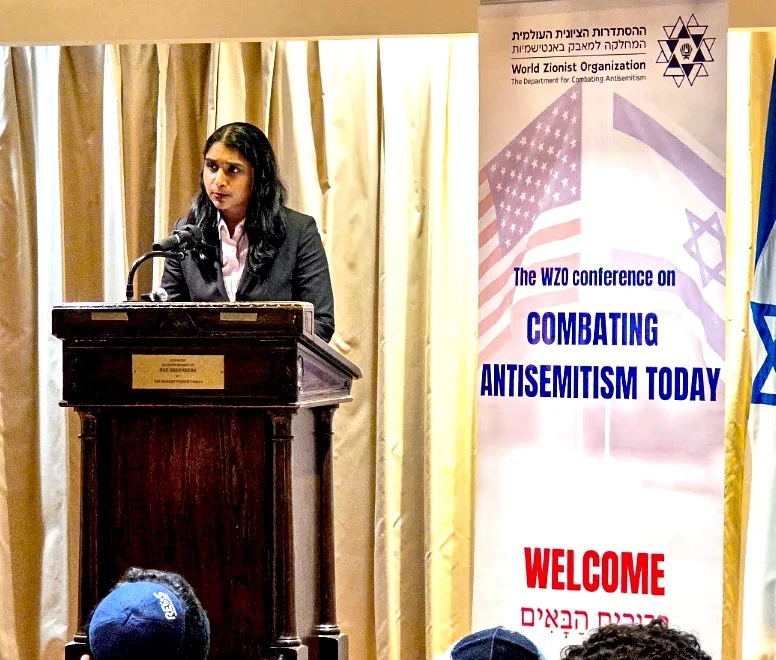
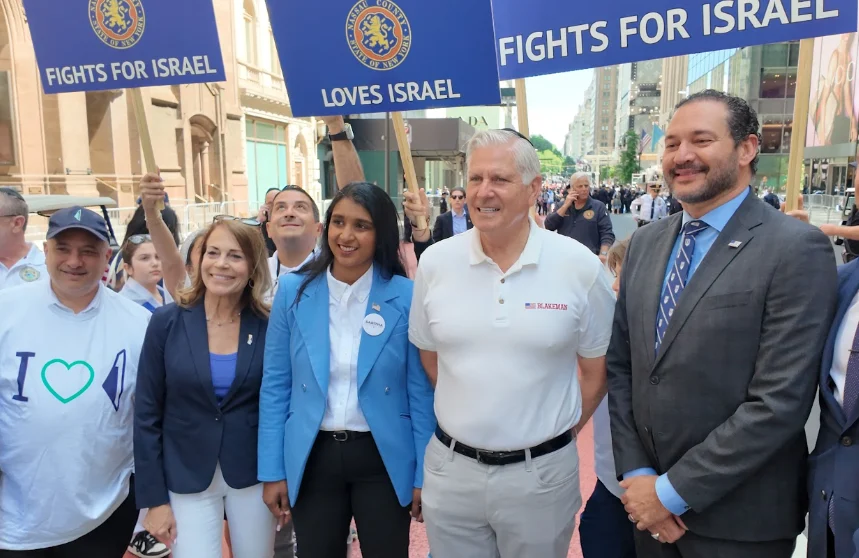
Saritha Komatireddy is running for New York Attorney General on a public-safety platform—and has made combating antisemitism a prominent part of her campaign. The Bukharian Times spoke with the former federal prosecutor about her candidacy, protecting Jewish New Yorkers and what she wants Bukharian voters to know. Learn more at sarithafornewyork.com.
Erin Levi: You grew up in Queens, home to one of the largest Bukharian Jewish communities outside Central Asia. Did you encounter the Bukharian community growing up?
Saritha Komatireddy: I was born in Coney Island, but have long known of the Bukharian community and its deep roots in Rego Park and Forest Hills. I spent years on cases rooted in Central Asia and the former Soviet republics, and I came to understand the history that these extraordinary communities carry.
EL: Tell us a little more about yourself. You’re the daughter of immigrants, a mother of four, and you’ve spent much of your career prosecuting terrorism, organized crime and other major federal cases. What experiences most shaped the person and prosecutor you became?
SK: I was planning on medicine. Then 9/11 happened. I was at Harvard, and I decided the thing I most wanted to do with my life was keep people safe. That took me to Harvard Law School and then to the U.S. Attorney’s Office in Brooklyn, where I spent a decade prosecuting terrorism, organized crime and narcotics cases. I put leaders of ISIS and al Qaeda in prison. I convicted the most senior Mexican law enforcement official ever tried in the U.S. for working with the Sinaloa cartel to move cocaine into this country. I served as chief of staff of the DEA, a 10,000-person agency, and as counsel on the Deepwater Horizon investigation. I have worked for three presidents, Republican and Democratic. Terrorism cases teach you one thing above all: that prevention of harm is paramount; if someone has already died, we have already failed. I’m a mother of four. Every time I read a case file, I read it as one.
EL: Why have you decided to run for New York attorney general now? What do you believe you would bring to the office that is currently missing?
SK: Because New York isn’t safe, and if New York isn’t safe, nothing else matters. Repeat offenders cycle through the courts. Severely mentally ill people are living and dying on the streets and subways. Jewish New Yorkers are being harassed in the street and in their own neighborhoods.
The Attorney General’s office has real tools to change that — the power to prosecute, to investigate, to take cases the local district attorneys won’t, to sue under civil rights laws, to police the nonprofits that take public money. The current Attorney General has spent eight years and a rapidly growing budget on politics and press releases, and has left most of those tools in the drawer.
What’s missing is a prosecutor. I am the only prosecutor in this race. I have actually put dangerous people in prison, and I will run the office as what it is meant to be: the top law enforcement office in the state.
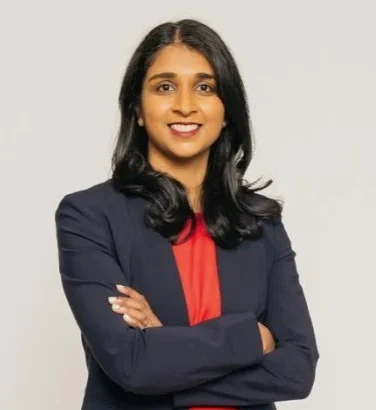
EL: Antisemitism is an urgent concern for our readers—and, evidently, for you, too. You have said you would declare a “state of emergency” on antisemitism and, in certain circumstances, use the attorney general’s authority to take over prosecutions from local district attorneys. What would that look like in practice, and what threshold would have to be met before you intervened?
SK: On day one I will declare a state of emergency on antisemitism in New York City. I will make antisemitic harassment, vandalism, and violence a top enforcement priority, with staff and money to match.
The Attorney General has statutory authority to prosecute hate crimes. The current Attorney General has never used it, and the office’s Hate Crimes Bureau is not even staffed. I will staff it with experienced prosecutors and I will use it.
The threshold for stepping in is not complicated. If a local district attorney declines to charge, drops the hate-crime enhancement, pleads a case down to a violation, or lets it sit — or if there is a pattern of that in a county — my office will take the case. Nobody who assaults a Jew on a New York street because he is a Jew should walk out the door with a desk-appearance ticket. If the DA won’t say that, I will.
EL: Jewish institutions are spending significant amounts of money on security. What role, if any, should New York State—and specifically the attorney general—play in protecting synagogues, Jewish schools and community organizations?
SK: No synagogue in this state should have to hire a private army to hold Shabbat services. Security is a public responsibility, and the Attorney General has two tools sitting unused.
First, safe buffer zones. Under Civil Rights Law §79-m, the Attorney General has authority — on her own — to go to court and enjoin anyone who obstructs or intimidates people trying to worship. The current Attorney General has used that exact section to keep protesters back from other buildings. She has never once used it for a synagogue. I will.
Mobs screaming at families walking into shul will get a court order and, if they break it, a cell.
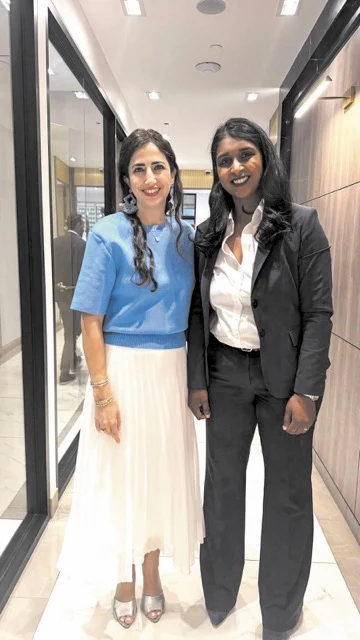
Second, our students. Title VI of the Civil Rights Act protects students from discrimination based on shared ancestry, and that includes Jewish students. The Attorney General has brought civil rights actions to protect students of other backgrounds. She has not brought one for Jewish students. I currently represent Jewish students at MIT in a Title VI case before the United States Supreme Court. I know how these cases are built and I know how to win them. As Attorney General, I will bring them against any school in New York, public or private, that lets Jewish kids be threatened and excluded.
EL: Mayor Zohran Mamdani has caused concern among many Jewish New Yorkers over his positions on Israel and antisemitism. Where should the attorney general act independently of—or, when necessary, as a check on—New York City government?
SK: The Attorney General is a statewide officer. She doesn’t answer to the Mayor of New York City, and she has jurisdiction that doesn’t depend on his cooperation.
If City Hall won’t keep a mob off the steps of a synagogue, a §79-m injunction from my office doesn’t need the Mayor’s permission. If the NYPD is told to stand down, or a district attorney is told to go easy, the Attorney General’s hate-crimes authority still exists and I will use it. If a nonprofit that takes public money is bankrolling harassment campaigns, the Charities Bureau can open the books — that’s my office, not his.
I will judge the Mayor by what he does, not by what he says. But Jewish New Yorkers deserve to know that there is a law enforcement office in this state that will protect them regardless of who sits in City Hall. That will be mine.
EL: The Bukharian community has a growing legal community, including the Bukharian Law Association and its Student Division. Given your path from law school to federal prosecution, national security work, the DEA and private practice, what opportunities would you encourage young Bukharian lawyers and law students to pursue? And what advice would you give those interested in public service or federal law enforcement?
SK: Go work for the government early. Nothing I did in private practice taught me more than my first years as a line prosecutor. You stand up in court alone, you make decisions that change people’s lives, and you learn to be responsible for them.
Specifically: the U.S. Attorney’s offices in Brooklyn and Manhattan, the DEA and FBI, the district attorneys’ offices, the state Attorney General’s office. These are hard jobs to get; the way in is a clerkship if you can get one, and a record of showing up and outworking everyone if you can’t. Language is a real advantage. A young lawyer who reads Russian or Uzbek or Farsi is valuable in national security and organized-crime work, and most applicants don’t realize it.
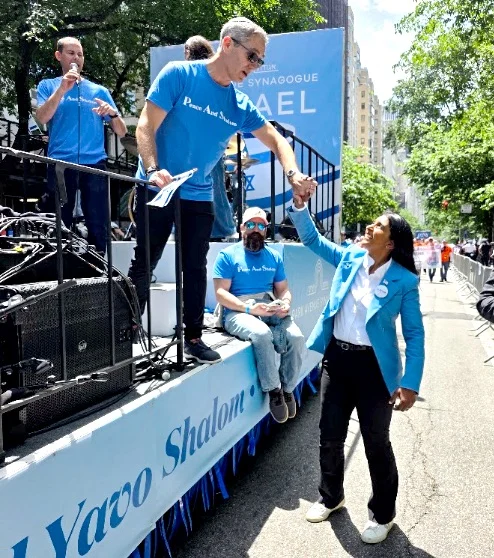
And don’t wait to be asked. I didn’t. The Bukharian Law Association and its Student Division are exactly the kind of network that opens those doors. Use it.
EL: What else would you want Bukharian Jewish voters who are just getting to know you to know about you and your candidacy?
SK: I am not a politician. I’m a prosecutor who has spent her career going after the people who hurt other people, and I’m running because the office that should be doing that for New York isn’t.
Your community came here for the same reason mine did–to be safe and free to think and worship as you wish. That is the promise of this nation, and it is being broken in front of us in New York. I will keep it.
I will lock up repeat offenders, get the mentally ill off the streets and into humane treatment, root out fraud, and treat antisemitism as the emergency it is.
If New York isn’t safe, nothing else matters. I’d be honored to have your vote.
EL: Thank you, Saritha!
By Erin Levi