
D’var Torah
Parashat Vayeshev is almost always read close to Chanukah, and this is hardly a coincidence.
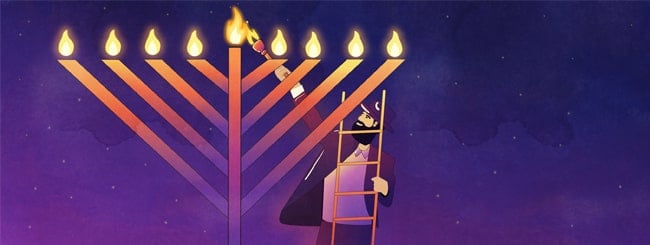
The light of Chanukah illuminates the story of Yosef, revealing how hope is born precisely within the darkest moments. The characters and struggles in the parashah teach us the inner power of Chanukah: a small flame that pushes back great darkness.
First theme: Yosef the dreamer – a spark of future light in a dark present. When Yosef is young, his dreams seem detached from reality. His brothers mock him, his father rebukes him, and soon he finds himself at the bottom of a pit on the way to slavery in Egypt.
Here we feel the deep connection to Chanukah: the Maccabees also seemed like impossible dreamers – a handful of priests rising against a mighty empire. This parallel between “dreamers” and “bearers of small prophecy” teaches that light often begins as a vision no one else believes in.
A well-known story tells of Rabbi Aryeh Levin meeting a discouraged student who said, “My dreams are too big for reality.” The rabbi smiled and answered, “If your dream is bigger than reality, it means reality simply hasn’t grown enough yet.” So it was with Yosef, and so with the Maccabees.
Yosef teaches that within every fall lies the seed of ascent. Chanukah teaches that bringing light into the world begins with holding onto a dream that darkness cannot quench.
Second theme: The empty pit – darkness that calls for light. The Torah describes Yosef being cast into a pit that was “empty; there was no water in it.” The Sages add: there was no water, but there were snakes and scorpions. This moment of absolute despair becomes a symbol of ancient exile, from which the formation of Israel in Egypt would eventually grow.
Chanukah mirrors this: the Greeks tried to “empty” Jewish life of its spiritual water. But precisely when the pit is empty, light emerges. A Hasidic tale tells of a Jew trapped in a deep pit during a time of pogroms. From the darkness he prayed with all his heart, and suddenly a friend spotted a tiny flicker of light in the distance—perhaps a candle the captive had managed to light. Realizing that where there is even a pinpoint of light there must be a Jew, he risked his life to save him.
The pit of Yosef invites us to search for that small point of light, just as the delicate flame of the Chanukah candle teaches that even the smallest illumination must be treasured and can be seen even from the outside. A place that appears empty may contain a hidden spark waiting to be revealed.
Third theme: The sale of Yosef – pain that transforms into redemption. The sale of Yosef is one of the most painful moments in the Torah. A brother sold by his own siblings… the tension, jealousy, and brokenness are profound. Yet this very act becomes the catalyst for redemption: Yosef reaches Egypt, and the chain of events eventually saves the region from famine.
Chanukah also begins in darkness: harsh decrees, spiritual oppression, and a sense of helplessness. Yet from this emerges a miraculous salvation that echoes through generations.
A moving story from World War I tells of a Polish Jew exiled to a distant village. Entering the small, spiritless synagogue, he pulled out an old menorah he had brought with him and said, “If we have been exiled, then we will bring our light here.” Lighting the candles revived the entire community.
Like Yosef’s sale, and like the decrees of the Greeks, moments that seem devastating often hold the beginning of redemption. Hardship becomes the fuel for the miracle.
Fourth theme: Yosef in Potiphar’s house – inner victory. In Potiphar’s house Yosef faces a powerful and private moral trial. He resists temptation and preserves his identity in a culture utterly different from his own.
This reflects the inner battle of Chanukah: not only a war against external enemies but the struggle to preserve holiness and spiritual identity within an assimilating society. The Midrash says that during Yosef’s test, “the image of his father appeared to him.” This teaches that a person carries an inner flame of memory, tradition, and upbringing that can guide him even in darkness.
A story tells of a student about whom his rabbis said, “Wherever he travels, he carries the menorah of his father’s house with him.” When he asked how they knew, they explained, “Even when you are far away, your light remains with you.”
Yosef wins because the inner light defines him more than the darkness that surrounds him.
Fifth theme: The dreams of Pharaoh’s officials – bringing light to others in the darkest place. Yosef is imprisoned, yet he refuses to sink into despair. He notices the sad faces of his fellow prisoners and asks, “Why are your faces down today?” This small act becomes the beginning of his rise to greatness. He brings light to others in the darkest dungeon.
This is a core message of Chanukah: we light candles inside our homes, but we place them so they shine outward, “at the entrance of the house, facing the public domain.”
A wonderful story tells of an elderly Jew who traveled through Lithuanian villages during Chanukah. On a stormy night he came to the home of a poor man and said he had come only to light the candles with him, knowing the man had no oil. After kindling the lights, the poor man wept: “More than the candles you lit in my home, you lit a candle inside my heart.”
Yosef in prison discovers others’ darkness—and by illuminating it, he illuminates his own destiny. Chanukah teaches that light grows when it is given away.
***
In conclusion, Parashat Vayeshev and Chanukah meet at a deep point: the ability to find light precisely where everything seems dark. Whether in a pit, in slavery, in betrayal, in cultural pressure, or in prison—light is present. Yosef, like the Maccabees, teaches that a small flame lit in one moment can illuminate a journey of generations.
Wishing you all a Shabbat Shalom,
Rabbi Asher Vaknin
BJCC Rabbi of the Bukharian Youth
I approve this message
Rabbi Asher Vaknin