
Uzbekistan
Samarkand is a city where words have a special flavor. Sometimes tart like persimmon, sometimes sweet like fig. And sometimes pleasantly sour, like cherries — gilоs — a word local Tajiks jokingly use to refer to local Iranians, who reply in turn with kadu (pumpkin).
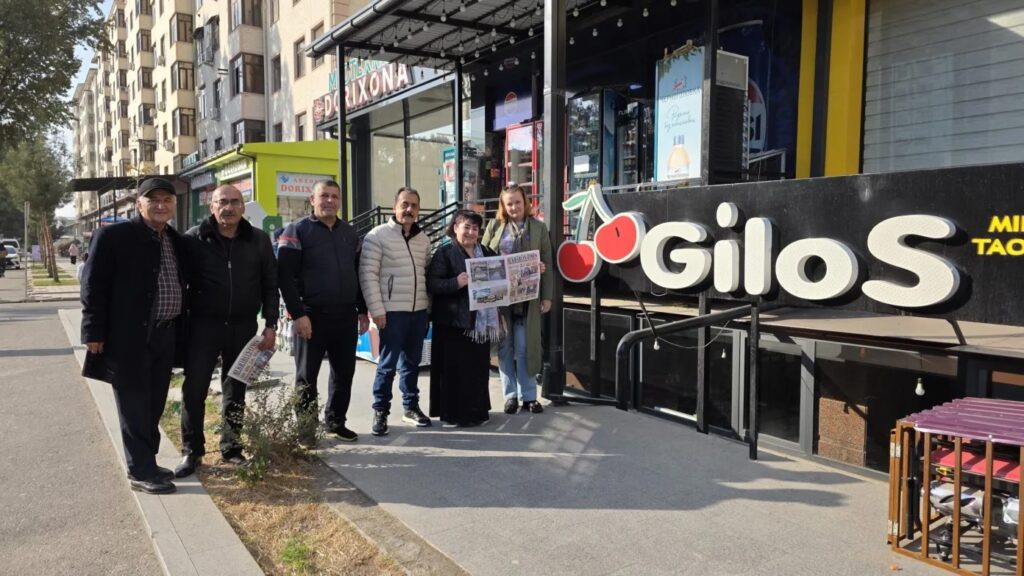
When, in 2021, Murod-aka — an Iranian — opened a restaurant and named it “Gilos,” many didn’t immediately understand that it wasn’t a joke. Even his sons tried to dissuade him, saying the name was somehow “not great.”
“It’s already the third restaurant in our family,” he explained simply. “There’s Anor — Pomegranate, and Anjir — Fig. And I love cherries. So I decided: let it be Gilos.”
In this simplicity, you must admit, there is an entire philosophy — even wisdom. Where some heard hidden meaning, Murod-aka heard the taste of childhood, the aroma and color of spring, the ease of conversation at a multicultural Samarkand table. The restaurant, with its delicious cuisine, quickly became a gathering place — for locals, visitors, Tajiks, Iranians, Uzbeks, Russians, Tatars, in short, for everyone who knows how to appreciate both laughter and bread. And the word on the sign, which once caused a hint of offense, suddenly became a kind of symbol of reconciliation.
I learned about the restaurant from a guest from New York, a native of Samarkand — Rafael Nektalov, editor-in-chief of The Bukharian Times. We had known each other remotely, as colleagues, and today he finally found himself in Samarkand and convinced me and Shakhlo Ahrorova to have lunch together.
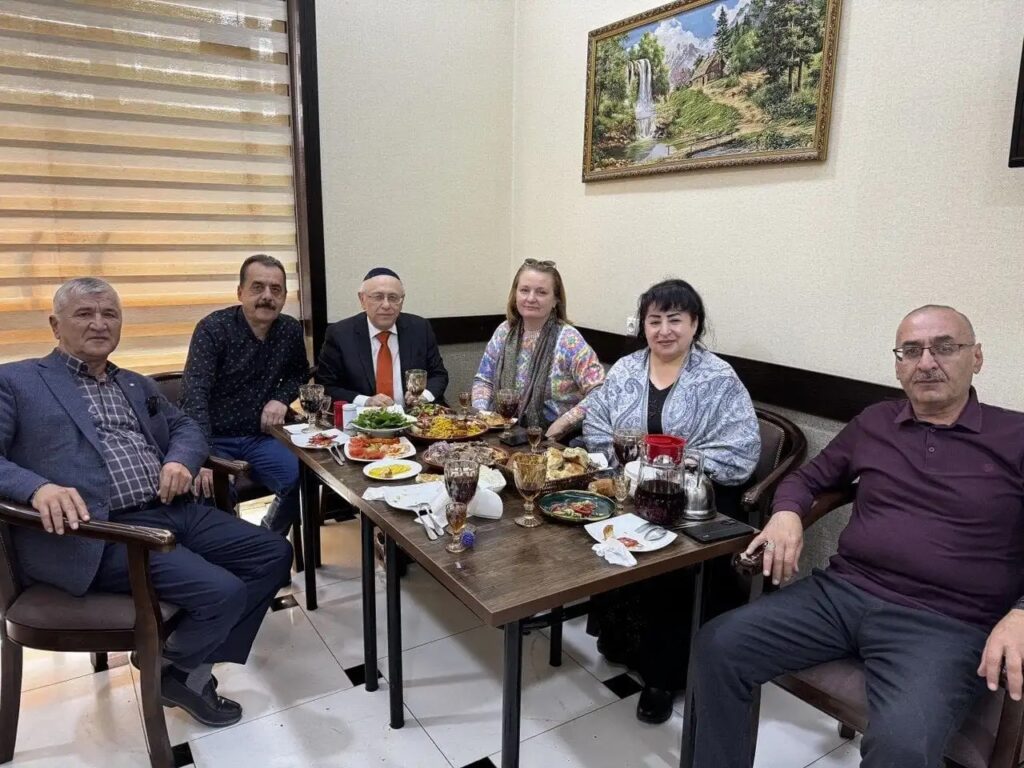
Imagine Shakhlo’s surprise — someone who knows all the subtleties of Samarkand humor — when she found herself, not jokingly but in all seriousness, in a restaurant named “Gilos.” For a long time she couldn’t believe, even staring at the sign, that it was real. Then she smiled and said:
“Well, that’s it. Now it’s time for some Tajiks to open a restaurant and call it ‘Kadu.’”
We laughed. And indeed — why not? After all, kadu — pumpkin — is a universal thing: great in samsa, in shurpa, in roasted dishes, in bichak. You could supply such a restaurant directly from the agricultural plot of the “Save Samarkand” group. And who knows — maybe all the old subtexts would disappear, leaving behind nothing but delicious Samarkand plov and a warm smile over a cup of green tea…
— Anastasia Pavlenko, Voice Press AZ
This was translated
from Russian into English