
Editor’s note: This story came to us through lawyer Leo Jacobs, a community leader and recent Jamaica Estates resident featured in issue 1178.
When David Davydov moved to Jamaica Estates eight years ago, he was drawn by what many of his neighbors already knew: this is a neighborhood worth caring about. Tree-lined streets, well-kept Tudor-style homes, a genuine sense of community. He got involved with the Jamaica Estates Association (JEA) not long after, joining the board as Director of Security and working to revamp the neighborhood’s safety patrol. Last month, the membership voted in an election—several candidates ran—and Davydov came out on top, becoming the first Bukharian Jew to lead an organization that has been shaping this neighborhood—and Queens—for nearly a century.
The milestone reflects something larger. Of Jamaica Estates’ approximately 1,800 homes, Davydov estimates that roughly half are now Bukharian families. Yet the JEA has remained largely the domain of older, long-tenured residents—the kind of civic institution that many newer arrivals have never thought to join. Davydov wants to change that.
“Bukharian residents are often very vocal about issues,” he says, “but sometimes those voices go into dead air. Through the association, people actually have a forum to be heard.”
A Tajikistan-Born Businessman Takes the Helm
Davydov’s path to this moment began far from Queens. He was born in Dushanbe, Tajikistan, and came to the United States in 1990 at age six, part of the wave of Bukharian Jewish families who emigrated from the former Soviet Union in the late 1980s and early ’90s. He grew up in Forest Hills, built his career in New York—he now owns ambulatory surgery centers in New York and New Jersey—and eventually moved his family to Jamaica Estates when they needed more space. He and his wife Rona have three children. (Rona also runs a popular baking business, Rona’s Bakes (@ronas_bakes), with a following on Instagram.)
‘Time for a new generation’
“It’s a very historic civic association,” Davydov says. “We’ve had prominent residents here over the years—including the Trump family and former Secretaries of the Treasury and State. It has always been a neighborhood of influential residents.”
A few houses down from Davydov lives Michael Bookbinder, 83, a former JEA president who knew Donald Trump personally and used to ride bikes with him and his brother when they were young. Stories like that are woven into the institution. But the membership has been declining—from nearly 400 when Davydov first joined the board, to roughly 250 today—as longtime members have moved away or passed on.

“It’s time for a new generation to step in,” Davydov says. “I’d like to bring in a more youthful board, new energy. Ideally, I’d like to see more members of the Bukharian community involved, since many of us live here.”
What the JEA Actually Does
Founded in 1929, the JEA has spent nearly a century cultivating relationships that individual residents can’t easily build on their own: direct lines to NYPD precinct leadership, access to elected officials at the city, state, and federal levels, and a seat at the table when agencies make decisions affecting the neighborhood. When something goes wrong—a spike in car break-ins, a sanitation issue, a zoning dispute—the JEA can escalate quickly rather than relying on 311 and hoping for the best.
Zoning protection is one area where membership has concrete, financial stakes. Nearly all of Jamaica Estates is zoned R1-2—the most restrictive single-family designation in New York City, i.e. low-residential district. The median house sale price was $1.4M in January 2026, up 15.9% over the year, according to Property Shark. The JEA actively monitors and fights attempts by developers to circumvent those protections. For families who have invested in building or buying homes here, that advocacy directly protects their property values.
The association also has a social dimension that matters for Bukharian families in particular. For over 20 years, the JEA has hosted an annual International Night, celebrating the cultures and traditions of the neighborhood’s diverse communities—Chinese, Indian, Irish, Albanian, Puerto Rican, Bangladeshi, and yes, even Bukharian. It is the kind of event that signals something important: this is not an institution that views newcomers as outsiders. Bukharian Jewish culture has already been honored here.
The Case for Joining
Annual membership costs $65—less than $0.18 a day. Members gain access to a community chat, receive timely updates on everything from crime alerts to street repairs and city meetings, and contribute to the collective advocacy that keeps the neighborhood running well. The JEA communicates through its website, email bulletins, Facebook page, and general membership meetings open to all Jamaica Estates residents.
“My message is simple: let’s work together,” Davydov says. “It’s a great neighborhood. Why not take part in shaping it?”
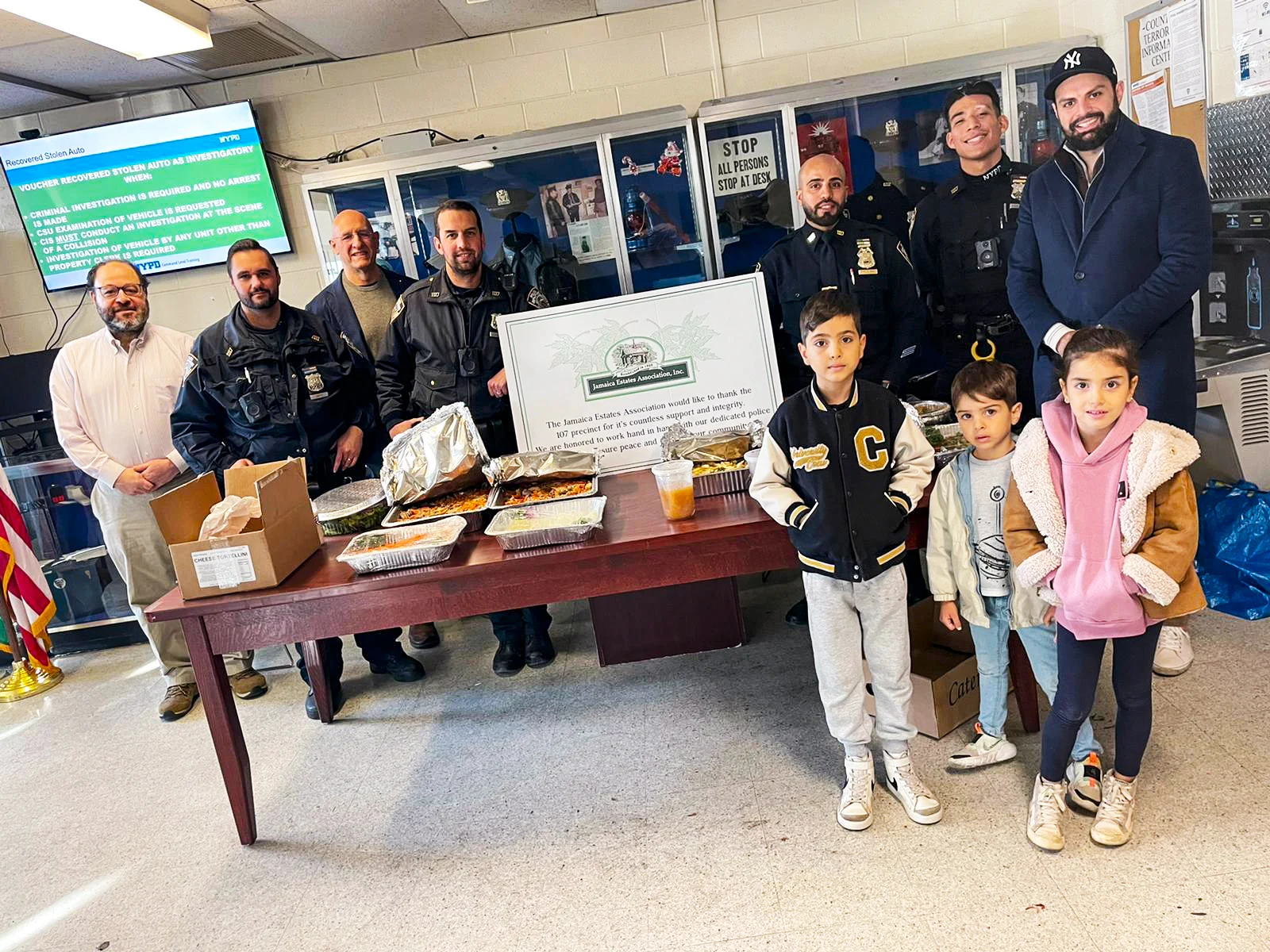
Board members must live in Jamaica Estates, and Davydov is actively looking to recruit. Whether you want to serve on the board or simply become a member, he’d like to hear from you.
Get Involved
Website: jamaicaestatesassociation.com
Contact David Davydov: ddavydov5@gmail.com
About Jamaica Estates
Jamaica Estates was conceived in 1904 by real estate developers as a planned, gated community — a refuge for wealthy New Yorkers seeking to escape the city’s density. Though the gates are long gone, the neighborhood retains an almost suburban quality rare in Queens: tree-lined streets, Tudor-style and Colonial homes on generous lots, and a strong sense of residential pride.
The neighborhood is perhaps best known as the birthplace of Donald Trump, whose father Fred Trump built the family’s six-bedroom Tudor home at 85-15 Wareham Place. Trump lived there until age four. The house sold in 2017 for $2.14 million.
Today, Jamaica Estates is home to approximately 1,800 households. Roughly half, by David Davydov’s estimate, are now Bukharian families — many of them younger couples building new homes and establishing roots in one of Queens’ most sought-after addresses.