
Personal Journey
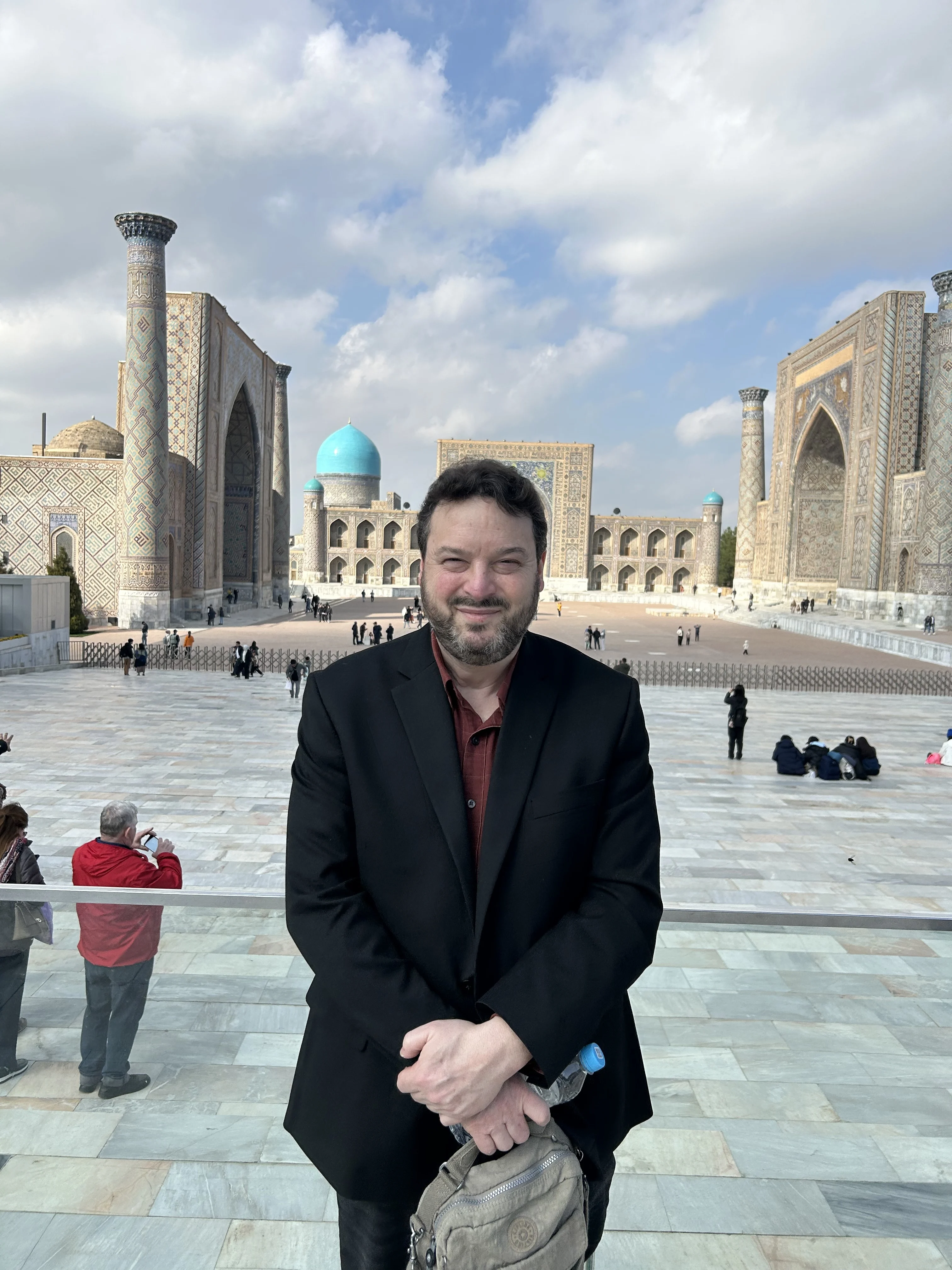
At the end of February 2026, I was honored to travel to Uzbekistan as part of a delegation of more than twenty Bukharian Jews from New York, Atlanta, and Israel. Our tour was further enriched by several participants who live in Uzbekistan.
An Ashkenazic Jew, I have no family connections to Central Asia and speak neither Russian, Uzbek, Tajik, nor the Jewish dialect of Bukhori. Nonetheless, I was warmly welcomed as part of the group, and several members generously provided English translation throughout the trip so I could fully understand what I was seeing and hearing.
I did arrive with some familiarity with the region’s culture. I serve as Executive Director of the Center for Traditional Music and Dance (CTMD) in New York City (www.ctmd.org). Founded in 1968, CTMD partners with New York’s immigrant communities to help sustain and share their performing arts traditions. For more than 40 years, CTMD has worked with leading performers in New York’s Bukharian Jewish community, presenting concerts, tours, festivals, workshops, and recordings.
I have long loved Central Asia’s performing arts, including the courtly musical and poetic tradition of shashmaqom. The writings of American ethnomusicologists Theodore Levin (Dartmouth College, Aga Khan Music Programme) and Evan Rapport (The New School) have provided invaluable context for my listening over many years. In addition, my neighborhood of Midwood in Brooklyn is home to a growing community of Muslim Uzbeks and Tajiks who have established a number of shops and restaurants that I frequent.

The primary purpose of our trip was to participate in a major conference at Bukhara State University entitled “Bukharian Jews in the Socio-Economic and Cultural Life of the Region.” The conference explored the long-standing Jewish presence in this multicultural region and highlighted continuing ties between Uzbekistan and the Bukharian Jewish diaspora.
The trip was organized by Rafael Nektalov, Editor-in-Chief of The Bukharian Times. A musicologist by training, Nektalov is one of the community’s leading spokespersons and a tireless advocate and organizer of important cultural programs in New York. For decades, he has served as an intrepid cultural ambassador, building bridges between the Bukharian diaspora and national institutions in Central Asia.
When Nektalov first invited me, I was excited to join a group that included two of the Bukharian Jewish community’s—and Uzbekistan’s—leading musicians: Ezro Malakov and Tamara Katayeva. We were also joined by the wonderful Israel-based singer Rita Yusupova. Indeed, each and every member of our delegation was making a distinctive contribution to the community as scholars, cultural workers, writers, political figures, philanthropists, and business leaders.
Our itinerary focused on three major Uzbek destinations: Samarkand, Bukhara, and Tashkent. As this was my first visit to Central Asia, I chose to skip the Tashkent leg and spend additional time in Bukhara.

Samarkand and Bukhara are, of course, legendary Silk Road cities, conjuring images of camel caravans, blue-domed mosques, spice bazaars, and luminous silk garments. Uzbekistan has invested significantly in preserving its architectural and artisanal heritage and promoting tourism. Major tourist centers are connected by high-speed trains and feature beautifully restored historic buildings, Western-style hotels, and helpful multilingual signage. Tourism reaches its most elaborate expression in the preserved museum-city of Khiva—something like a Venice or Bruges of the Silk Road—and at Silk Road Samarkand, a Disneyesque recreation of a historic town augmented by amenities such as a water park, light show, and spas all set along old Soviet rowing canals. Looking for a more authentic travel experience, I didn’t go to either.
Silk Road Samarkand aside, Samarkand boasts the marquee tourist attractions: the breathtaking Registan, featured in nearly every promotional image; the mausoleum of the conqueror Timur, a complex historical figure who led brutal military campaigns and is better known in the West as Tamerlane (1336–1405), and his grandson, the emir-cum-astronomer Ulugh Beg (1394–1449); and the Shāh-i-Zindah, a complex of smaller mausoleums famed for their exquisite blue tilework and as the memorial site of Qutham ibn Abbas, venerated as a cousin of Muhammad and among the first to bring Islam to Central Asia in the 7th century AD. Much of contemporary Samarkand was developed during the Russian Empire, and the city abounds in wide boulevards and pleasant, tree-lined parkways.
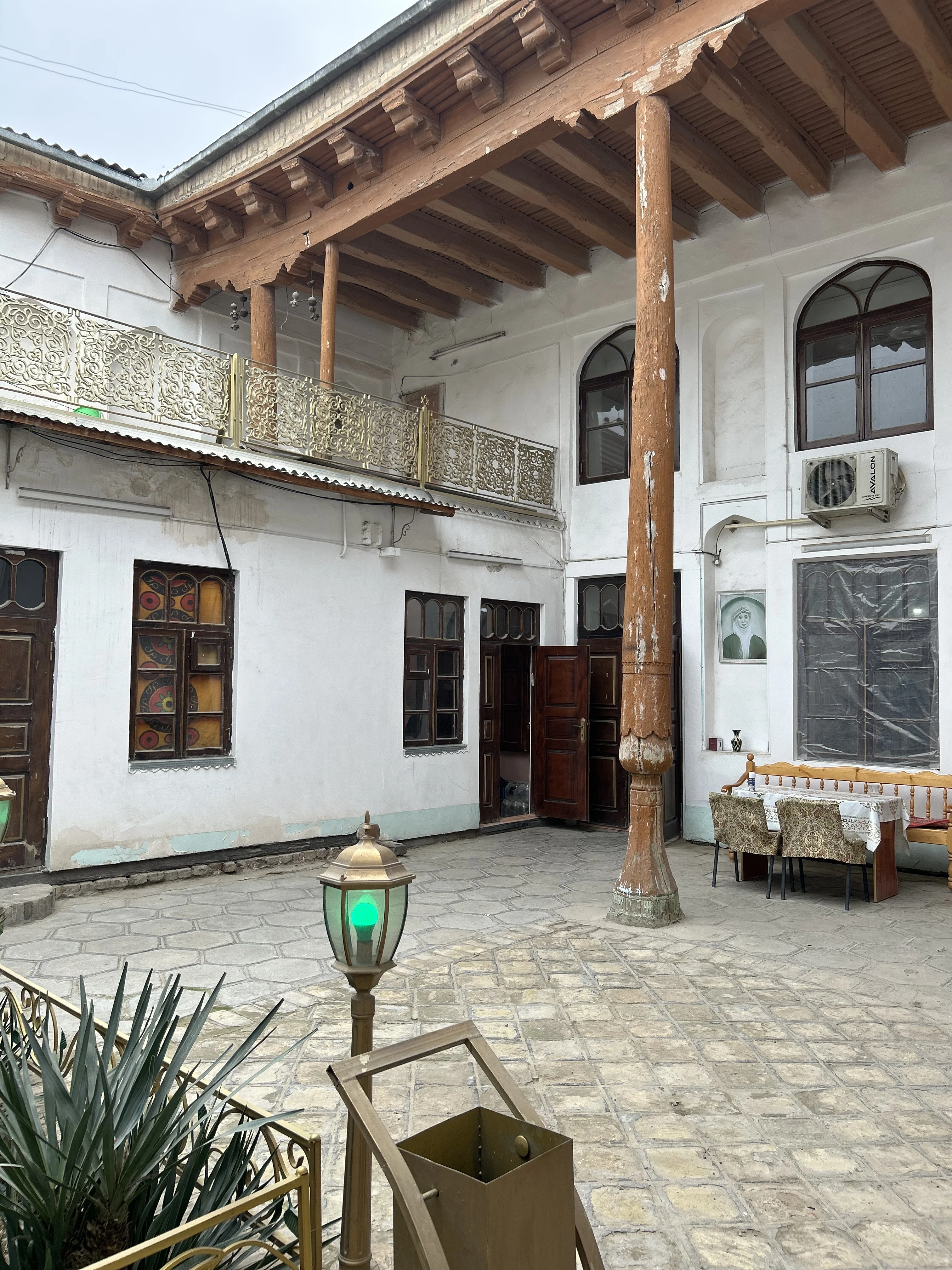
Bukhara offers a more immersive historic Silk Road atmosphere. The city center radiates from the famous 150-foot, 11th-century brick Kalyan minaret and its adjacent mosque-madrasa complex. The minaret is so impressive that it was reportedly spared by Genghis Khan as his army marauded the city. Nearby are domed bazaars filled with locally made crafts, historic sites, museums, restaurants and cafés, and the rebuilt citadel, which served as the seat of the Bukharan Emirate from the 18th century until the Soviet takeover. Beyond the tourist center, Bukhara becomes a maze of narrow alleys lined with homes that present few windows to the street, many still constructed of traditional adobe. Doorways open onto shaded two-story courtyards where families and neighbors gather to socialize.
In addition to visiting major tourist sites and bustling bazaars, our group toured hilltop Jewish cemeteries and historic Jewish mahallas (quarters) in both cities, complete with their beautiful synagogues. The cemeteries and synagogues are beautifully maintained, thanks to dedicated local residents and vital funds raised by the Bukharian diaspora. Many of the more recent grave markers feature etched black-marble portraits of the deceased, and I came to appreciate these warmly rendered visages as members of our group posed for photos beside the stones of their ancestors.
I was especially moved by the tomb of Levi Babokhonov (1873–1926) in the Samarkand Jewish cemetery. Revered as a virtuoso hofiz (master musician) and pedagogue, Babokhonov served as court musician to the last emirs of the Bukharan Emirate. In an oft-retold story, he was dismissed and imprisoned for accepting a lucrative recording contract from the Gramophone Corporation. In the emir’s eyes, recording Babokhonov’s voice for mass dissemination amounted to apostasy—a desecration of a treasured asset of the court. Though Levicha lost his court position, the recordings he made became touchstones that continue to influence generations of Central Asian maqam performers.
Nektalov organized sumptuous daily meals featuring heaping Russian-style salads, samsas, fish, freshly-baked non, and plov, the rice-and-lamb pilaf that is Uzbekistan’s national dish. Our banquets were frequently punctuated by boisterous speeches and toasts, though most of the witticisms escaped my limited grasp of Russian.
With talents such as Malakov, Katayeva, and Yusupova at the table, we were often treated to impromptu performances. Katayeva, in particular, demonstrated her prowess as a sozanda—a female entertainer and emcee for community celebrations known as toys. Employed at both Muslim and Jewish toys, the role of the sozanda was historically almost exclusively the domain of Jewish performers, and Katayeva is among the last who can masterfully present this unique Central Asian repertoire.
On the eve of the academic conference in Bukhara, we were honored at a lavish banquet attended by local politicians and the U.S. and Israeli ambassadors. Our visit coincided with a period of strengthening political ties between the United States and Uzbekistan, which has been courted by the Trump administration as an inaugural member of the new “Board of Peace.” The evening’s entertainment featured Bukhara’s wonderful Shashmaqom Ensemble, and Malakov, Katayeva, and Yusupova rose from their seats to deliver spectacular, spontaneous performances of shashmaqom and other folk/classical repertoire, expertly accompanied by the ensemble.

At the conference
The conference at Bukhara State University was held in a large hall filled with students and faculty. Speakers offered updates on a range of research and cultural initiatives, showcasing the breadth of talent within our delegation.
Dr. Lily Ishakova, a neuroscientist at Israel’s Weizmann Institute, discussed a Bukharian Jewish archive she is helping to establish there. Vyacheslav Shatokhin (New York) spoke about the Stolen Childhood Project, which preserves the memory of Jewish orphans who escaped the Holocaust through evacuation to Uzbekistan.
Albert Mavashev (Long Island) reported on the work of his family’s foundation, named in honor of his grandfather, the renowned writer and historian Itzhak Mavashev.

Eugenia Aranov (a.k.a. JEKA) discussed her novel The Heritage, set in part in old Bukhara.
Lyubov Mosheyeva, Levi Babokhonov’s great-granddaughter, reflected on her family’s musical legacy.
Tashkent-based historian Imanuel Rybakov (formerly on the faculty of Queens College) presented research on a Bukharian Jewish poet.
David Aronov briefed the audience on the emerging political power of the community in New York.
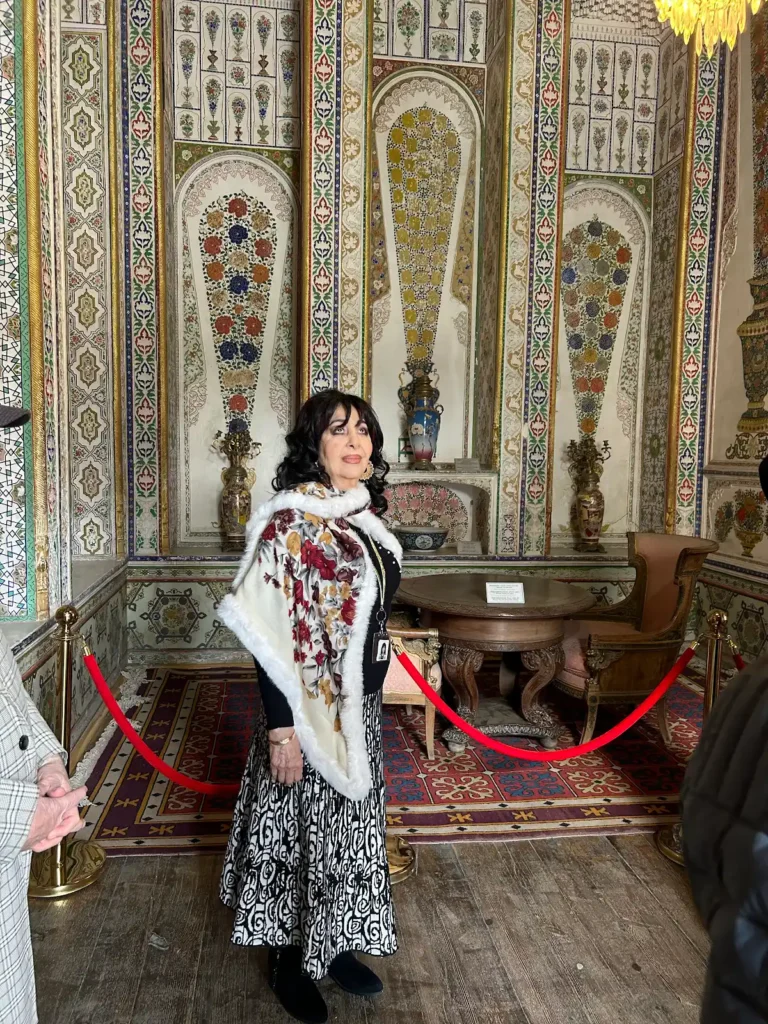
And Ezro Malakov spoke about his monumental recording and transcription project, Musical Treasures of the Bukharian Jewish Community.
For my part, I spoke about the Center for Traditional Music and Dance’s four decades of work with the Bukharian community, beginning with programs in the early 1980s at dancer Firuza Yagudaeva’s Firuza Restaurant on Manhattan’s Lower East Side and continuing to the present. As a practicing klezmer musician, I was thrilled to be able to perform for the conference some examples of East European klezmer music in a special performance with members of the Shashmaqom Ensemble. Two days later, the ensemble’s remarkable chang (hammered dulcimer) player, Rasul Naimov, generously hosted me at the ensemble’s offices and gave me a private lesson in shashmaqom.
I returned to New York deeply impressed by the generosity and openness to cross-cultural collaboration that marked this extraordinary trip. This cosmopolitan spirit defines the rich history of Bukhara and the Silk Road. Further, Central Asia stands as a model of productive engagement between Muslim and Jewish communities—something the world needs now more than ever.
I also came home with a renewed appreciation for the remarkable success of Bukharian Jewish immigrants in New York. They have built vibrant futures for their families and community in a new country, while sustaining creative initiatives that maintain strong ties to their Central Asian homelands.
Although Bukharian traditions face challenges as American-born generations inherit this rich multilingual and multicultural legacy, the heroic efforts of the immigrant generation will continue to inspire both the community and the broader world.
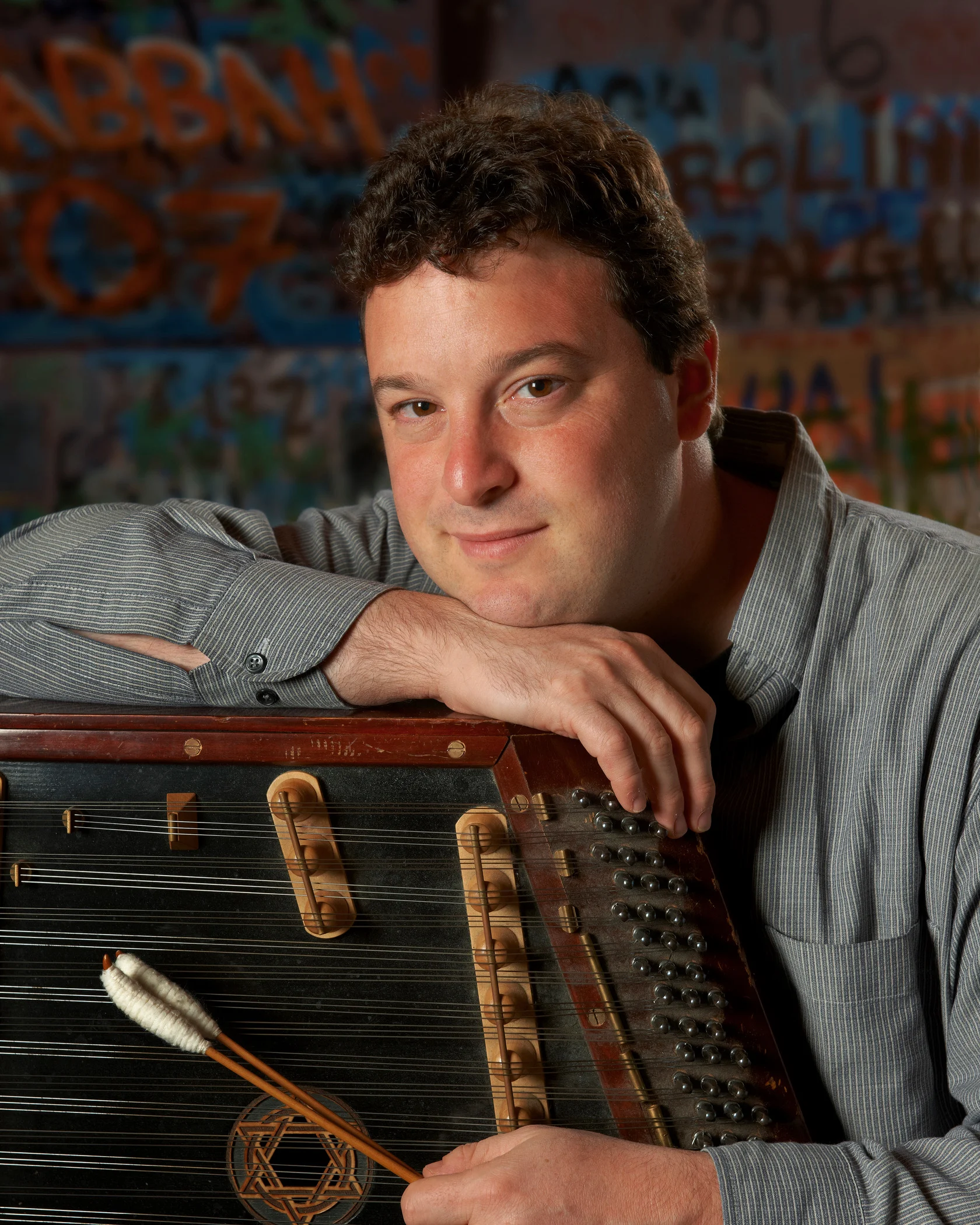
Pete Rushefsky is the Executive Director of the NY-based Center for Traditional Music and Dance (www.ctmd.org). He is also a klezmer musician who performs and records internationally with violinist Itzhak Perlman and the Klezmer Conservatory Band.
By Pete Rushefsky New York