
D’var Torah
Parashat Shemot opens not only a new book of the Torah, but a new chapter in the story of the Jewish people. It describes the descent into slavery, the birth of hope within darkness, and the emergence of a leader who never sought greatness. At its heart, Shemot teaches that redemption begins quietly, through human choices, courage, and faith. These messages are deeply relevant to everyday life, especially in moments of struggle, uncertainty, and searching for purpose.
Growth through Hardship
The first theme is growth through pressure and hardship. The Torah describes how the oppression in Egypt intensified, yet paradoxically states, “The more they were afflicted, the more they multiplied and spread.” Our sages explain that suffering did not destroy the people; it strengthened their inner identity. This teaches a powerful life principle: difficulty is not only an obstacle, but often a catalyst for growth.
There is a story of a man who lost his job after many years and felt his sense of worth collapse. With time, pain, and effort, he learned new skills and eventually found work that aligned far more deeply with his values. Looking back, he realized that what felt like a breaking point was actually the beginning of his true path. Parashat Shemot reminds us that moments of pressure may be preparing us for inner expansion we cannot yet imagine.
Small Acts of Conscience
The second theme is the power of small, quiet moral choices. Shifra and Puah, the Hebrew midwives, stand before Pharaoh, the most powerful ruler in the world, and choose not to follow his cruel decree. They do not lead a revolution or make public declarations. Instead, they save lives quietly and consistently. The Torah tells us that God rewarded them for their fear of Heaven. Their story teaches that history is often changed not by loud acts of defiance, but by steady, ethical decisions made in private moments.
A modern example is a teacher who refuses to give up on fairness and kindness in a system driven by pressure and numbers. Years later, a single student remembers that integrity and builds their own life upon it. Small acts of conscience can echo far beyond what we ever see.
Positive Outlook
The third theme is learning to see goodness and possibility where others see danger or despair. Pharaoh’s daughter comes down to the Nile, a place associated with death and fear, and sees a basket among the reeds. The Torah says, “She saw the basket,” and the sages add that she saw the Divine Presence with it. Where others would have turned away, she looks closer. She recognizes life where death was expected.
There is a story of a mentor who noticed potential in a young person everyone else labeled as difficult. By choosing patience and belief, the mentor helped that individual transform their future. Parashat Shemot teaches that the ability to see hope in dark places is not naïveté; it is a sacred vision that brings redemption closer.
Personal Responsibility
The fourth theme is identity and the discovery of personal responsibility. Moses grows up in Pharaoh’s palace, surrounded by comfort and privilege, yet the Torah emphasizes, “He went out to his brothers and saw their suffering.” He does not remain detached. The sages explain that Moses truly saw, meaning he felt their pain in his heart. Leadership begins not with ambition, but with empathy.
In daily life, many people reach a moment when they ask, “Who am I really, and what is my role?” A person might feel successful externally yet restless within, until they find a cause or responsibility that speaks to their soul. Not everyone is meant to lead a nation, but everyone is meant to take responsibility for a corner of the world that needs care.
Power of Humility
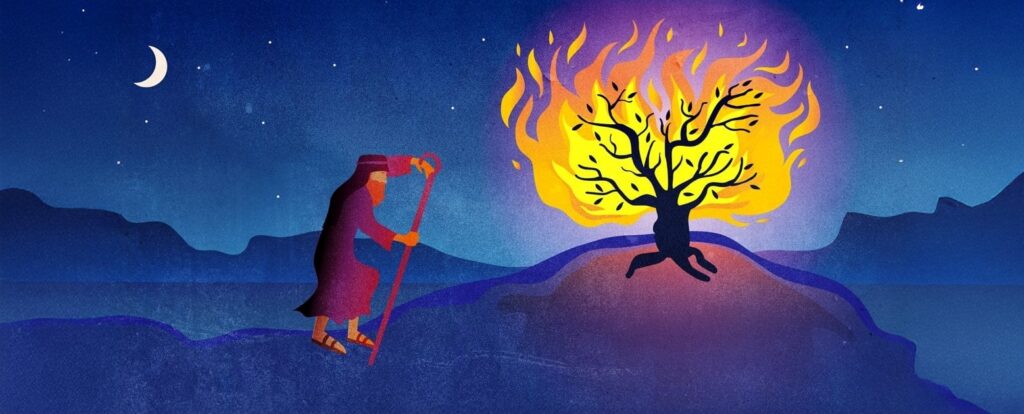
The fifth theme is humility as the foundation of true greatness. God does not reveal Himself to Moses in a palace or on a grand mountain, but in a small burning bush in the wilderness. The sages explain that the lowly bush represents humility, teaching that the Divine Presence rests with those who do not elevate themselves above others. Moses himself responds to God by saying, “Who am I?” This humility does not disqualify him; it qualifies him.
There is a story of a person who believed they had nothing special to offer because they were not charismatic or impressive. Yet their quiet sincerity and willingness to listen made them a source of strength for many. Parashat Shemot teaches that real power does not come from dominance or noise, but from humility, presence, and service.
***
Ultimately, Parashat Shemot teaches that redemption does not begin with miracles, but with human hearts that choose compassion, courage, and faith. It begins with individuals who refuse to ignore suffering, who make ethical choices even when no one is watching, and who believe that light can emerge from the darkest places. Even when life feels like Egypt—tight, overwhelming, and uncertain—God is already preparing the burning bush, the moment of calling, and the path forward. This is a message of hope, responsibility, and trust that speaks powerfully to the daily lives of every person, in every generation.
Rabbi Asher Vaknin