
A Musical Bridge Between Worlds

EditorEditor’s Note: This week marks the 90th anniversary of the birth of Ilyas Mallayev, whose life embodied the journey of Bukharian Jews from Central Asia to Queens. His story is one of artistic excellence, cultural preservation, and the determination to keep ancient traditions alive in a new land.
When Ilyas Mallayev arrived in Queens in October 1992, he carried with him more than luggage. In his mind and heart resided shashmaqom—a centuries-old musical tradition that had flourished in the courts of Bukharian emirs and survived, barely, through seven decades of Soviet rule.
Most Bukharian Times readers are already quite familiar with shashmaqom (literally «six maqams»)—one of Central Asia’s great classical music traditions, comparable in complexity and cultural significance to Indian raga or Persian dastgah. These intricate melodic modes and poetic cycles were historically performed by Jewish musicians at the Bukharian court, making them both a regional treasure and a specifically Jewish cultural inheritance.
Malayev was among the last masters who learned this tradition directly from those who had performed it in the emir’s court. As musicologist Theodore Levin noted in his book «The Hundred Thousand Fools of God,» quoted in Malayev’s 2008 New York Times’ obituary, what Malayev knew, almost nobody else knew. His immigration to America at age 56 could have marked the end of his artistic life. Instead, it became a new beginning.
Building Community Through Music
The Forest Hills and Rego Park neighborhoods where Malayev settled in the 1990s were transforming into the largest Bukharian Jewish community outside of Israel. Families who had fled Central Asia after the Soviet Union’s collapse were rebuilding their lives, and Malayev’s home quickly became a gathering place where culture and tradition found refuge.
His creation of the Maqom ensemble wasn’t simply about preserving old songs. It was about affirming identity, maintaining continuity, and proving that ancient art forms could thrive even in the strip malls and apartment buildings of Queens. When the ensemble performed at Carnegie Hall and Symphony Space, they brought audiences into a world most New Yorkers never knew existed—right in their own backyard.

The Challenge of Preservation
Malayev faced a dilemma common to immigrant artists: should he adapt to contemporary tastes or maintain strict fidelity to tradition? While other Central Asian musicians in New York incorporated synthesizers and pop sensibilities to attract younger listeners, Malayev refused to compromise. He believed, as Levin observed, in «the power of traditional music and poetry to stir the spirit.»
This wasn’t stubbornness—it was faith. Faith that beauty transcends language barriers, that complexity rewards patient listeners, and that some things are worth preserving precisely as they are.
A Living Legacy
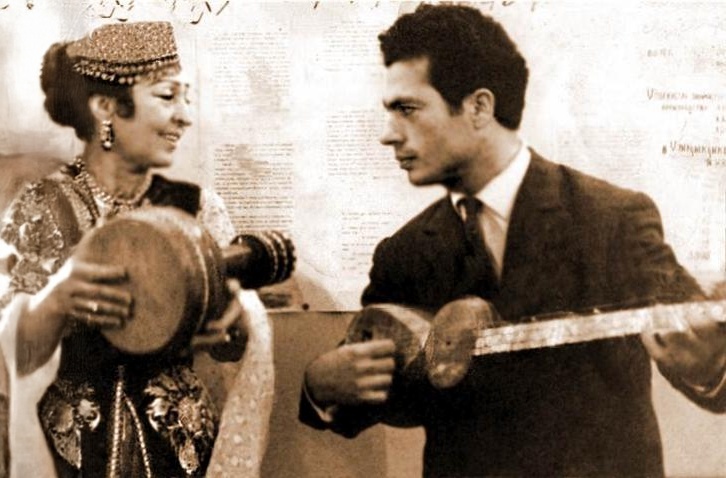
Today, the Maqom ensemble continues under the direction of Svetlana Khanimova-Levitin, still performing the Buzruk and Navo maqoms that Malayev spent his life mastering. The ensemble includes his widow, Muhabbat Shamayeva—herself a People’s Artist of Uzbekistan—alongside other virtuosos who carry forward this precious tradition.
The spirit of Malayev’s mission has found new expression in the Shashmaqom Forever Festival, organized by Rafael Nektalov and David Mavashev. This annual celebration ensures that the tradition Malayev championed continues to find new audiences and practitioners, bringing together musicians, scholars, and community members in a vibrant affirmation that this centuries-old art form has a future, not just a past.
For the Bukharian Jewish community, Malayev’s legacy extends beyond music. He published poetry in multiple languages when the Soviet system had denied him that right. (The likely culprit? Antisemitism.) He created theatrical works that brought Bukharian history to life on New York stages. He mentored younger artists and welcomed anyone interested in learning about his culture.

In an era when cultural homogenization threatens distinctive traditions worldwide, Ilyas Mallayev’s life stands as a reminder that small communities can preserve great art, that immigrants enrich their adopted homes immeasurably, and that Queens, New York, has served as a stage for some of humanity’s most beautiful and unlikely cultural resurrections.
As we honor this milestone, we look to the stage he built and the silence he broke. Bravo, Ustoz, and a very happy 90th birthday in the heavens. Your music plays on.
This article draws on reporting from William Grimes’s 2008 New York Times obituary of Ilyas Mallayev.