
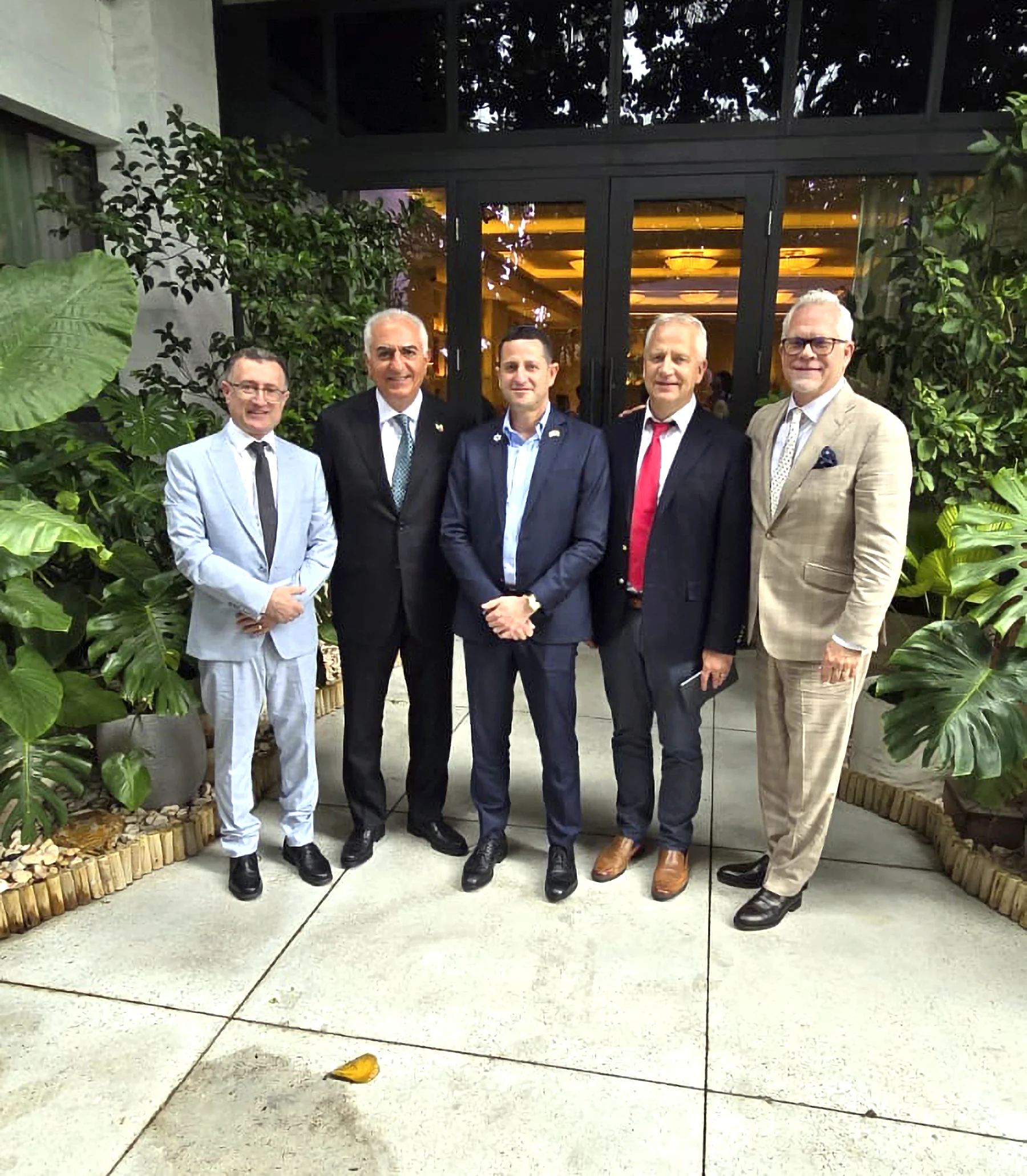
From Samarkand to Mar-a-Lago: Robert Ilatov discusses the future of Iran and the Jerusalem Prayer Breakfast’s historic January 13th dialogue with the Crown Prince.
The Jerusalem Prayer Breakfast (JPB) is a movement created and led by former Knesset member Robert Ilatov, alongside former Republican Congresswoman Michele Bachmann and Executive Director Albert Vexler. Each year, the JPB gathers government officials and influential Christian leaders from all walks of life in Israel’s capital to pray for the peace of Jerusalem.
Following their recent high-level gathering at Mar-a-Lago on January 14, 2026, Robert Ilatov sat down with The Bukharian Times to discuss his private meeting with Crown Prince Reza Pahlavi.
Rafael Nektalov: Welcome back, Robert! Welcome to the USA!
Robert Ilatov: Thank you, Rafael!
Nektalov: I saw a photo on your Facebook page that absolutely floored me! There you are, in your capacity as Chairman of the Jerusalem Prayer Breakfast, shaking hands with none other than Reza Pahlavi—the Crown Prince of the Shah of Iran!
Ilatov: That is exactly how it happened.
Nektalov: Robert, please tell us about this unique project you founded.
Ilatov: The Jerusalem Prayer Breakfast (JPB) was founded by my team and me in 2017, while I was still a member of the Israeli Knesset. At the time, I proposed an initiative to create a movement that would expand global communication through grassroots diplomacy.
The idea received support from [former] President Reuven Rivlin. Our primary goal was to promote Israel and Jerusalem based on the universal values found in the Tanakh—the Torah, Nevi’im, and Ketuvim—and the prayers for the peace of Jerusalem (the Psalms of King David). Over the years, this idea has attracted many supporters, uniting people who seek peace in Israel and the Middle East.
Nektalov: You left the Knesset in 2019, which saddened me deeply. But you have continued this project and your public activities.
Ilatov: At that time, I realized I had achieved what I wanted within Lieberman’s party. Leaving the Knesset didn’t mean stopping my work on the international stage. It is important for me to engage in grassroots diplomacy; it is the perfect tool for promoting my country to the world.
Nektalov: It is symbolic that your organization initiated a meeting with the Crown Prince of Iran himself. How did you feel, representing a community with such a long history of relations with Iran?
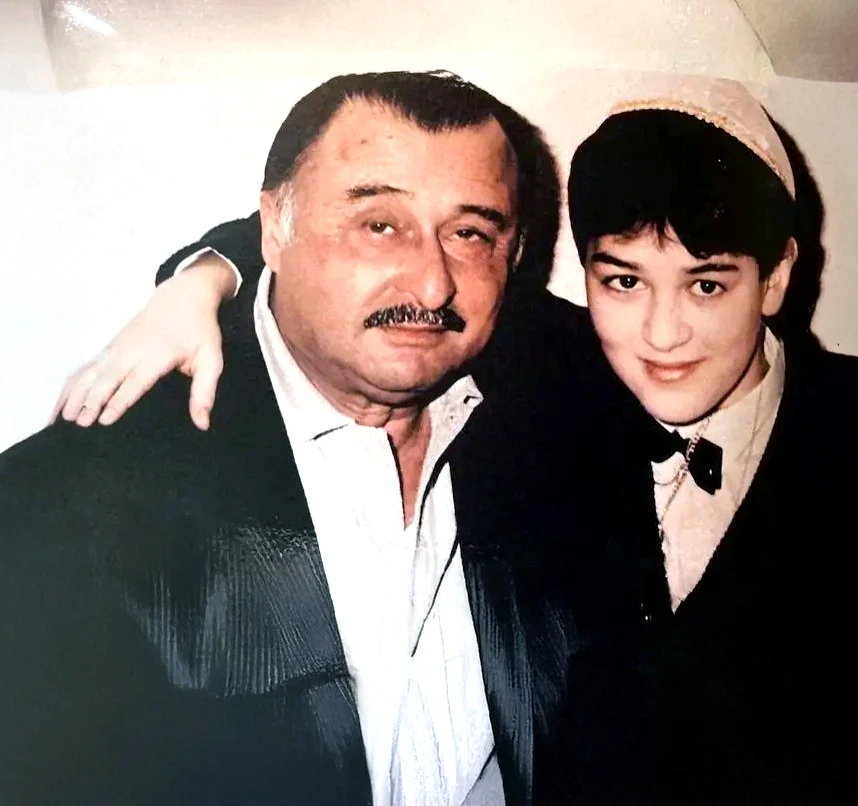
Ilatov: Reza Pahlavi is a great supporter of Israel. He states this openly. The Prince emphasizes that what happened in the Middle East after the 12-day war between Iran and the US/Israel (June 13–24, 2025) is of great significance for the region. The forces that want freedom for the Iranian people feel the moment to topple the Ayatollah regime is approaching. The Iranian people hope the West will help them in this.
Nektalov: I noticed that in America and Europe, there weren’t massive demonstrations in support of the Iranian protests, even though there were thousands of casualties.
Ilatov: That is not a question for me. But how could they—those frantic Israel-haters—be on the side of a movement that aims to overthrow the primary sponsor of the destruction of the Jewish state?
Nektalov: Fair point. Let’s return to your meeting with Pahlavi.
Ilatov: We invited Prince Reza Pahlavi to speak at our event held on January 14, 2026, at Mar-a-Lago. However, we managed to meet with him on the 13th. Due to the escalation of the situation in Iran and intensifying protests, his speech had to be canceled. Nevertheless, during our meeting, we discussed several vital issues. Specifically, the future of Israel-Iran relations after the overthrow of the Ayatollah regime.
Pahlavi is the primary opponent of the regime. We condemned the double standards of the global media regarding events in Israel and Iran. Their coverage of the early January protests in Iran is a glaring example. Prince Reza Pahlavi agrees that toppling the Ayatollah regime will completely change Middle Eastern geopolitics and sharply reduce the global arms race.
Nektalov: According to my information, not everyone is ready to return to a Pahlavi monarchy. Specifically, Iranians in the north near Azerbaijan—the Turkic-speaking Azerbaijanis, Turks…
Ilatov: Iran is a massive country with 80 million people. Naturally, there can and should be different approaches to the future. The main thing is this: the people understand that change is inevitable and are beginning to activate their social and political vision for the future. As for Reza Pahlavi himself, in my view, power is not his main goal; what matters is change and the liberation of Iran from the regime that plunged the country into the disaster of a religious dictatorship.
Nektalov: It’s a complex process.
Ilatov: It is possible that Iran may eventually break up into different states, as has happened with other regimes.
Nektalov: Would you dream of visiting Iran?
Ilatov: Of course! During WWII, my grandfather, Zalman Ribievich Ilatov, was sent to Tehran along with other Soviet officers because he was fluent not only in Tajik but also in Farsi, German, Russian, and Uzbek. He worked in security and was sent to Tehran to participate in the operation to protect Joseph Stalin, Franklin D. Roosevelt, and Winston Churchill.
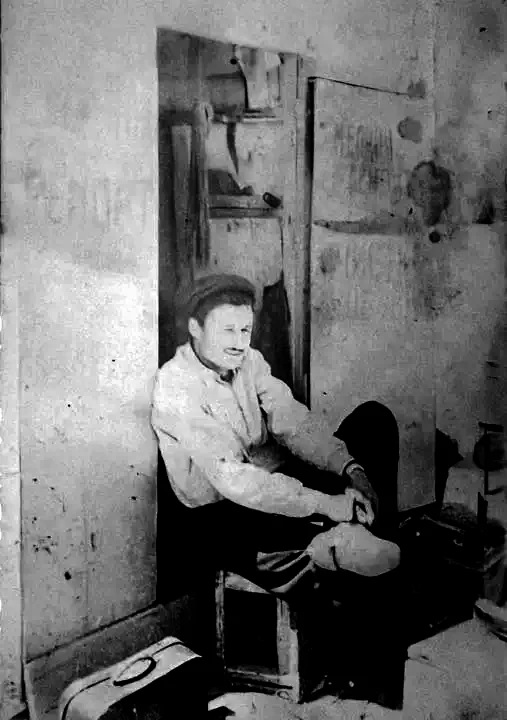
Nektalov: Where was your grandfather from?
Ilatov: From Samarkand. He was the son of Ribbi Elota and Victoria Mizrahi, a native of Cairo. On my mother’s side, I am a descendant of the Simkhaev family.
Nektalov: A very interesting genealogy. We should talk specifically about that another time.
Ilatov: We, the Bukharian Jews, are very close to Iran—shared culture, language, poets, and music. It’s a pity that political disagreements prevent us from traveling to a land where Jews still live today. I hope that when the regime changes and diplomatic relations with Israel and the US are restored, many Bukharian and Mountain Jews can go there and develop significant businesses.
Nektalov: Back to Prince Reza Pahlavi. What impression did he make on you?
Ilatov: A very positive person. Highly educated, intelligent, and open. He has lived in the West for nearly half a century, yet you can feel he is a man of the East. I told him I was from the Bukharian Jewish community, which includes many people originally from Mashhad. He nodded approvingly; it was clear he was familiar with our history. We agreed to continue our dialogue, and that after the regime falls, Iran will establish friendly relations with Israel.
Nektalov: I read on your website that the next conference will be in Jerusalem on May 26. I would like to participate.
Ilatov: Why not? Welcome to Jerusalem!
This was translated
from Russian into English.
By Rafael Nektalov, Editor-in-Chief of The Bukharian Times
