
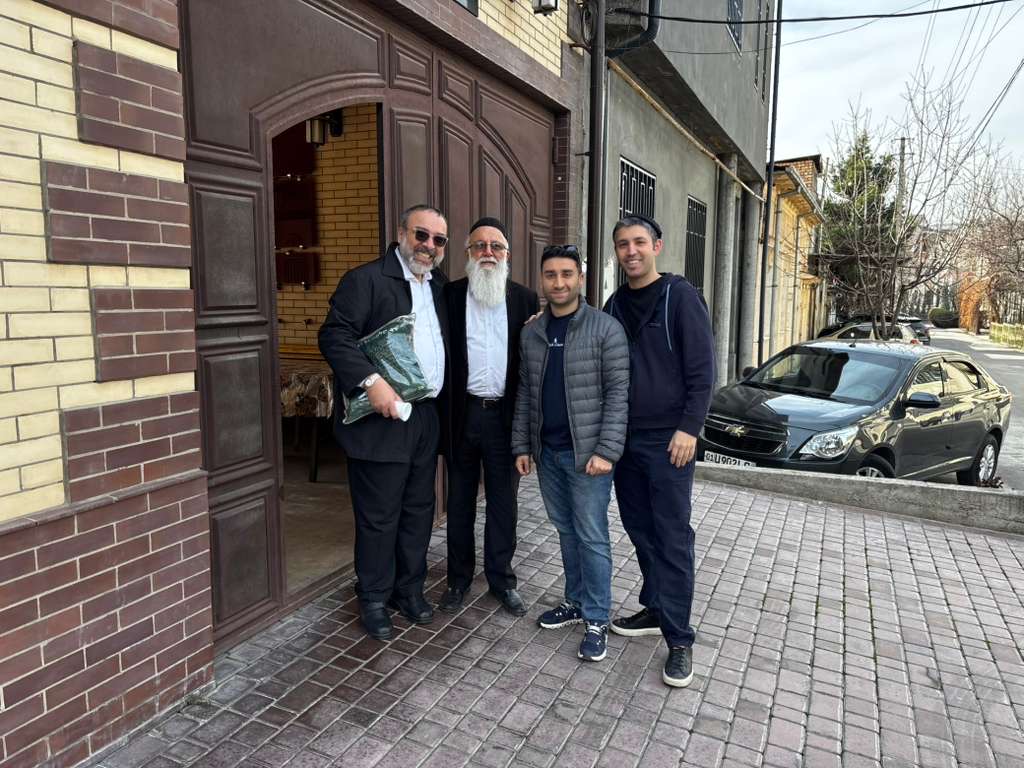
David Aronov is a young Bukharian community leader born and raised in New York. Last month he traveled to Uzbekistan for the first time, attending a conference organized by Bukharian Times editor-in-chief Rafael Nektalov. We spoke with him about ancestral homes, a million-dollar museum grant, and why he thinks more young Bukharians should make the journey.
Erin Levi: You were born in New York. What was it like visiting Uzbekistan for the first time?
David Aronov: My parents are from Tashkent and my grandmother comes from Samarkand, so it was a really moving experience. Bukharian Jews have lived there for over two thousand years. The majority of heritage trips our community supports are trips to Israel — which is great, I think everyone should visit Israel — but there isn’t enough focus on the cultural aspect of where Bukharians actually lived. So much of our traditions and identity comes from that land. And the remnants are still there. There are literally people living in homes that Bukharian Jews once occupied. I kept wondering: do they know the history?
EL: What did you find when you visited the old Jewish quarters?
DA: There are small museums, synagogues that are still operational, the Jewish Quarters of Bukhara, Samarkand, and Tashkent. The cemeteries are so well maintained because of the funds our community has set up from here to support them. Every Jewish site — cemeteries, synagogues — had police protection outside, which I appreciated. In Bukhara, we went to the old city, and it’s one of the oldest historical cities in Uzbekistan. Jews lived right next to a fortress that’s stood for centuries. One home where Bukharians once lived has been turned into a museum and guesthouse — they charge admission now. To walk through that space and think of our ancestors in those rooms was overwhelming.
EL: You also presented at the conference. What did you speak about?
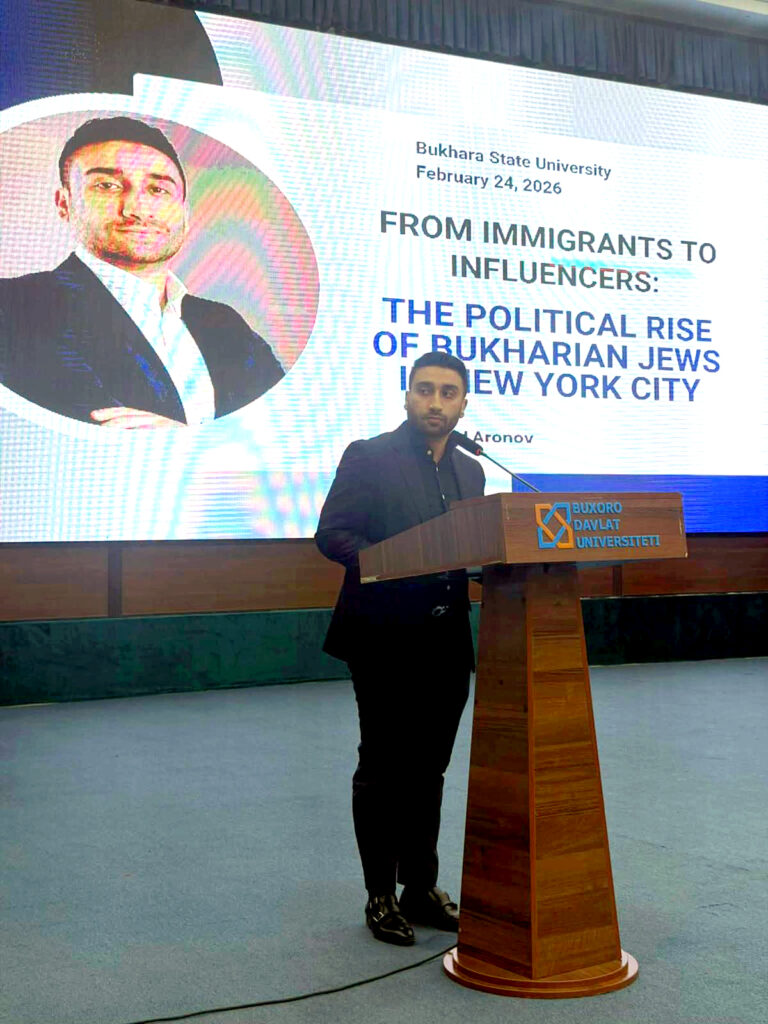
DA: I spoke about the Bukharian community’s involvement in New York politics. The first generation was focused on building their families and adjusting to a new country. My generation is asking: how do we get involved civically? I was able to announce at the conference that I had secured a one-million-dollar government grant for the Bukharian Jewish Museum in Queens. That’s what civic engagement can look like — leveraging relationships in politics to bring real resources back to the community.
EL: That’s all so important. I wish I could have been there. I also hear Rafael Nektalov is something of a VIP in Uzbekistan. What was it like traveling with him?
DA: He was very well received. In Samarkand, we visited a home that had been his neighbors’ years ago — and they remembered him. He visits often and his work with the Bukharian Times is known there. In Bukhara, we even had a police escort, a car accompanying our van everywhere.
EL: Did you feel safe as a Jewish visitor?
DA: Overall, yes. That said, if I’d wandered somewhere on my own, I wouldn’t have announced I was Jewish. You just never know. But Tashkent especially feels like a genuinely modern city — new restaurants, construction everywhere, a population that’s mostly under thirty. You see the Soviet influence, but also a country trying to move forward. It’s in an incredible geographic position, bordering Russia, China, the Middle East, and India, with significant natural resources.
EL: Were there personal moments of connection to your family’s history?
DA: Many. I visited my father’s childhood home in Tashkent — it’s a guesthouse now. My mother’s old neighborhood no longer exists; they built Tashkent City Park where she grew up. But her elementary school is still standing near the Palace of Friendship of Nations, and I sent her photos. My parents were so happy I could see where they once lived.
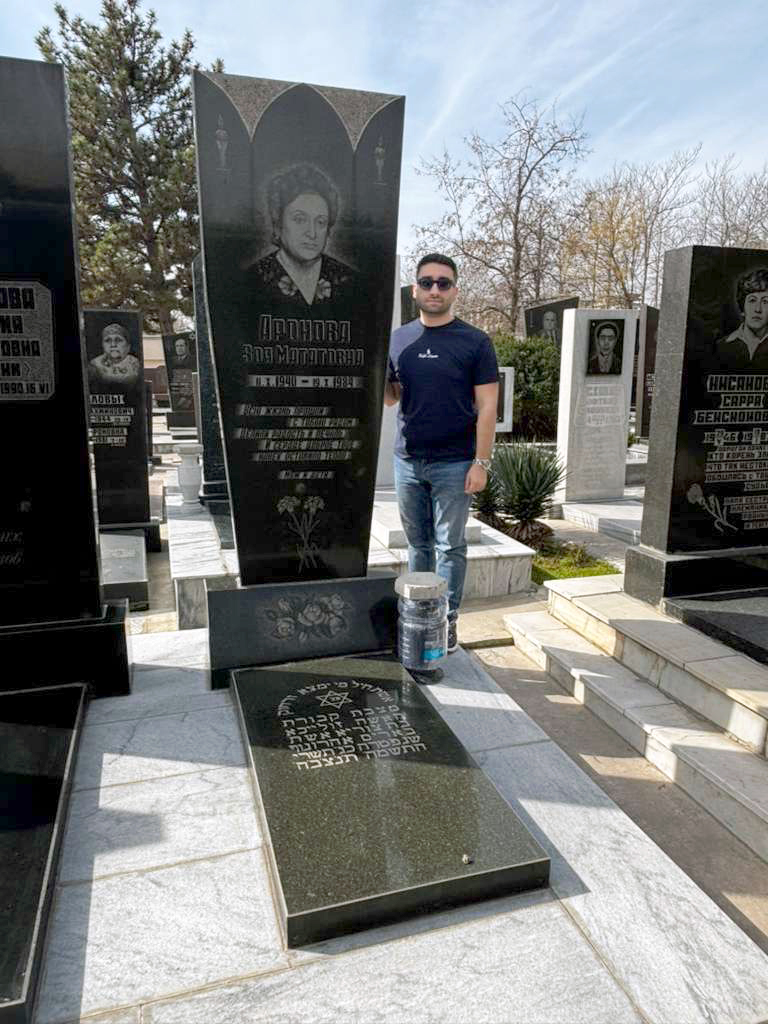
I also found my grandmother’s tombstone in Tashkent. She died in 1984, before the family immigrated, when my father was sixteen. I never met her. And in Samarkand, I found the grave of a relative — with a photo of my great-grandfather carved into the stone. He died during World War II and is buried in a mass grave outside Moscow, but his face is memorialized on that tombstone in Samarkand. I stood there for a long time.
EL: The history of Jews in Uzbekistan isn’t often discussed in the same breath as other Jewish traumas. What do you think about it?
DA: It’s not tragic in the way the Holocaust is tragic, but it’s not simple either. The Soviets confiscated property from Bukharian Jews — particularly in Samarkand and Bukhara — forced them to sell their homes, took what they had built over centuries, because they were Jewish. To be uprooted like that is traumatic. That’s history worth knowing.
EL: Would you go back?
DA: Absolutely. There’s still so much I didn’t see. And I’d love to go with a group of young Bukharians — to watch them experience it for the first time, to see their reactions. I have so many friends who want to make the trip. It’s a long journey, twelve hours each way, further than Israel. But it’s worth it. This is where we come from.
By Erin Levi