In an era when much of the Muslim world publicly abhors Israel, a striking and little-known partnership is unfolding in the heart of Central Asia. According to a recent YNet report by Nitzi Yakov, Muslim workers in Uzbekistan are producing tallit and tzitzit garments for IDF soldiers — an unlikely collaboration that challenges assumptions about faith, geopolitics, and the limits of coexistence.
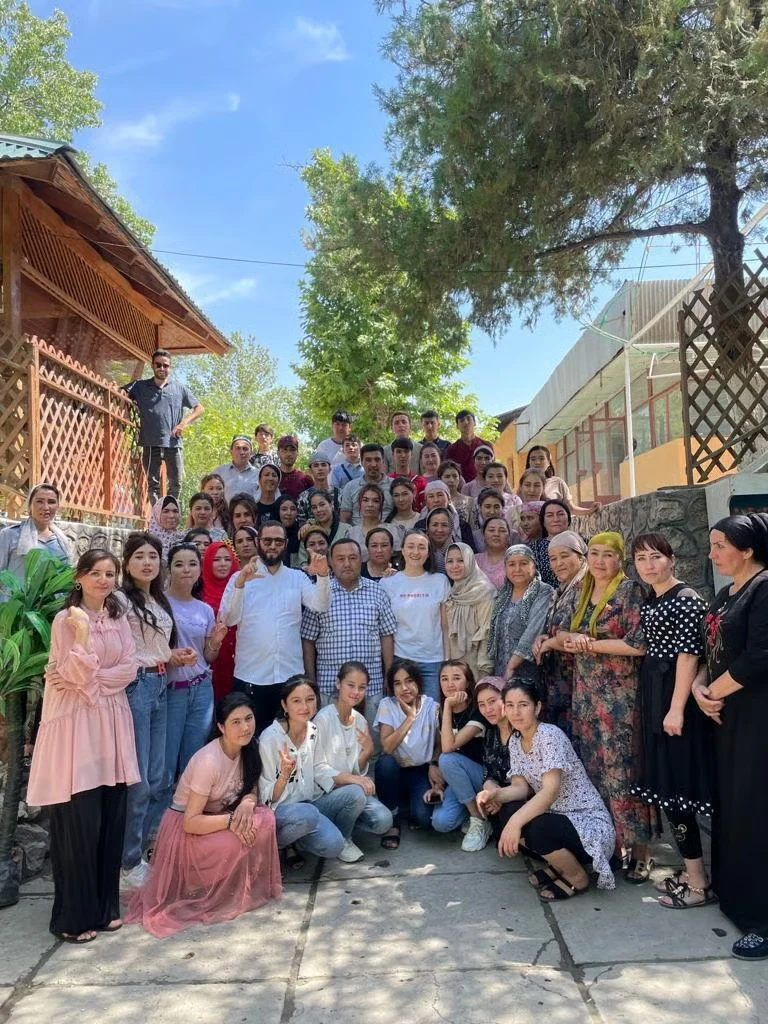
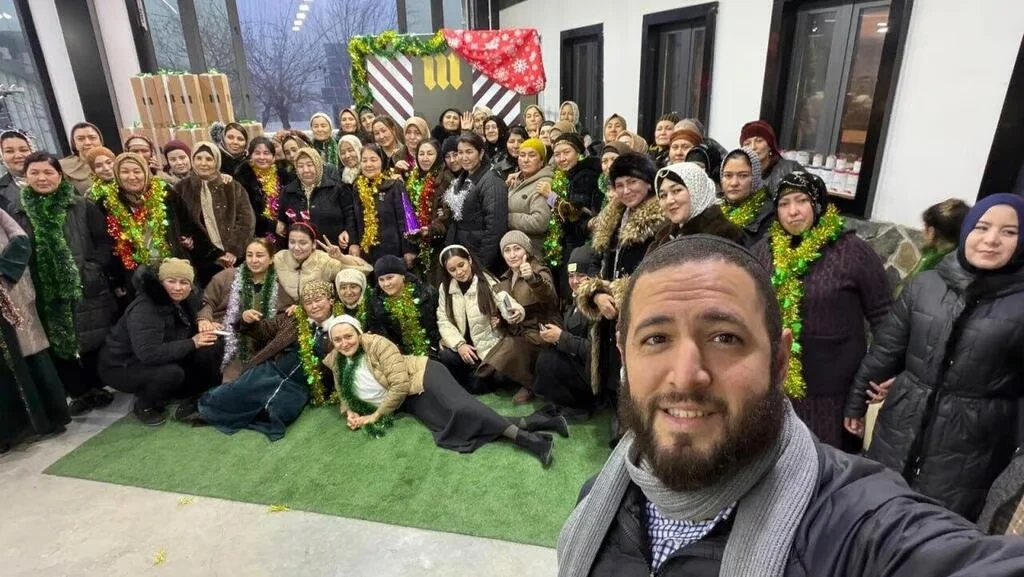
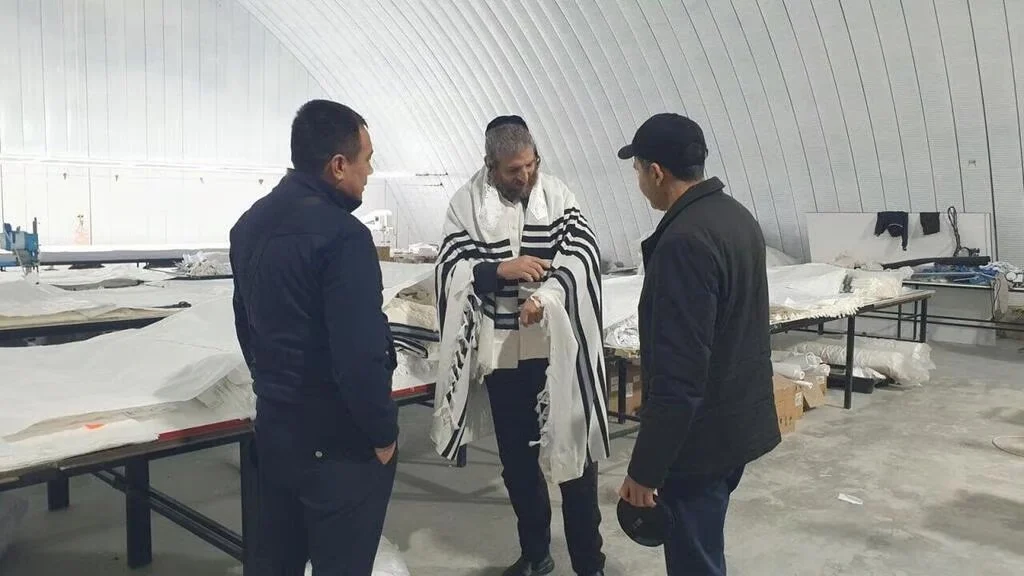
About 125 miles east of Tashkent, in a sprawling industrial zone, hundreds of Muslim men and women arrive each morning to work on production lines that hum with quiet concentration. They cut, sew, and measure with meticulous care. The products they create — tzitzit vests, tallit, kippahs, ritual garments — are destined for IDF soldiers and Jewish communities around the world.
The factories belong to Melech Tex, an Israeli-owned textile company founded by ultra-Orthodox businessman Shlomo Colombo, who splits his life between Bnei Brak and Miami. For Colombo, this is not merely business. As he told YNet, “Every product that comes out of here strengthens a soldier in the field.” In his view, the work carries spiritual weight — a sense of mission that transcends commerce.
Uzbekistan may seem an unlikely location for such an enterprise. It is a Muslim-majority country of roughly 37 million people. Yet it has cultivated growing ties with Israel since diplomatic relations were established in 1992. Under the leadership of Shavkat Mirziyoyev, Uzbekistan has promoted economic openness, foreign investment, and what Colombo describes as “zero tolerance for antisemitism.”
That policy, according to YNet’s reporting, has been visible in practice. After October 7, when tensions across the Muslim world surged, Uzbek authorities swiftly dispersed a small “Free Palestine” demonstration in Tashkent. In another incident, a passenger who allegedly cursed Colombo for being Jewish on a flight was detained upon landing and deported. Local officials, Colombo told YNet, offered him the choice between deportation and trial for the offender — a response he says left him “calm when I invest millions.”
Inside the factories, the collaboration feels less geopolitical and more human. Some 500 workers are employed directly or through subcontractors. Equipment is imported from Italy; quality control is exacting. The finishing, Colombo emphasizes, is “at the level of Louis Vuitton.” Yet the spiritual boundaries remain clear: while Uzbek workers produce the garments, the actual tying of the tzitzit strings — a ritual act governed by Jewish law — is completed in Israel under strict rabbinical supervision.
Workers interviewed by YNet describe a learning curve. One seamstress said that at first she did not understand why supervisors checked every millimeter. “For us, it was perfect sewing,” she explained. “Today, I understand that every detail here is related to faith, identity and something deeper.” Another worker called it “not just a garment,” but something sacred that carries meaning — even if it belongs to another religion.
The factories accommodate Muslim prayer schedules and holidays. According to YNet, some local imams have even expressed support for the partnership. In a country where religion remains woven into daily life, the notion that sacred work — even for another faith — carries dignity appears to resonate.
After October 7, demand for tzitzit vests reportedly surged. Melech Tex shifted production lines to supply khaki vests for regular IDF soldiers and white ones for reservists. There were obstacles: certain suppliers allegedly refused to sell khaki thread because it was destined for the Israeli army. Colombo and his team sought alternative suppliers and continued production without pause. Since the attacks, they say, over one million tzitzit have been produced for soldiers.
The symbolism is powerful. YNet recounts an incident in which Israeli soldiers escaped a burning armored personnel carrier; amid the wreckage, tzitzit and sacred books remained intact. In another case, a civilian fighting terrorists on October 7 was nearly mistaken for an attacker — until a soldier recognized the distinctive green tzitzit garment he was wearing. For Colombo and his family, these stories affirm that their work in Uzbekistan has tangible impact on lives in Israel.
Beyond individual narratives, analysts see broader implications. Dr. Victoria Martynova, a specialist in Central Asia cited by YNet, describes the factories as an example of unofficial public diplomacy. Ultra-Orthodox Israeli businessmen, she notes, have found common cultural ground with conservative Muslim communities in Uzbekistan. Mutual respect, rather than ideology, anchors the relationship.
Economically, Uzbekistan is undergoing rapid development, attracting foreign investment in industry, agriculture, and infrastructure. Flights between the two countries reportedly increased after October 7, with Uzbek workers filling labor gaps in Israel. While official diplomatic initiatives may be limited, commercial ties are deepening.
Of course, the arrangement is not without controversy. Some in Israel question the optics of producing sacred Jewish garments in a Muslim country. Colombo acknowledges raised eyebrows. Yet he frames the partnership through a biblical lens, invoking the shared ancestry of Isaac and Ishmael. “In Uzbekistan, there is business and no politics,” he told YNet. “There is no extremism. There is a lot of respect.”
(As someone who holds a master’s degree on Central Asia, I concur that extremism has largely been managed in Uzbekistan, apart from pockets in Ferghana Valley.)
In a global climate marked by polarization, boycotts, and escalating rhetoric, the sight of Muslim workers sewing tzitzit for Jewish soldiers feels almost radical. It does not erase political tensions or resolve deep conflicts. But it offers a reminder that identity and cooperation are not mutually exclusive.
Ultimately, this story, as reported by YNet, is about textiles — threads measured in millimeters. Yet it is also about something larger: economic pragmatism, quiet diplomacy, and a shared understanding that faith, when treated with dignity, can build bridges where politics fails.
In the industrial outskirts of Uzbekistan, beneath fluorescent lights and the steady rhythm of sewing machines, sacred garments take shape. They will travel thousands of miles, worn close to the heart by soldiers on distant borders. And in their threads is woven a paradox of our time: that in one of the Muslim world’s quieter corners, support for Israel is stitched, quite literally, into cloth.
Erin Levi
with reporting from Ynet
Photos by Avraham Haim and Shlomo Colombo